CEO and Co-Founder | Foundation Dental Transitions
He spent a decade learning exactly how DSO buyers think. Now he uses it against them.
Brian Mans has personally led more than 300 transactions across 26 states, co-founded a DSO from scratch that grew to 114 practices, and executed a $214 million private equity exit. He left the buy-side because dentists deserved someone who understood the game from the inside, and was fully, exclusively on their side.
And he made the decision to use it exclusively for the dentist.
Schedule Your Discovery Call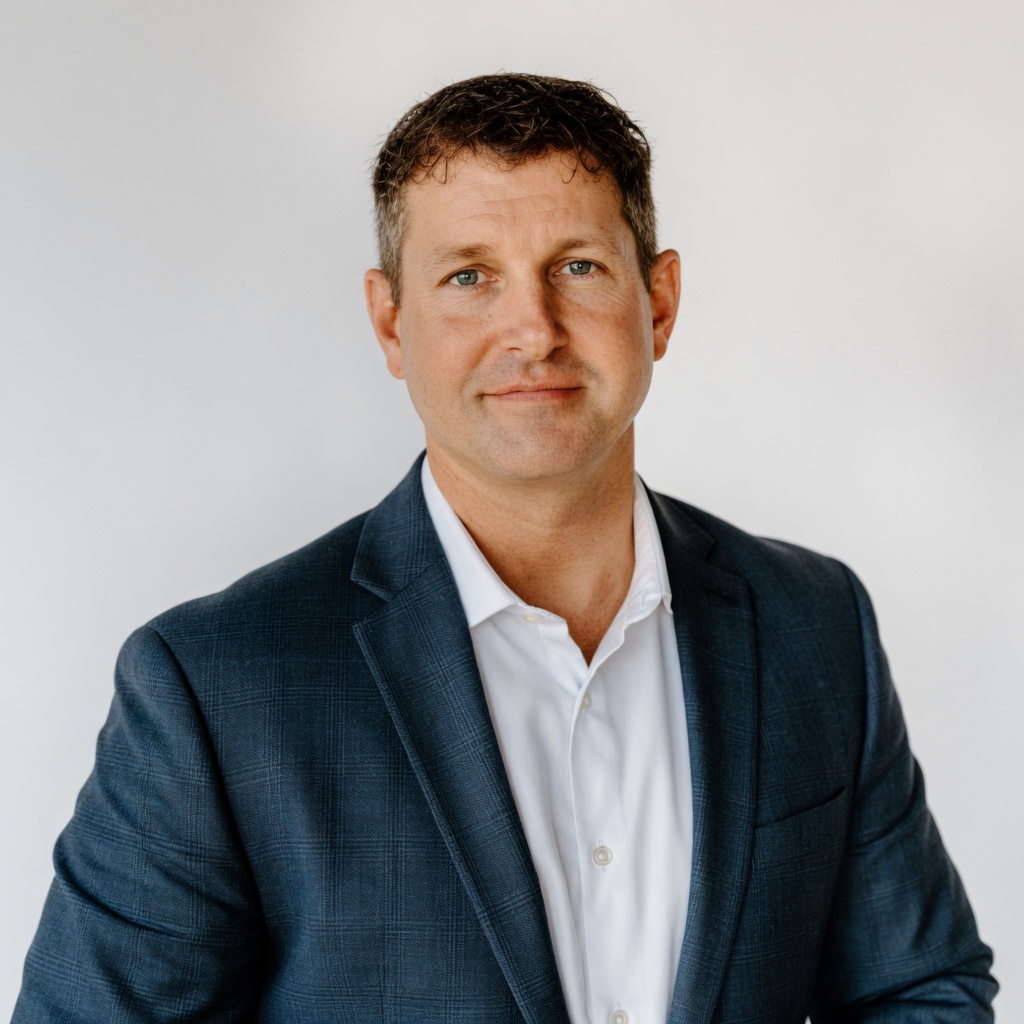
Watch Brian Tell His Story.
Some stories are better heard than read. Watch this first if you want. Then keep reading for the details that made Brian who he is.
Chapter 1
Pekin, Illinois
Brian Mans grew up in Pekin, Illinois, a town of about 35,000 people outside of Peoria. He graduated high school with roughly 650 classmates and spent most of his youth wanting to get out of a small town and do something with his life. He wasn’t sure exactly what that something was yet.
He went to Eastern Illinois University and got a sports management degree he has never once used. Coming out of school he took a job in accounts receivable, a sales role, and built up a decent business. He also started teaching himself marketing because he was tired of cold calling and wanted people to call him instead.
Then he met a girl in Robinson, Illinois. Robinson is in the middle of nowhere. Four hours south of Chicago, three hours from St. Louis, two hours from Indianapolis. He started spending time there. Her son played t-ball. Brian would show up at the games, talk to the other parents, and when they asked what he did for work, he would tell them. They would duck away.
He found out those parents were the people not paying their bills. The ones getting calls from his company.
“I had this oh-shit moment. This is not what I want to do with my life. This is not who I want to be.”
He started looking for something else. Heartland Dental’s home office was about an hour away. They had an opening for a marketing consultant. Brian did not have a marketing degree, had never worked in dentistry, and was not sure he was remotely qualified. He interviewed anyway.
On the drive home from the interview, he’d already made up his mind. Whatever they offer, he was taking it. He was going to the top.
They offered him $31,000 a year. He’d made more than that in college selling Schwann’s ice cream from a yellow truck for beer money.
He took the job.
Chapter 2
What Pat Bauer Said
Brian spent his first two years at Heartland as a marketing consultant, building custom campaigns for practices and, because he had no preconceived ideas about how dentistry worked, asking dentists the kinds of uncomfortable questions that turned out to be exactly the right ones. The campaigns consistently produced 400 percent ROI or better. He was getting rave reviews from the dentists he worked with and from the administrators. He had his sights set on becoming VP of Marketing.
Then one day Pat Bauer, the president of Heartland and now its CEO as the largest DSO in the country, knocked on his cubicle. Brian did not even know the man knew who he was.
I need to see you in my office. I go in. Giant office. I sit down. He says: I want you to consider joining our affiliations team. I said: what is that? He said: I want you to fly around the country and buy dental practices for us. I said: Pat, how in the hell do you buy a dental practice? He chuckled and said: you are a smart guy. I am sure you will figure it out. He got up and walked out.
“I had no idea what acquisitions even meant. But I wasn’t going to be the guy who said no.”
Brian sat there alone in that giant office thinking he had just been promoted to chemical engineer. He spent the next six months in Effingham, Illinois at Heartland’s corporate office bothering everyone who would talk to him. Every department. Every role. What do you do? How do you affect an acquisition? How can I help you? His boss told him to go bother people. He bothered people. They didn’t like it. He didn’t care.
At the end of six months, they gave him a territory. Twenty-six states. They told him not to freak out because they were only actually in three of them. The other states were listed under his name so dentists in those markets would know Heartland was coming. Brian went along with it.
The phone started ringing from all 26 states.
What followed were two years of being a human ping pong ball, flying from Indianapolis to Orlando to Greenville, South Carolina, ending the week down a two-mile driveway in the middle of nowhere to meet a two-million-dollar practice owner in Southern Arkansas. And every single time, regardless of the market, the city, the state, or the size of the practice, he was having the same conversation.
“It did not matter where I was. Suburban Chicago or rural Arkansas, I was talking to the same person. Dentists who had built something they were proud of, who were walking into one of the most important decisions of their career, and who were doing it with no real idea of what they were getting into or who was actually on their side.”
He loved the dentists. They became his social life. He talked to them more than he talked to his best friends. They were down-to-earth people who viewed their practices as their babies, and he felt the weight of what a transition meant to them every single time.
Chapter 3
The Bet on Himself
Toward the end of his time at Heartland, a private equity firm out of Chicago reached out. They wanted to build a new dental support organization from scratch with the right people from the major platforms. They wanted Brian.
He said no. He had just flown on Dr. Rick Workman’s private jet to Arkansas with his wife to close a deal. He did not know how to explain leaving a billion-dollar company for a startup to his family.
A couple of years later, in August 2014, they called again. They had nine people identified. They were having a dinner in Chicago. Would he just come meet everyone? He drove four and a half hours. He went in with no expectations.
“I got to the meeting and met a bunch of people who all had the same thought in their head: if I had a bag full of cash, I could actually give these dentists exactly what they want, need, and deserve. I do not usually agree with everyone at a table. That night I agreed with everyone at the table.”
In October 2014, Brian became the second person to join Elite Dental Partners. He also invested his entire life savings.
There was no backup plan.
The three most important women in his life, his wife, his mother, and his grandmother, all thought he was making a terrible mistake leaving a billion-dollar company for a startup. He told them he loved them. This train was rolling. He hoped they’d jump on.
By December of that first year they had four or five practices. By the end of 2015 they had around 25. The snowball started rolling and did not stop. Four years later Elite Dental Partners had grown to 114 practices across multiple states with over $100 million in revenue. They sold for $214 million, a little over 14 times EBITDA, one of the highest multiples in the industry at that time.
Brian’s bet on himself paid off.
He also rolled $500,000 of his exit proceeds back in to do it again under new ownership. The new buyers had a different philosophy, a different direction, and they ran the company into the ground. Brian lost every dollar he had reinvested.
He walked away with significantly less than he had planned. And a lesson he says he’ll never forget.
He loved the dentists. He’d talked to them more than he talked to his best friends across those years at Heartland and Elite. But through everything he had built and everything he had lost, that nagging sense never left him: that they were getting less than they deserved, and that nobody had built a real system to change it.
Chapter 4
Switching Teams
Over a decade on the buy-side, Brian had worked with and analyzed more than 5,000 dental practices in 26 states. He had personally led more than 300 M&A transactions. He had seen deals that worked beautifully and deals that quietly hurt people who deserved better. He had seen teams thrown into chaos, cultures collapse, and sellers walk away from the most significant financial decision of their lives with quiet regret, not because they sold, but because the deal did not reflect what they actually wanted.
The pattern was consistent. Dentists were not walking into these transactions with anyone who truly held the complete picture on their behalf. Their CPA handled taxes. Their attorney reviewed documents. The broker managed the introduction and showed up at the closing table. Nobody owned the full process from valuation through integration. Nobody was accountable for the promises that evaporated after the ink dried.
“I kept thinking: if I could be fully on the dentist’s side of this, not just facilitating the transaction but actually protecting the outcome. I could give these people what they want, what they need, and what they deserve. That thought would not leave me alone.”
At some point, he realized he didn’t want to be the guy on that side of the table anymore.
After the Elite chapter closed, Brian made a decision. He was done being the buyer. He was switching teams.
He called Jim Arnold.
Chapter 5
What Brian Brings to Your Side of the Table
Everything Brian learned on the buy-side, how DSO acquisition teams think, where they find leverage, how deals are structured to protect institutional interests, and what actually drives valuation in the institutional buyer market, he uses all of it for you.
That means when a DSO buyer’s Development Director walks into the room with their analysts, their attorneys, and their integration team, the dentist on the other side has someone who has sat in that chair. Someone who has run that process. Someone who knows exactly what the buyer is looking for, where they will probe, and how they will try to shift terms once the LOI is signed.
It also means the financial model built for your practice is not a simplified revenue multiple. It is the same private equity-grade analysis the institutional buyers use: eight zones, 150+ analytical views, examining every dimension that drives or suppresses your value. Every finding is used to maximize your position before a single buyer sees your name.
“I spent a decade learning how buyers think. Every deal I did, every dentist I sat across from, every term I structured. I was learning what it would take to truly protect the person on the other side of that table. Now that is my entire job.”
When you sit across from a DSO, you are not walking into a conversation. You are walking into a system that was built to protect them. Brian’s entire job is to make sure you are protected inside it.
He runs the whole process from the first conversation through integration. Every stakeholder coordinated. Diligence managed. Re-trading attempts neutralized before they gain momentum. Legal process directed. He does not consider the job done until the dentist has crossed the finish line the way they deserve.
By the Numbers.
Ready to Have Brian in Your Corner?
Everything Brian built on the buy-side, every deal, every dentist, every lesson learned, all of it exists now to protect you. One conversation is where it starts.
Most dentists who reach out aren’t ready to sell. They just want to understand what they’re actually looking at.