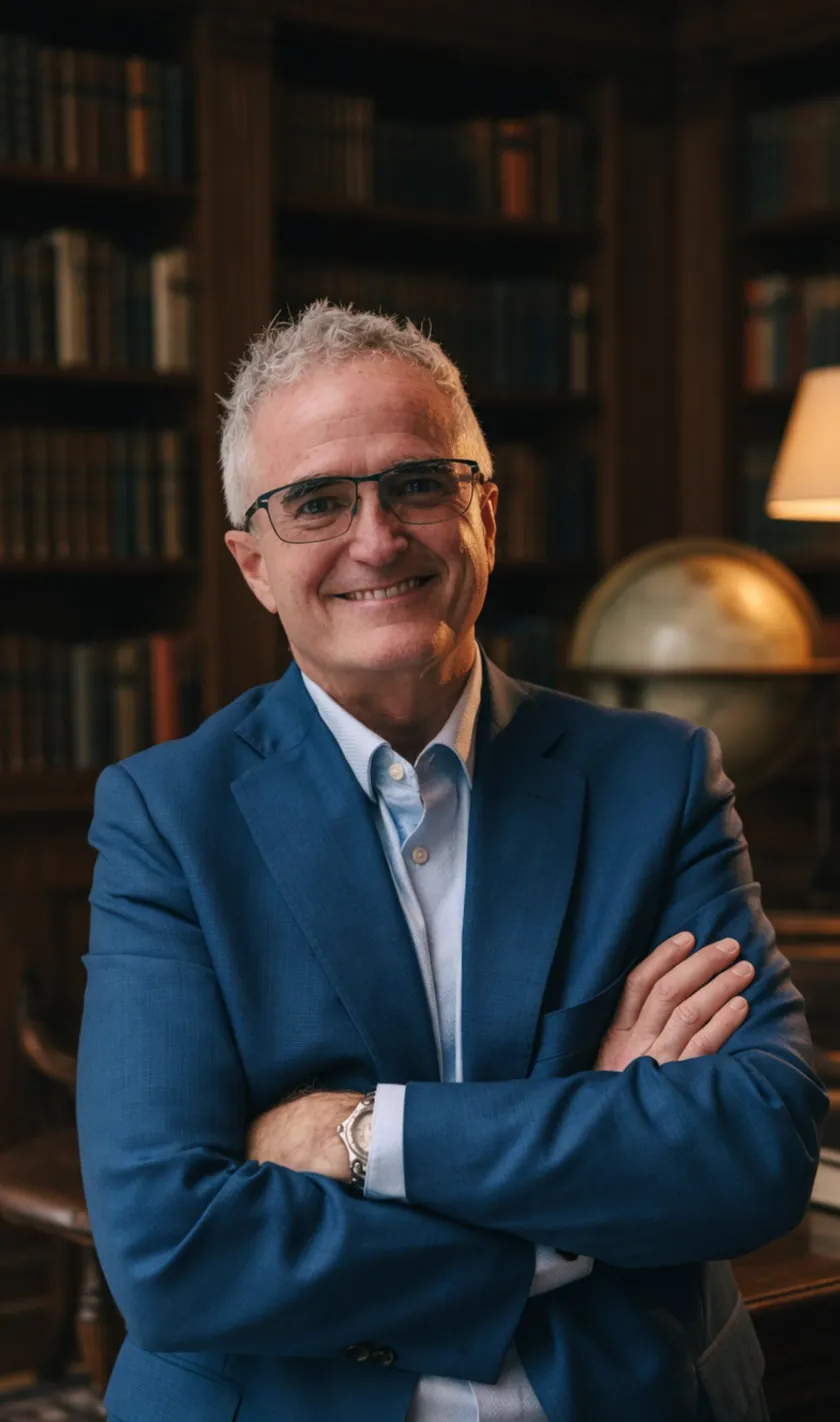
Co-Founder and Chief Dental Officer | Foundation Dental Transitions
He’s been on both sides of the table. In fact, he’s sat in just about every seat this process has to offer.
A practice transition is the single largest financial and emotional event in most dentists’ careers. Yet most enter that moment with advisors who have never owned a practice, never sold one, and never lost everything they built. Dr. Jim Arnold understands the stakes because he’s lived every one of them.
If you’re trying to decide who to trust with the most important decision of your career, this is the page that should answer that.
Watch Jim Tell His Story.
Some stories are better heard than read. Watch this first if you want, then keep reading for the details that made Jim who he is.
Chapter One
$10,000 in the Bank and a Million Dollars in Debt
Jim Arnold graduated dental school in May 1996. Three years later, he walked into practice ownership on day one with $10,000 in his bank account and a million dollars in debt. He was scared to death.
He also made a decision on that first day that would define everything that followed. He was not going to work with insurance companies and discount his services 50 percent. His relationship with patients would be entirely about them. Their relationship with their insurance company was theirs, not his.
That decision gave him the freedom to build the practice he actually wanted. He could spend money on technology. He could invest in continuing education. He could recruit and retain the best team possible and pay them what they deserved.
“From 2001 to 2005 I was doing two hundred and fifty to four hundred hours of CE every year. I was dragging my team all over the country. I was spending probably $100,000 to $200,000 a year on travel and tuition. Our income got cut in half. But I had faith. I had a vision.”
The vision was a practice where he could spend real time with patients, do work he was proud of, and build something that ran on systems rather than on his personal presence. He had a phrase he returned to constantly: the best dental team on the planet. He built that team once. Then he built it again from scratch. Then a third time. Same playbook. Different spaces, different people, different vibe, but the same systems, the same communication, the same culture.
He also had four kids during this time, was in state and then national dental leadership, taught with the David Hornbrook group, and was on the road 25 to 30 weekends a year. His life was, by his own description, beyond crazy.
He added Ironman triathlon training to it anyway. Twenty hours a week. He was an All-American runner in high school and a Division I collegiate runner. Pathologically competitive was how he described himself. He did not want to be just a runner or just a dentist. He wanted to be the best he could be at everything he took on.
By the time he was 45, he had built three successful fee-for-service practices generating 31% EBITDA, a number that is genuinely rare in the industry. He was making close to a million dollars a year and was barely doing clinical dentistry himself, running an associate-driven business he had deliberately built to not depend on him.
He had built an asset. Not just a job.
Chapter Two
Which One?
At 45, Jim made a decision he had been quietly building toward for years. He didn’t want to do clinical dentistry for the rest of his life. He wanted to take everything he’d learned, the clinical experience, the thousands of hours of CE, the systems he had built, the relationships he had developed, and use it to have a bigger impact on the industry than he could have from behind a dental chair.
He wanted to be doing that by the time he turned 50. Which meant he needed to sell by 45.
“I had built something really big, really profitable. I realized I was going to sell to a DSO. That was just a fact. The question was which one.”
His answer to that question was characteristically thorough. He asked a thousand questions. He tracked whether the answers were consistent. He asked the same question multiple ways and compared the responses. He spent a month vetting Brian and the Elite Dental Partners team before he would agree to a dinner. Long emails. Long texts. Brian has said Jim asked more questions than anyone he had encountered in his entire career.
When he finally found a group with the integrity, the shared vision, and the consistency he required, he moved forward. He signed the LOI. And then something happened that he did not expect.
It got emotional.
His whole identity was wrapped up in Smiles by Arnold. That was him. That was his family’s identity too. Through the process, his top associate’s husband got a health diagnosis that required relocating to Texas for treatment. She had been a significant part of the deal. His other associates were scared. He had built a family inside that practice and now he was asking them to trust him through the most disruptive change any of them had experienced.
The night before the closing, his 14-year-old daughter looked at him and said: Dad, are you sure? Like, this is everything. I mean, you’ve been doing this for so long and everybody knows you.
He said: I think so.
He could not have gotten to the finish line without Brian, he will tell you, despite the fact that Brian was on the other side of the table. The empathy in that process, the sense that someone on the buy-side actually cared about the outcome for the person selling, changed Jim’s understanding of what a transition could and should feel like.
Then everything changed.
Chapter Three
45 Seconds
After the Elite Dental Partners exit, Jim rolled his proceeds into a second chapter. The same platform was now backed by a larger private equity firm. He believed in it. He told his kids they were bulletproof.
On September 3rd, 2020, he sat in his office at 5:30 in the evening for what he thought was a routine investor update.
The call lasted 45 seconds. It was a recorded message.
“The message said: we are really sorry, but we mismanaged the company. The pandemic hit and shut down dentistry. The bank took everything. There’s no recourse. Your money’s gone.”
He dropped the phone.
$15 million gone. Everything he had rolled back in, every dollar of everything he had worked for over a 25-year career that had been wrapped up in that equity, gone in less time than it takes to pour a cup of coffee. He went outside and told his wife. He stuttered through it. She said: Jim, that is ridiculous. He said: no. Like, legitimately. We just lost everything.
He had come from a middle-class family. He had done everything right. He had worked harder than almost anyone he knew, made smart decisions, surrounded himself with people he trusted. And they told him in a 45-second recorded call that there was no recourse.
What followed were four years that Jim does not talk about lightly. He fell into the deepest depression of his life. He had been a competitive triathlete at 7 percent body fat. He went to 204 pounds and 30 percent body fat. He gained 65 pounds. He didn’t want to leave the house. He felt like he had let his family down. He went to meetings and put on a happy face and pretended everything was fine. He joked about being one cheeseburger away from a heart attack, and later acknowledged that was not far from the truth.
For four years he sleepwalked through the industry he had spent his career building.
Chapter Four
1% Daily
A friend invited Jim to a conference in Bermuda. The first keynote speaker was a dentist who had been through something different but similar, the kind of quiet collapse that comes when a professional life falls apart and nobody around you knows. He had rebuilt from it completely. His practice had grown from a million dollars to over four million. His marriage was stronger. He was more fit than he had ever been. He stood on the stage and told the full story without flinching.
Jim sat there and thought: I am right now where you were ten years ago. Show me the way.
“For the first time in four years, I stopped looking back and I started looking forward with purpose.”
What followed was a single decision: 1% better every day in body, mind, and spirit. Not all-out. Not all-or-nothing, which had always been his pattern and had always ended in injury or burnout. One percent. One bite at a time.
He got up before five every morning. Coffee with his wife. Personal growth reading. Meditation. Journaling. Then the gym, deliberately, carefully, without the intensity that had torn his Achilles tendon and his hamstrings and his rotator cuffs when he was doing Ironman triathlons through injuries because he could not stop himself.
He hasn’t missed a day since. As of this writing, more than 500 consecutive days. He has lost 65 pounds. He looks like the athlete he used to be. And somewhere in that process, the clarity came back, the sense of purpose, the energy, the vision for what he was supposed to do next.
He already knew. He had been part of more than 60 transitions. He had sat with dentists through every stage of the process, the fear, the emotion, the staff concerns, the LOI, the diligence, the closing table tears. He had been the seller who needed someone in his corner and felt what it was like when that person was genuinely there. He has already lived the version of this story that most dentists are trying to avoid.
Very few people in this industry could say all of that. That’s part of why dentists trust him with this moment.
A Transitions Firm Co-Founded by a Dentist Who Has Lived Every Stage.
Foundation Dental Transitions exists because dentists deserve representation from someone who has lived every stage of the journey they are about to enter. Jim has occupied every seat in this process.
He has been the single-location owner who started with nothing and built something from scratch. The multi-practice builder who scaled fee-for-service operations to 31% EBITDA. The high-volume clinician producing at the level his buyers valued. The national educator teaching esthetic dentistry across the country. The corporate clinical executive who helped drive a 39% increase in collective clinical production for his mentees. The practice owner who endured a failed transition and lost everything. The leader who rebuilt from zero with discipline and intention. The advisor who has participated in over $100 million in transitions. And the strategist who has helped buyers capture more than $20 million in additional EBITDA while understanding the full value of what has been built.
He’s sat in every seat. That vantage point allows him to identify risks and opportunities long before they surface in the paperwork.
Why Dentists Trust Jim Arnold.
Dentists trust Jim because he has carried every responsibility they carry. He has led teams, scaled operations, met payroll, navigated corporate realities, and lived through the consequences of a failed transition.
As Peer Review Chairman, he resolved cases for more than 500 dentists and maintained a zero-litigation record. When you do that long enough, patterns stop hiding from you. That same pattern-recognition skill now protects transition clients from risks hidden in plain sight.
Dentists describe the experience of working with Jim and Brian with the same words: clear, calm, protected, understood.
Continuations, Not Sales.
Foundation Dental Transitions does not broker practices. It represents dentists. The difference matters.
The profession typically offers two paths: chase the highest multiple or accept the fastest close. Foundation Dental Transitions architects continuations. Transitions that preserve legacy, protect teams, safeguard clinical culture, and position dentists for the future they actually want. Every structural decision is engineered to protect a lifetime of work.
This is much more than brokerage. It is continuation design.
What Jim Brings to Your Side of the Table.
Everything Jim learned as a builder, a seller, a corporate executive, and a survivor of a failed transition gets applied entirely on your behalf.
He understands the psychology of this moment because he has lived it. The identity tied up in the practice name. The staff who feel like family. The patients whose lives have intersected with yours for decades. The daughter asking if you are sure. The closing table emotion that surprises people who thought they had prepared for it. He has felt every one of those things from the inside.
He also understands what DSO buyers look at, what they value, what they miss, and where they make promises they do not keep. He has seen it from the corporate executive chair. He has tracked it across 60+ transitions. He has already lived the version of this story that most dentists are trying to avoid.
Jim helped build the advisory firm he wishes had existed years ago. A team that protects the dentist, understands the stakes, and sees the life behind the practice.
That is what he brings to every engagement. Not just a credential list. A complete understanding of what this moment actually costs, and what it is worth to get it right.
This page is for the dentist who knows this decision is bigger than price, and bigger than paperwork.
If you’re trying to understand your options, protect what you built, or make sense of an offer already in front of you, this is the conversation Jim built this firm to have.