Foundation Dental Intelligence
Blog No. 43
The Strategic Connector Dentistry Didn’t Know It Needed.
Why Dr. Anthony Stefanou Matters in the Business of Dentistry.
Get the next article.
One signup. Everything we publish.
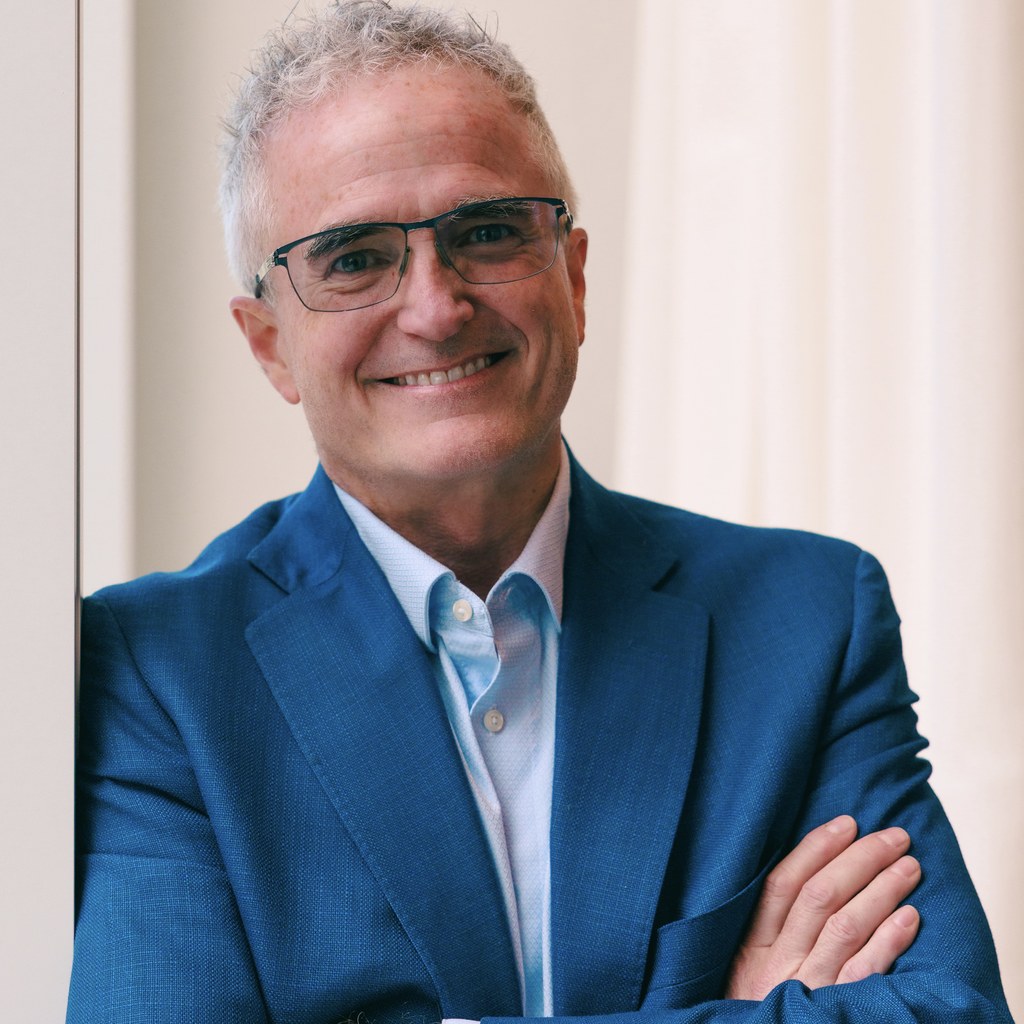
Dentistry’s business side has more moving parts than any one seat can see at once, and Dr. Anthony Stefanou has spent nearly four decades working in the space between them. His career across clinical practice, M&A, valuation, and sales education shows why understanding both sides of a relationship still beats having the biggest number.
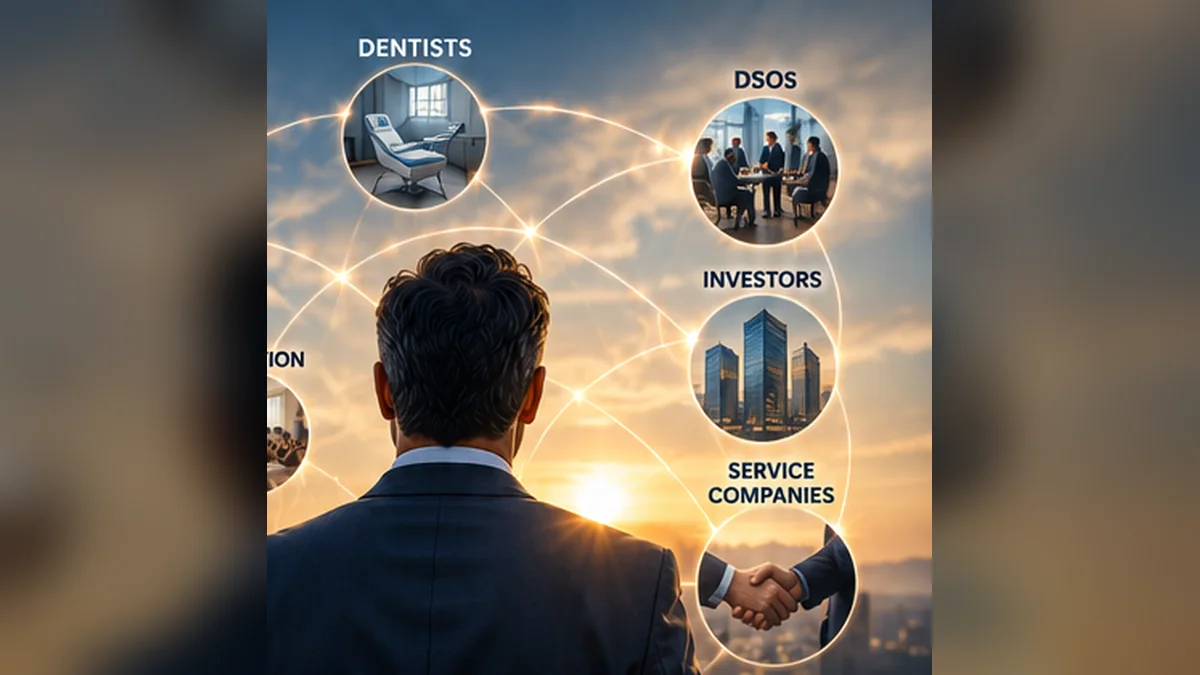
Dentistry has become a harder business to understand from any single seat. The practice owner sees staffing, patients, insurance pressure, overhead, and the responsibility of keeping the office moving. A DSO sees acquisition strategy, integration, capital, and organizational fit. A dental company sees distribution, adoption, sales, and market access. An investor sees risk and return. They can all be looking at the same industry and speaking almost entirely different languages.
Dr. Anthony “Tony” Stefanou has spent most of his career working in the gaps between those languages, translating what one side needs into terms the other side can actually use.
That creates opportunity for people who can move between those worlds without losing the perspective of any one of them, and it is the clearest way to understand why Tony’s career looks the way it does. He practiced dentistry for roughly two decades before moving into the business side of the profession full time. He later built Connect the Dents around dental mergers and acquisitions, practice valuation, business development, sales education, and the practical work of bringing the right people together. His career has taken him from the operatory to transactions, corporate strategy, industry education, and professional communities.
The word connector can sound informal for work involving practice value, DSOs, company sales, and business strategy. In Tony’s case, it is probably the most accurate description.
Why Does It Matter That Tony Understands the Dentist?
Tony graduated from Tufts University School of Dental Medicine in 1987 and spent roughly two decades in private practice before focusing exclusively on the business side of dentistry. He is a Certified Business Intermediary, and his current work centers on dental M&A, business development, valuations, and industry strategy.
That clinical background matters because a practice owner does not evaluate a transaction the way a financial buyer does.
The doctor may care about valuation, but also about what happens to the employees who helped build the practice. The owner may want liquidity without being ready to stop practicing. The highest offer may come with operating requirements that make the next five years far less attractive than the headline number suggests.
Those issues are easy to underestimate if you have only seen a dental practice from the spreadsheet side. Tony has seen both sides, and that gives him a useful position in an industry where more dentists are being asked to make decisions that carry clinical, financial, and personal consequences at the same time.
Why Is Connect the Dents Built Around Fit?
Tony founded Connect the Dents as a dental-specific M&A and business-development company. Its current work includes practice appraisals, dental company transactions, DSO matching, acquisition support, and strategic business development.
The word matching is important.
The normal instinct in a sale is to assume the highest number wins. Sometimes it should. But a dentist who plans to continue practicing after a transaction is not simply selling an asset and walking away. That doctor may be entering a relationship that lasts years.
Culture, clinical philosophy, management expectations, compensation structure, autonomy, and future obligations all matter alongside the economics. Connect the Dents describes its DSO Matching Program as a process that weighs financial terms together with clinical, cultural, philosophical, and organizational fit. The company also states that the seller pays no representation fee when a matched deal closes, because the acquiring organization pays the referral fee instead. That fee structure is the company’s own model, not independent proof that every owner will receive a better result. The more useful idea is the philosophy behind it: fit belongs in the valuation conversation.
Why Should Practice Value Be Understood Before Someone Wants to Sell?
Tony also developed the Objective Practice Appraisal, or OPA, system. Connect the Dents says he has performed hundreds of appraisals across general, specialty, group, and DSO settings. That is the firm’s own figure rather than an independently audited count, though it is consistent with how long he has been doing this work.
The practical lesson is bigger than the appraisal method itself.
Dentists often think about valuation when a transaction is getting close. That is late.
Practice value becomes far more useful when it is treated as a management tool years before a sale. An appraisal can reveal how an outside party is likely to view the economics, margins, owner dependence, growth, risk, and operating structure of the business.
A dentist may learn that collections are strong but profitability is weak. Another may discover that the business is too dependent on one producer. Someone else may find that the practice is more attractive than expected and that waiting introduces risks they had not considered. The point is not to turn every owner into a seller. It is to understand the asset before circumstances force the conversation.
Hypothetical Example: The Offer That Looks Better Than It Is
Imagine a practice owner receives two offers.
Buyer A offers the higher headline number. Buyer B offers less upfront, but the employment expectations, clinical autonomy, equity structure, and future obligations fit the owner far better.
If the dentist evaluates only purchase price, Buyer A looks obvious. Now add the rest of the deal.
The first buyer expects a longer employment commitment, carries performance conditions the doctor does not like, and plans operational changes that may affect the team. The second offer has a lower headline price but creates a future the owner can actually live with. There is no universal answer, because every owner values those tradeoffs differently.
The point is that transaction value is not the same thing as purchase price. That is one of the strongest ideas behind Tony’s approach. A dentist needs to understand the entire relationship being created, not simply the number printed at the top of the letter of intent.
Why Did Tony Also Learn to Translate Dentists for Industry?
The connector role is not limited to transactions.
Tony founded the Dental Sales Academy and created programs focused on selling and marketing to dental offices. His current materials say those programs have been taken by more than 30,000 people from more than 300 dental companies. Those are company-reported figures, but they appear consistently across his own materials.
The subject may sound far removed from practice transitions, but it is not. Both depend on understanding how dentists make decisions.
A sales representative may have an excellent product and still communicate poorly with the doctor. A broker may have a strong buyer and still misunderstand what the seller actually values. A founder may have an innovative idea and still fail to understand how practices evaluate risk. Tony’s career keeps returning to the same problem: two sides can want a relationship and still fail to understand one another. The connector reduces that distance.
Why Is Selling to Dentists Different From Selling at Dentists?
Tony has taught for years about how dentists respond to business conversations. His sales material emphasizes understanding the dentist before rushing into a presentation and identifying what matters to the doctor before trying to move the conversation forward. That sounds basic, but it is routinely ignored.
Dental companies sometimes train representatives on features, objections, competitive positioning, and close techniques without giving them enough understanding of how a dentist experiences the interaction. Dentists are clinicians first. They are trained to question evidence, understand risk, and avoid making decisions casually. They are also business owners with limited time and no shortage of companies asking for their attention. The representative who understands that is already communicating differently.
Tony’s work in sales education is another version of the same bridge he builds in M&A: understand the person on the other side before trying to advance the transaction.
How Did Connection Become Its Own Operating Model?
Tony’s other projects make more sense when viewed through that lens.
TriviaDent is a dental trivia and education concept he founded. DentWorkers is his name for the nonclinical people who work throughout the dental industry, including sales professionals, marketers, consultants, company leaders, educators, and others whose work affects dentistry without happening chairside.
More recently, Connect the Dents developed the DentWorkers Circle, a small professional community focused on relationships, collaboration, and business development. Tony’s own materials describe the group as intentionally limited in size.
Those projects look different on the surface, but the operating idea is consistent. Tony keeps identifying groups of people who should know one another better and then building a structure that helps that connection happen.
The Objection: Does Networking Really Create Value?
Networking can become an empty word.
Every conference promises connection. Social platforms make it possible to know thousands of people without knowing many of them well. A large contact list, by itself, is not especially valuable.
The value appears when the connector understands both sides well enough to make the introduction intelligently. That requires judgment.
A seller does not need twenty random DSO introductions. A founder does not need every investor. A company does not need every dentist. The practice owner does not need the person with the biggest title. They need the right relationship for the decision in front of them. That is a different skill from networking. A strategic connector filters before connecting.
Why Does Tony Matter More as Dentistry Becomes More Complicated?
Dentistry now has more ownership structures, investor involvement, technology companies, advisory firms, DSOs, nonclinical career paths, and capital moving through the profession than the owner of a generation ago had to understand.
That creates opportunity, but it also creates noise.
Dentists need people who can explain the business side without forgetting what it feels like to own the practice. Companies need people who understand why dentists may hesitate even when the economics look attractive. Buyers need insight into what sellers are trying to protect. Sellers need help distinguishing a good offer from a good long-term relationship.
The value of a connector rises as the number of possible connections rises. Tony has spent nearly four decades in dentistry and roughly two decades focused primarily on the business side. His current work spans practice valuation, dental M&A, business development, sales education, and professional relationships. That combination is unusual enough to matter.
Why Tony Matters to Me
My perspective here is not detached.
I met Tony at a tradeshow in 2001, and he has been one of my closest friends ever since. Over the years, we have traveled together, worked together, shared conversations at conferences and dinners, and co-hosted Connect the Dents events. Today, Tony serves on the Foundation Dental Alliance Advisory Board, where he is listed as CEO and Founder of Connect the Dents.
That history gives me a view of Tony that has little to do with his résumé.
I have watched how he treats people. He makes introductions. He shares relationships that took years to build. He notices when two people should know each other and helps make the connection. Those moments matter more than they appear to.
Careers change because of introductions. Companies grow because the right people end up in the same room. Dentists find better opportunities because someone understands both what they need and whom they need to meet. Tony has spent a career doing that.
The Strategic Connector
Dentistry does not lack expertise. It has outstanding clinicians, operators, founders, advisors, investors, educators, sales professionals, and companies.
The harder problem is getting the right expertise to the right person at the right time.
That is where Tony’s different ventures begin to look like one body of work. Connect the Dents, OPA, the Dental Sales Academy, TriviaDent, DentWorkers, M&A advisory, and DSO matching all address different parts of the profession, but the logic underneath them is remarkably consistent. Understand both sides. Find the real point of alignment. Make the connection useful.
That is why I think of Tony Stefanou as a strategic connector. He has spent decades helping different parts of dentistry understand one another, find one another, and work together more effectively. The value is not simply who he knows. It is knowing which connection matters.
Frequently Asked Questions
Who is Dr. Anthony Stefanou?
Dr. Anthony “Tony” Stefanou is a dentist, a Certified Business Intermediary, and the founder and CEO of Connect the Dents. He graduated from Tufts University School of Dental Medicine in 1987, spent roughly twenty years in clinical practice, and now works primarily in dental M&A, valuation, business development, and sales education.
What does Connect the Dents do?
Connect the Dents is a dental-specific M&A and business-development company. Its work includes practice appraisals, dental company transactions, DSO matching, acquisition support, and strategic business development.
What is the Objective Practice Appraisal?
The Objective Practice Appraisal, or OPA, is Tony Stefanou’s dental practice valuation system. Connect the Dents says he has performed hundreds of appraisals across general, specialty, group, and DSO settings, though that figure is the firm’s own and not independently audited.
How is the DSO Matching Program different from a conventional sale process?
Connect the Dents says the program focuses on matching a practice with a DSO based on financial, cultural, clinical, and organizational fit rather than simply sending the practice to as many buyers as possible. The company states that the seller pays no representation fee if a matched transaction closes.
What is the Dental Sales Academy?
It is Tony’s training program for dental industry sales and marketing professionals, built around how dentists actually think and make decisions rather than standard sales technique. His own materials report that more than 30,000 professionals from more than 300 dental companies have gone through it.
Why does a connector matter in dentistry?
Dentistry increasingly requires owners, buyers, investors, founders, clinicians, and industry companies to understand one another. A strong connector helps the right people reach each other with more context, which can improve the quality of a decision without replacing the owner’s own judgment.
About the Author
Dr. Jim Arnold, DDS is the Founder and CEO of Foundation Dental Alliance, a leadership and practice development organization serving dentists from graduation through retirement. He has 30 years of experience as a multi-practice owner and has been involved in more than 60 dental practice transitions. He leads the Foundation Dental Mastermind, Luxury Dental Retreats, co-founded Foundation Dental Transitions, and hosts the Foundation Dental Podcast. He also publishes the Foundation Dental Newsletter and Blog weekly, focused on leadership, practice design, and long-term sustainability in dentistry.
Stay Connected
Websites
FoundationDentalAlliance.com
FoundationDentalMastermind.com
FoundationDentalTransitions.com
FoundationDentalNetwork.com
LuxuryDentalRetreats.com/dubai
Social Media
LinkedIn: linkedin.com/in/arnoldjim
Instagram: instagram.com/smilesbyarnold
YouTube: youtube.com/@DrJimArnold
Facebook: facebook.com/smilesbyarnold
Twitter/X: twitter.com/smilesbyarnold
Publications
Foundation Dental Newsletter: linkedin.com/newsletters/foundation-dental-newsletter
Contact
Professional Email: drarnold@foundationdentalalliance.com