Foundation Dental Intelligence
Blog No. 54
The Identity Failure of Modern Dentistry.
Why High-Performing Dentists Feel Trapped by the Success They Built
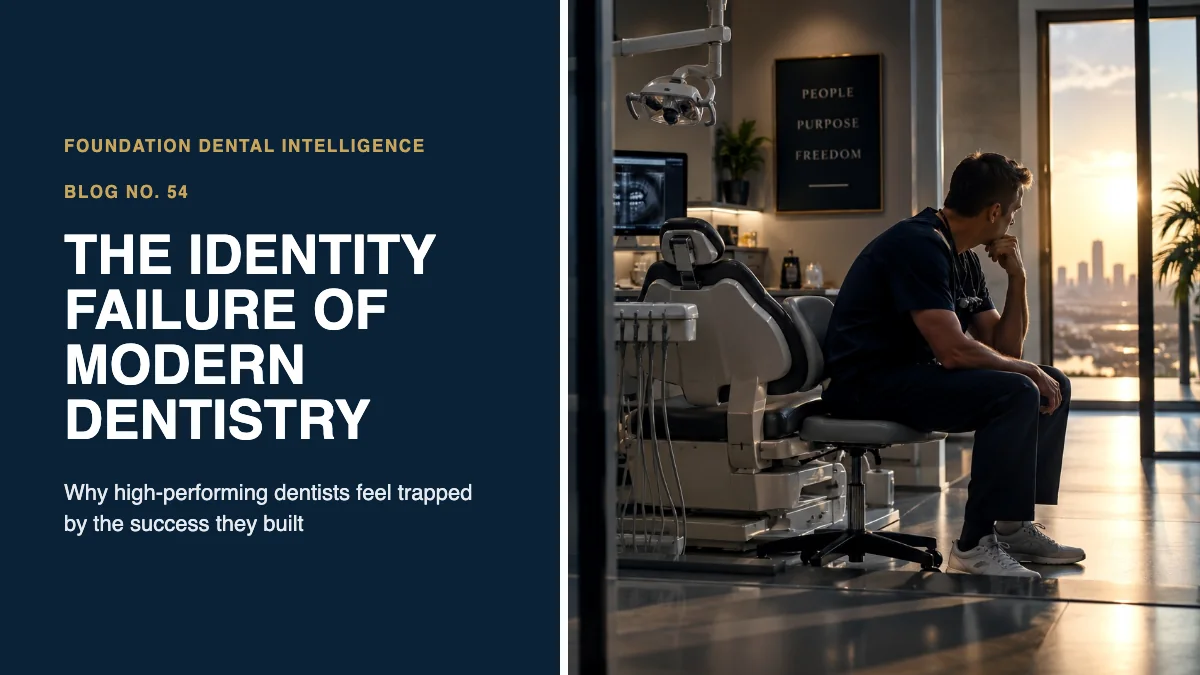
Dentistry has an identity problem
Dentistry has spent decades teaching clinicians how to become better at the work. Better diagnosis. Better clinical execution. Better technology. Better systems. Better business skills. All of that matters. But it doesn’t explain why a dentist can become more productive, more profitable, and more respected while feeling less free inside the career that produced those results.
That is the problem this piece is about. The issue isn’t a lack of intelligence or discipline. It is what happens when a professional identity becomes organized around endurance, production, and personal responsibility for nearly everything that matters. The practice can look successful while the owner becomes more essential to it every year.
When that happens, the usual response is to optimize the visible business. Add a system. Delegate more. Improve the schedule. Hire another person. Install another piece of software. Those may be good decisions, but they don’t answer the deeper question: What kind of role has the owner built for himself inside the business?
Why can success start to feel like a trap?
Dentistry rewards endurance early. Long hours can produce more dentistry. Personal availability can solve problems quickly. The doctor who knows every patient, answers every question, and carries every difficult decision can look like an exceptional owner because, for a while, that approach works.
The trouble is that the same habits that help a young practice survive can become liabilities as the practice grows. The owner remains the final answer. The team learns where decisions go when uncertainty appears. More production creates more responsibility, and higher income can hide the fact that autonomy is moving in the opposite direction.
That is why some high-performing dentists don’t experience success as freedom. They experience it as dependency with better numbers. The practice has become valuable, but the owner’s role inside it has become harder to leave.
Why systems don’t solve an identity problem by themselves
Systems matter. Foundation Dental Intelligence talks about them constantly because a practice that relies on memory and heroics is difficult to lead and difficult to scale. But a system can only organize the way a practice already thinks about responsibility. If the owner still believes every important outcome ultimately belongs to the doctor, the system often becomes another mechanism that routes exceptions back to the same person.
The better question is whether the system creates capacity around the owner or simply makes the owner’s involvement more efficient. Those are not the same thing. A well-designed practice develops people who can use judgment, gives decisions a clear home, and protects standards without requiring the dentist to personally supervise every variation.
Systems should reduce owner dependency. If they make the owner faster at carrying the same dependency, the architecture changed less than it appears.
Clinical authority was the entry point, not the destination
Clinical mastery creates authority. It earns trust from patients, gives the team confidence, and creates the economic engine of the practice. But the skills required to become an excellent dentist are not identical to the skills required to build a business that can perform without constant access to that dentist.
That distinction matters because many owners continue solving business problems with the identity that made them clinically successful. They study harder, work longer, stay closer to the details, and assume responsibility when something becomes uncertain. Those instincts are useful in a procedure. They can become expensive when they define the operating model of the entire practice.
The next stage of ownership asks for something different: judgment about what only the owner should do, trust in capable people, clarity about decision rights, and enough distance to see whether the practice is creating freedom or simply consuming a more successful version of its owner.
What reconstruction looks like
The source conversation behind this article points to Dr. Jeff Buske and his work through the Limitless Dentist Academy as an example of identity-first reconstruction. The emphasis is not on squeezing more output from an already successful dentist. It is on examining the person, relationships, capacity, and business structure underneath that output.
The original framework describes four areas - Body, Being, Balance, and Business. The labels are less important than the diagnostic question behind them. Is the way you are living and leading capable of supporting what you are asking the practice to become?
Energy matters because leadership requires attention and judgment. Identity matters because inherited assumptions about responsibility can follow an owner into every system he builds. Relationships matter because a successful practice that consistently damages the rest of a person’s life is a poor definition of success. Business structure matters because systems should create leverage and optionality, not a more organized form of dependence.
This is also why the work has informed conversations inside the Foundation Dental Mastermind and the Dubai Luxury Dental Retreat. The value of getting away from the normal environment is not the destination itself. Distance can expose decisions that routine keeps hidden.
From prisoner to producer to free
The original piece described the progression as Prisoner, Producer, and Free. It is a useful distinction when it is treated as a diagnostic rather than a slogan.
A prisoner can produce at a high level and still have very little autonomy. A producer improves the economics, but the practice may remain dependent on the owner’s presence and judgment. Freedom begins when the owner has genuine options - the ability to step away, change pace, make a transition, invest elsewhere, or remain in dentistry because he chooses to, not because the entire structure requires him to.
Income is part of that equation, but income alone is not optionality. A practice can pay extremely well and still own the calendar, attention, and identity of the person who built it.
Freedom begins when the owner has genuine options. Income matters, but income alone is not optionality.
What should a practice owner examine first?
Start with dependence. Look at the decisions, relationships, production, and operational knowledge that still stop when you stop. That inventory is more revealing than another productivity metric because it shows where the business is strong and where it is still borrowing capacity from the owner.
Then look at the role itself. Which responsibilities genuinely require the owner’s clinical judgment, authority, or strategic perspective? Which ones remain with the owner because they always have? A practice becomes more durable when those two categories stop being treated as the same thing.
Finally, look outside the business. If better numbers consistently require less energy for family, health, relationships, or the parts of life that make ownership worth having, the scoreboard is incomplete. The objective is not to make the dentist irrelevant. It is to make personal sacrifice a choice rather than the operating system.
Why interruption can create clarity
Most owners try to answer these questions while standing inside the same schedule, same team dynamics, same patient demands, and same stream of decisions that created the problem. That makes perspective difficult.
An interruption can help because it changes the conditions around the decision. That is the role of an environment like the Dubai Luxury Dental Retreat. The point is not escape. It is enough distance from normal operating pressure to see what has become normal simply because it has been repeated for years.
Clarity matters only if it changes a decision. The useful outcome is not inspiration. It is returning with a more accurate definition of what the practice is supposed to provide and what the owner is no longer willing to trade for it.
Stewardship is the next standard
One generation of dentists became exceptionally good at production. The next challenge is to build practices that can sustain performance without requiring the owner to absorb every cost personally.
That changes the definition of leadership. The question is no longer how much pressure the owner can tolerate. It is whether the practice develops capable people, protects relationships, creates durable systems, and gives the owner more choices as the business becomes more successful.
The identity failure of modern dentistry is not that dentists care too much about their work. It is that the profession has too often treated personal indispensability as evidence of professional success. Those are different things.
A practice should become more capable as it grows. So should the life of the person who built it.
Frequently Asked Questions
Why do successful dentists still feel trapped?
Because financial performance and personal autonomy can move in different directions. If production, decisions, and team confidence still depend heavily on the owner, a successful practice can create more responsibility without creating more freedom.
Can better systems fix owner dependency?
They can help, but only when they move responsibility and judgment to the right level. A system that simply makes the owner faster at approving everything preserves the dependency.
What does identity have to do with practice leadership?
Identity shapes what an owner believes he must personally control, carry, or prove. Those assumptions influence delegation, decision rights, relationships, and the way systems are designed.
What does optionality mean for a dentist?
Optionality means having real choices about time, pace, ownership, transition, and continued clinical work. It is broader than income because it depends on how well the practice performs without constant owner involvement.
Where should an owner begin?
Begin by identifying what still stops when you stop. Repeated decisions, relationships, knowledge, and production that cannot move without the owner reveal the most important dependencies to address.
About the Author
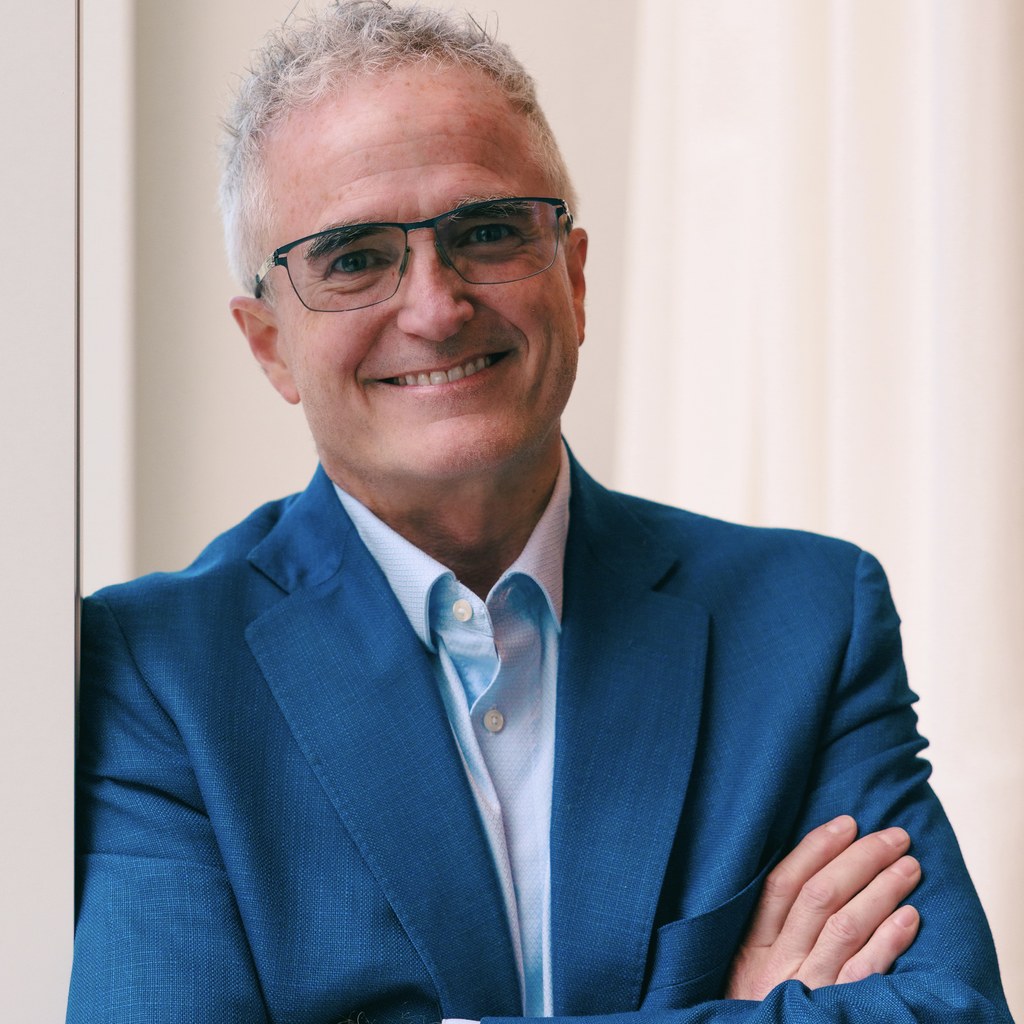
Dr. Jim Arnold, DDS is the Founder and CEO of Foundation Dental Alliance. He has 25+ years in dentistry, has been involved in 60+ practice transitions, and has built multiple top-tier dental teams. His work focuses on leadership, practice value, ownership, transitions, and creating practices that give dentists more freedom.