Foundation Dental Intelligence
Blog No. 75
Dr. Lincoln Harris and RipeGlobal.
Get the next article.
One signup. Everything we publish.
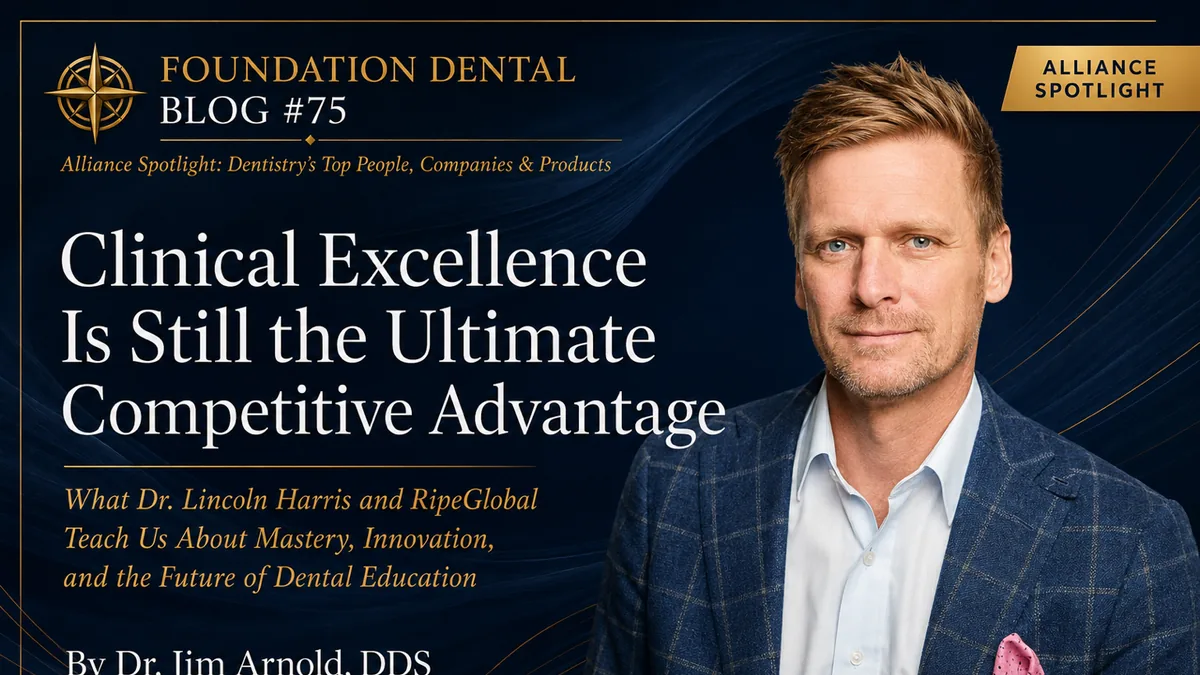
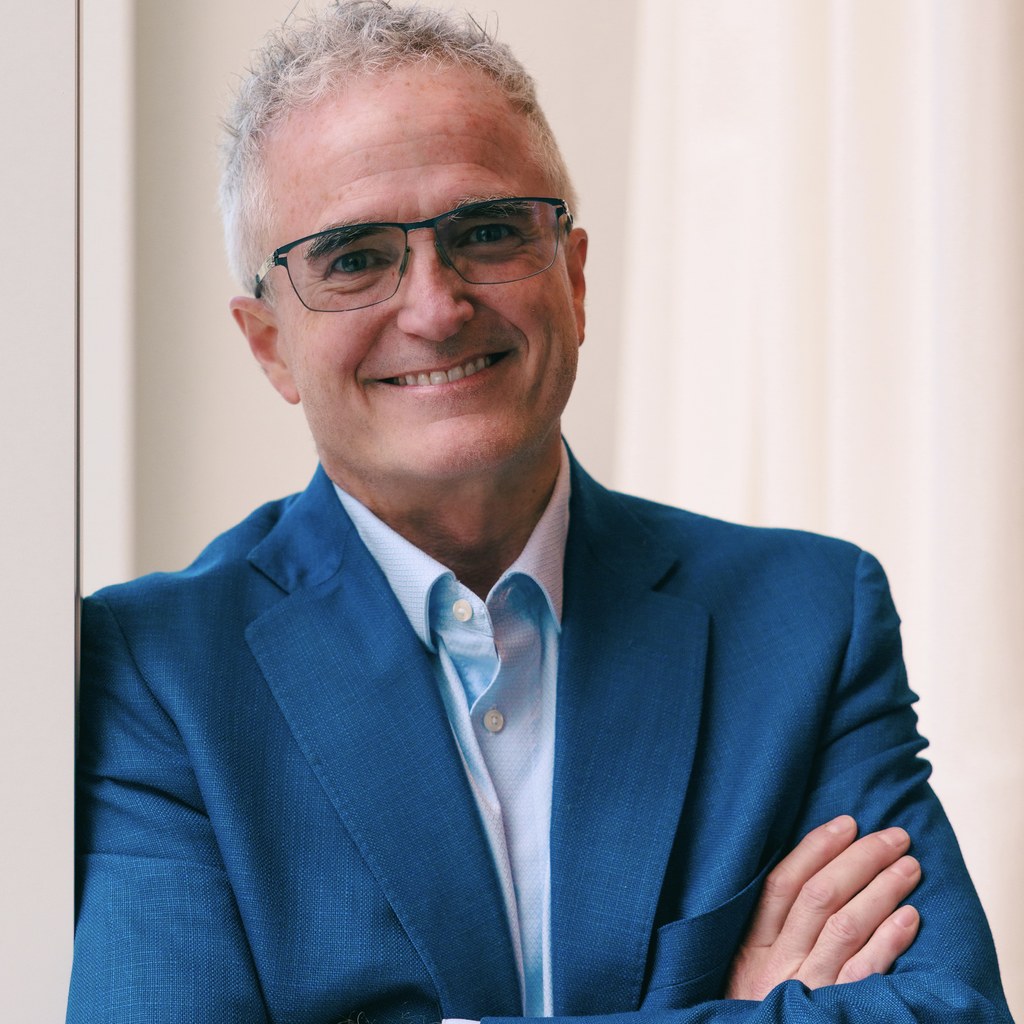
Founder & CEO, RipeGlobal | Clinician, Educator, and Global Voice on Competency-Based Dental Training
I've had a lot of guests on the podcast who identified a real problem in dentistry. Lincoln Harris is one of the few who built the fix in five days flat, then spent five years proving it wasn't a fluke.
We recorded this conversation while he was in London for a DSO meeting, a few days after Chicago, a few weeks before wherever he lands next. That's not an exaggeration for effect. He works across 35 countries and he means it when he says he's lost track of time zones. But the part of the conversation that stuck with me wasn't the travel. It was what he said about how dentists learn, and why almost none of us were ever taught the way we should have been.
Most continuing education in dentistry is built to be watched, not practiced. RipeGlobal was built on the opposite premise: competence comes from repetition, under real conditions, in your own hands, not from a lecture hall. That's the whole argument. Everything else is detail.
Why did a dentist from a small town in Queensland end up rebuilding how thousands of clinicians learn?
Lincoln Harris graduated from the University of Queensland in 1998 with First Class Honours and went back to Bargara, Queensland, to build a practice. Harris Dental Boutique is still there. It's fee-for-service, built around what he calls Blame-Free Dentistry, and it carries more than 400 patient reviews. He wasn't trying to build a global education company. He was trying to get better at his own work.
What actually drives him?
Ambition doesn't usually come from nowhere, and Harris doesn't pretend otherwise. He grew up in a farming area outside Bundaberg. His parents went bankrupt when he was about ten. He still shows a photo in his talks of a truck taking away everything the family owned. No paint on the house. An outside toilet. No shoes or vacations like other kids had.
He told me one of his early investors pushed him hard on why he was building any of this, past the polished answer, until Harris finally admitted his father had never once told him he was proud of him or that he loved him. The investor's response: that's perfect, and he wired the money that day. He told Harris he needed to know he was, in Harris's own words, a bit messed up, because that's the kind of drive that doesn't quit.
That's not a branding story. It's the actual reason a small-town dentist ended up rebuilding continuing education for a global profession.
In 2006 he started teaching other dentists, informally at first, then through international conferences in the US, Canada, and Italy. By 2013 that had become a real business, Restoring Excellence, running in-person courses across Australia, New Zealand, Singapore, Canada, the UK, Croatia, Portugal, India, Germany, and Poland. Alongside the courses he built an online community that grew past 85,000 dentists, a place where people posted actual clinical protocols instead of before-and-after glamour shots.
Somewhere around 2015, he started making a comparison that would end up defining his career. Pilots train in simulators, under real pressure, with massive repetition, long before anyone lets them near a real aircraft. Dentists get a lecture, maybe a model, and then a real patient. He couldn't stop asking why that gap existed for a profession where the stakes are also somebody's health.
“There is no way to develop a hand skill without repetitions. And you don't need to understand the repetitions to build the skill.”
- DR. LINCOLN HARRIS
That line is worth sitting with. It's not an argument against theory. It's an argument that theory alone never built a steady hand.
What actually happened in March 2020, and why does it matter?
Here's the real-world anchor, and it's not a marketing story, it's just what happened. In March 2020, COVID shut down Harris Dental Boutique and Restoring Excellence in the same week. Two decades of clinical and educational work, stopped cold, no notice.
“We can either sit and cry, or we can go big. For years I'd complained about not having enough time. Now I had enough.”
- DR. LINCOLN HARRIS
Five days after the first lockdown, he and his brother, Cam Harris, founded RipeGlobal from Bargara, Queensland. The goal was specific: deliver real, hands-on clinical training to any dentist, anywhere, without a flight, a hotel room, or a week away from practice. He recorded a short video explaining the idea and posted it to Facebook, asking whether anyone might want to invest. Within months, RipeGlobal had sold a million dollars of education, launched entirely during a global shutdown, with no physical office and no in-person events. Since then, the company has put roughly five million dollars into research and development building the infrastructure, curriculum, and technology behind it.
That's not a pivot story. That's a company built in the exact week most businesses were deciding what to cut.
What almost broke the company after it started working?
Selling a million dollars of education during a shutdown is one thing. Building the software to actually deliver it is another, and Harris was candid about how messy that got.
“We had a Frankenstein platform. We had Zoom attached to HubSpot CRM attached to Loom.”
- DR. LINCOLN HARRIS
It worked well enough to sell courses. It was never going to become real software, because they didn't own any of it and couldn't control the cost. Every piece ran on someone else's API, someone else's pricing, someone else's roadmap.
By 2024, two things had become obvious. RipeGlobal needed its own purpose-built platform, and Harris needed to stop splitting time between the CEO chair and the operatory. He quit clinical dentistry that year to become a full-time CEO. That's more than two decades of clinical identity, set down in one decision, not because the practice had failed, but because the bigger problem needed all of him.
Building the real platform meant confronting something Harris has clearly thought about since.
“When people don't want to do something because it's scary, they very rarely say, I don't want to do this because it's scary. They'll use words like, we've got to follow the correct procedure, we need to do a strategic plan.”
- DR. LINCOLN HARRIS
He told his team he wanted the rebuild turned around in three months. It took longer than that. It always does. But it's theirs now, not five vendors stitched together with an API bill nobody controls.
What does RipeGlobal actually do differently?
A few things, and they're specific:
It ships a fully integrated simulation kit directly to a dentist's own chair, so training happens in the exact ergonomic environment where they treat patients every day, not in a rented conference room.
Work gets reviewed under high magnification by RipeGlobal's global faculty, more than 80 educators, with feedback delivered through the cloud instead of a critique three weeks later at a follow-up course.
The Learning Membership gives access to more than 450 hours of CPD and CE content, with career tracking built in rather than a certificate that sits in a drawer.
The Fellowship programs in Restorative Dentistry, Modern Implantology, and Modern Aligners run one to two years and lead to an EduQual Level 7 Diploma, structured enough to actually change how someone practices, not just what they know.
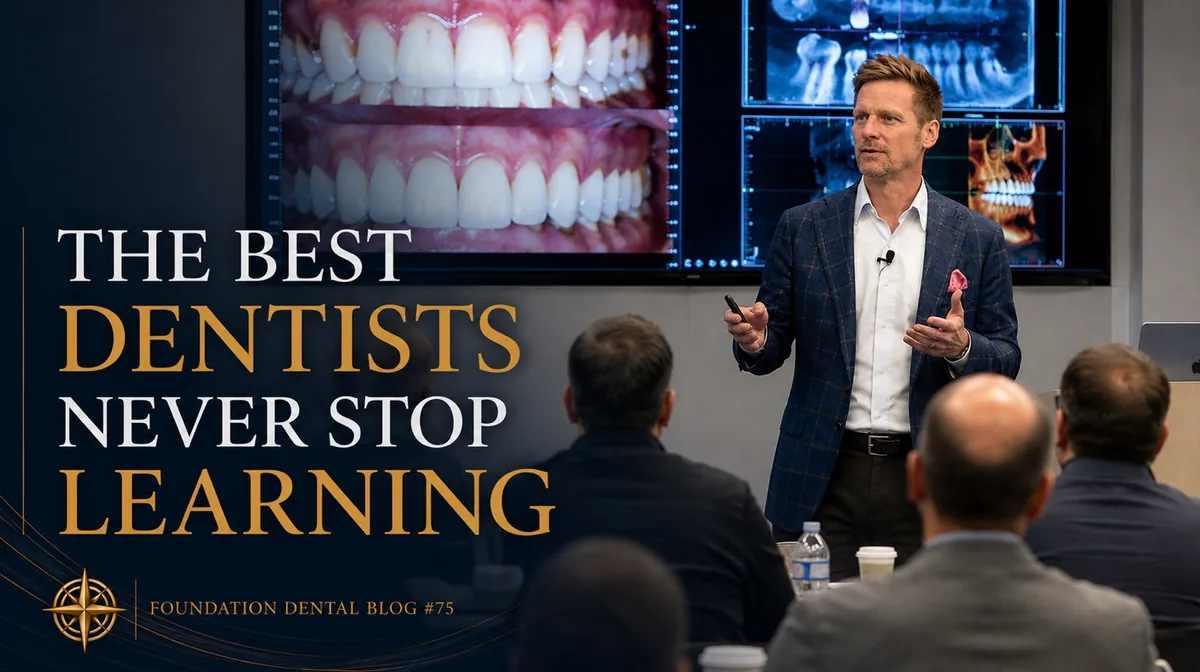
The curriculum runs on scans and repetitions, not slides.
The company reports that learners progress through material roughly 50 percent faster than traditional in-person courses. I'll frame that the way I'd want anyone framing a number about my own practice: that's the company's own reported figure, not an independent audit, and it's still a serious claim from a platform now operating across 35 countries with more than 10,000 active learners and an 85,000-member community.
What's the part most people miss?
Everyone focuses on the pandemic pivot because it's the dramatic part. The part that actually explains why RipeGlobal works is quieter. It's the human factors research Harris pulled from aviation, work that dates back to World War One, when the military first started studying why trained, capable pilots still made preventable errors under pressure. Aviation didn't respond by adding more lectures. It responded by building simulators, running massive repetition, and treating psychology and ergonomics as part of the curriculum, not an afterthought. Every basic pilot's license requires it.
Every course he’s ever built rests on this one distinction.
Dentistry never built that infrastructure. We built continuing education around hours logged, not competence proven. Harris noticed the gap in 2015 and spent the better part of a decade building the thing dentistry was missing instead of writing about it.
“I can train a clean-skinned civilian to cut crowns faster than I can train a dentist. It's not because dentists are unskilled. It's because dentists have so much knowledge that the knowledge interferes with the technical training.”
- DR. LINCOLN HARRIS
That's a strange thing to hear from someone who built his career on clinical education. It's also the whole case for training skill and knowledge on separate tracks instead of dumping both on a student at once.
Where does this connect to a conversation I have with owners every week?
Partway through the interview, we ended up talking about fee schedules, and Harris made a point about scale that I haven't stopped thinking about. He was fee-for-service himself, same as I was for my entire career, and he pointed out something specific about what happens as a group practice gets bigger.
“The bigger you get, the closer you must become to average.”
- DR. LINCOLN HARRIS
A single office can sit two standard deviations above the market on cost and get away with it. A thousand offices can't. At enough scale, you become the average, and the moment you're the average, dropping price becomes the fastest way to grab share. That's not a knock on DSOs. It's just math. It's the same reason I used to tell people I'd rather sell used cars than hand forty percent of every dollar to an insurance company.
Fee-for-service isn't a personality type. It's what lets a practice stay a deliberate outlier instead of drifting toward the middle of a bell curve somebody else controls.
That's the part of this conversation that belongs squarely inside Foundation's own thinking on financial architecture and EBITDA. Harris arrived at it from training economics. I arrived at it from transitions and practice ownership. Different roads, same conclusion.
Why do DSOs care about a training company at all?
Harris breaks a group practice's revenue into three stages. New patients coming in the front. Collections and recall on the back end. In the middle, the actual clinical delivery, which he calls the choke point, because no revenue exists until a dentist or hygienist actually delivers care.
“The clinical delivery is the choke point, because no revenue is generated unless clinical services are delivered.”
- DR. LINCOLN HARRIS
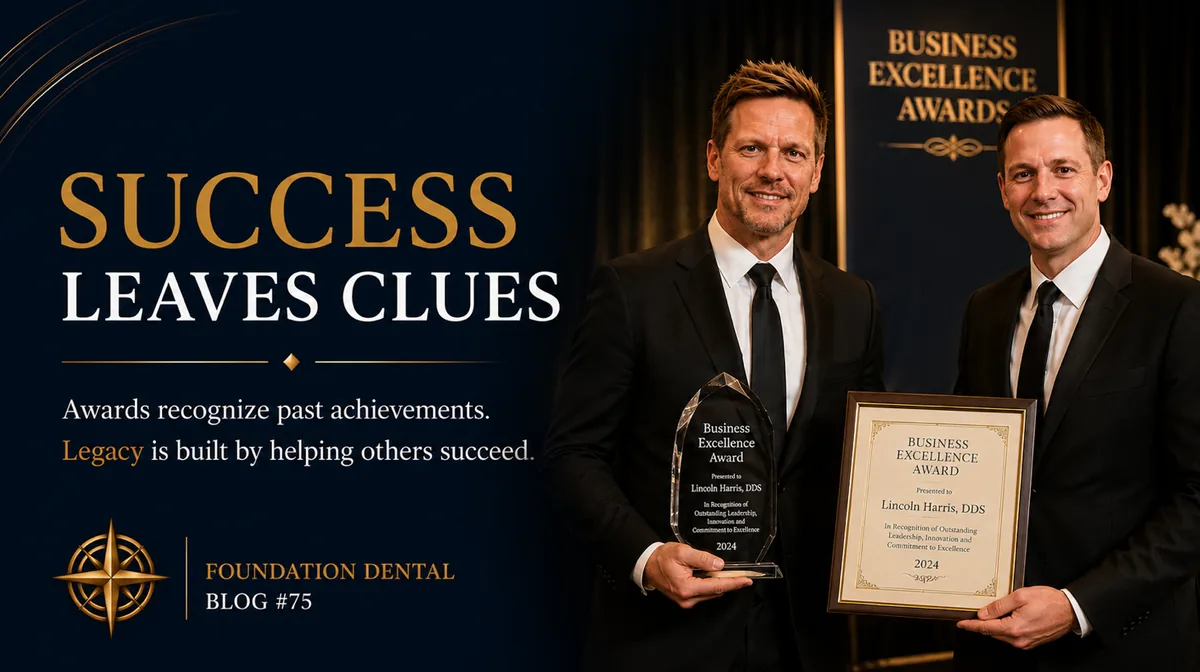
Scale changes the economics. It never changes what actually works.
Most groups pour money into the front end, more marketing, more leads, more new-patient funnels, while the choke point stays untouched. Harris's math on why that's backwards is blunt: losing a single associate costs a DSO somewhere between $150,000 and $400,000 in EBITDA that year. Training the dentists already on the payroll is cheaper than replacing them, and it moves faster.
He backs that with two specific results from his own courses, not projections. One UK dentist went through Rapid Efficient Treatment Planning and moved from roughly 1,200 pounds an hour to around 3,500 pounds an hour. And in one country where dentists had never sat through anything but a clinical lecture, one dentist told him she'd completed three ceramic restorations in the entire previous year. The week after his course, she diagnosed and got case acceptance on twenty.
That's not a marketing claim. That's the same patient base, the same chair, the same insurance mix, with a different level of clinical confidence sitting in the chair.
What did the numbers actually look like in 2025?
RipeGlobal shared its 2025 figures with real specificity, and specificity is worth more than adjectives here. In one year: 59,500 hands-on training reps completed, 11,000 CE and CPD certificates issued, an estimated $10.1 million in travel costs saved for learners, and $54.6 million in dentist productivity preserved by keeping clinicians in their own chairs instead of on a plane. Enterprise revenue grew 1,000 percent year over year. Whatever you think about a claim that big, the underlying mechanism is simple to verify: fewer flights, fewer canceled clinic days, more reps completed where the dentist already works.
The team behind the platform reads like a deliberate answer to “who's actually qualified to teach this.” Dr. Alice Whang, a University of Melbourne graduate with an Australian Dental Association prize, now leads two RipeGlobal Fellowships as an educator. Dr. Olivia Henzell trained at Otago. Dr. Jun, also a Queensland graduate, is a Fellow. Katelyn, an Oral Health Therapist who's worked alongside Harris since 2011, now teaches for RipeGlobal too, a nice thread connecting the original Bargara clinic to the global platform it helped inspire.
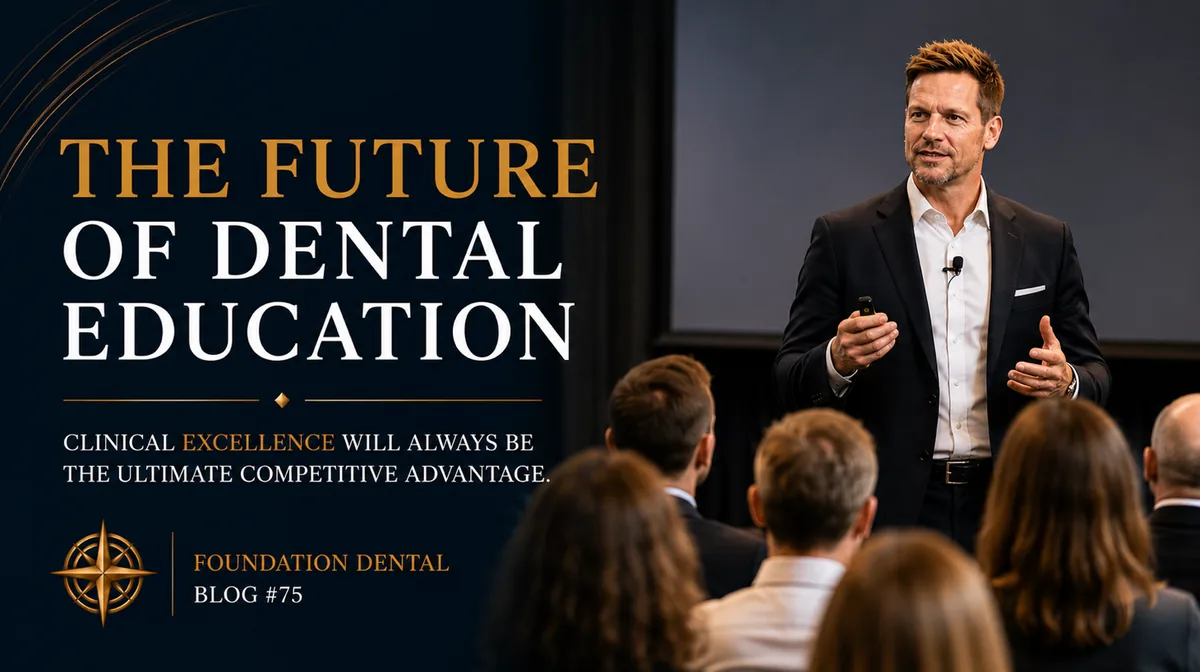
Alice Whang, Olivia Henzell, Dr. Jun, and Katelyn all teach for RipeGlobal now. Same team that started in one Bargara chair.
Why does this matter if you're not shopping for a CE platform?
You don't have to be in the market for continuing education to take something from this.
Competence gets built through structured repetition under real conditions, not through hours logged in a seat.
That principle applies to more than clinical skill. It applies to how you train associates, how you develop a hygiene team, how you build anyone in your practice into someone who doesn't need you standing over their shoulder. Harris built a company around that idea because he lived the gap firsthand, in his own operatory, long before he had any interest in building software.
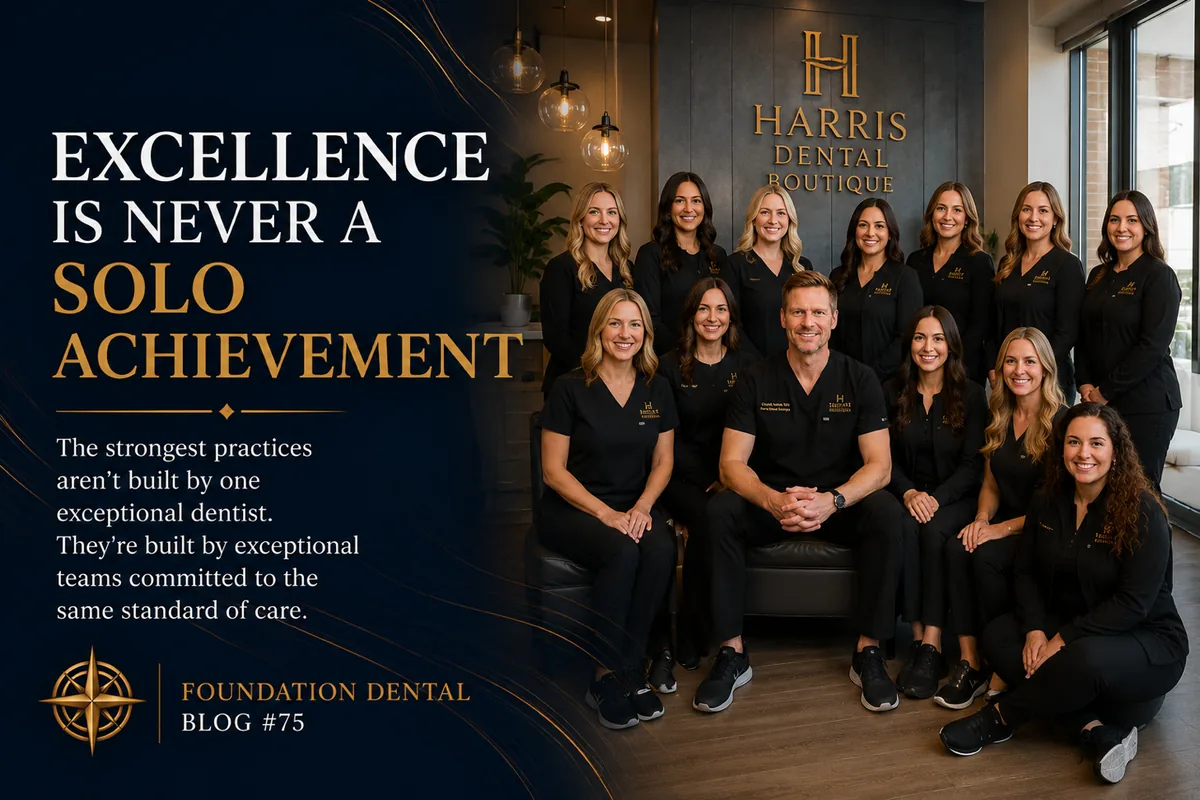
Every course he’s ever built rests on this one distinction.
FAQ
Is RipeGlobal an in-person course provider or a fully remote platform?
It's remote by design. The simulation kits ship to the dentist's own chair, and review happens through RipeGlobal's global faculty over the cloud, though Harris still teaches select in-person intensives himself, including a two-day Rapid Efficient Treatment Planning course.
What's the difference between the Learning Membership and the Fellowship programs?
The Learning Membership is an on-demand library, more than 450 hours of CE and CPD content with career tracking. The Fellowships in Restorative Dentistry, Modern Implantology, and Modern Aligners are structured one to two year programs that lead to an EduQual Level 7 Diploma.
How many countries does RipeGlobal actually operate in?
The company reports operations across 35 countries, with more than 10,000 active learners and an 85,000-member community built up over its earlier years as Restoring Excellence and RipeGlobal combined.
Why does Harris compare dental training to pilot training specifically?
Because aviation solved this problem a century ago. Pilots build competence through structured, high-repetition simulation under pressure before they're ever trusted with a real aircraft. Harris spent years asking why dentists, trusted with a patient's health from their first day in practice, were never trained the same way.
Does any of this apply if I already left the insurance model behind?
Yes, and maybe more than you'd think. The scale-economics point Harris raised about fee schedules, that growth without intention pulls any practice or group back toward the average, is exactly the conversation Foundation has been having about EBITDA and enterprise value all year.
ABOUT DR. LINCOLN HARRIS
Dr. Lincoln Harris is the Founder and Chief Executive Officer of RipeGlobal, a competency-based dental education platform operating across 35 countries. He built Harris Dental Boutique in Bargara, Queensland, and practiced there for two decades before stepping back from clinical dentistry in 2024 to lead RipeGlobal full time. He founded RipeGlobal with his brother, Cam Harris, in May 2020.
ABOUT THE AUTHOR
Dr. Jim Arnold, DDS is the Founder and CEO of Foundation Dental Alliance, a leadership and practice development organization serving independent dental practice owners. With more than 25 years in dentistry, multiple successful practices, 31% EBITDA achievement, and involvement in more than 60 dental practice transitions, Dr. Arnold writes and speaks on leadership architecture, practice systems, enterprise value, and the future of independent dentistry. He is the host of the Foundation Dental Podcast and the founder of the Foundation Dental Mastermind and Luxury Dental Retreats.
STAY CONNECTED
FoundationDentalAlliance.com · FoundationDentalMastermind.com · FoundationDentalTransitions.com
FoundationDentalNetwork.com · LuxuryDentalRetreats.com/dubai
LinkedIn: linkedin.com/in/arnoldjim · Instagram: instagram.com/smilesbyarnold · YouTube: youtube.com/@DrJimArnold
Facebook: facebook.com/smilesbyarnold · X: twitter.com/smilesbyarnold
Foundation Dental Newsletter: linkedin.com/newsletters/foundation-dental-newsletter-7289675134649450496
Alliance Spotlight: Dentistry’s Top People, Companies and Products
© 2026 Foundation Dental Alliance. All Rights Reserved.