Foundation Dental Intelligence
Blog No. 72
The Persistence Problem.
Get the next article.
One signup. Everything we publish.

Most dental practices don’t have a new patient problem nearly as often as they think they do. They have a follow-through problem, and because follow-through doesn’t show up as loudly as an empty schedule or a weak phone report, owners often spend years chasing new opportunities while diagnosed treatment quietly sits inside the practice management system.
That statement surprises people. Dentistry has spent two decades obsessing over patient acquisition - SEO, Google reviews, direct mail, referral programs, social media, every possible strategy for bringing more people through the front door. Meanwhile, a significant amount of diagnosed treatment quietly leaves through the back door every year without ever making it onto the schedule.
I’ve reviewed practice financials for more than 25 years. I’ve looked at production reports, collection percentages, overhead structures, treatment acceptance metrics, and practice valuations. One pattern shows up over and over regardless of practice size, geography, or specialty.
The patient says yes in the chair. Then nothing happens.
They want to talk to a spouse. They need to check their schedule. They have a question about insurance. They get busy with work. Life intervenes. The urgency fades. The office moves on to the next patient. The conversation ends.
The treatment wasn’t rejected. The conversation simply stopped.
That distinction matters because it changes how we think about growth. Most practices don’t need to diagnose more treatment. Most already have substantial diagnosed treatment sitting inside their systems right now. What they’re missing is a consistent way to help patients follow through after they leave the office.
The average dental practice has between $1 million and $1.5 million in diagnosed, unscheduled treatment sitting in its system right now. For many group practices and DSOs, it’s considerably higher. - Henry Schein One / Jarvis Analytics Benchmark Study
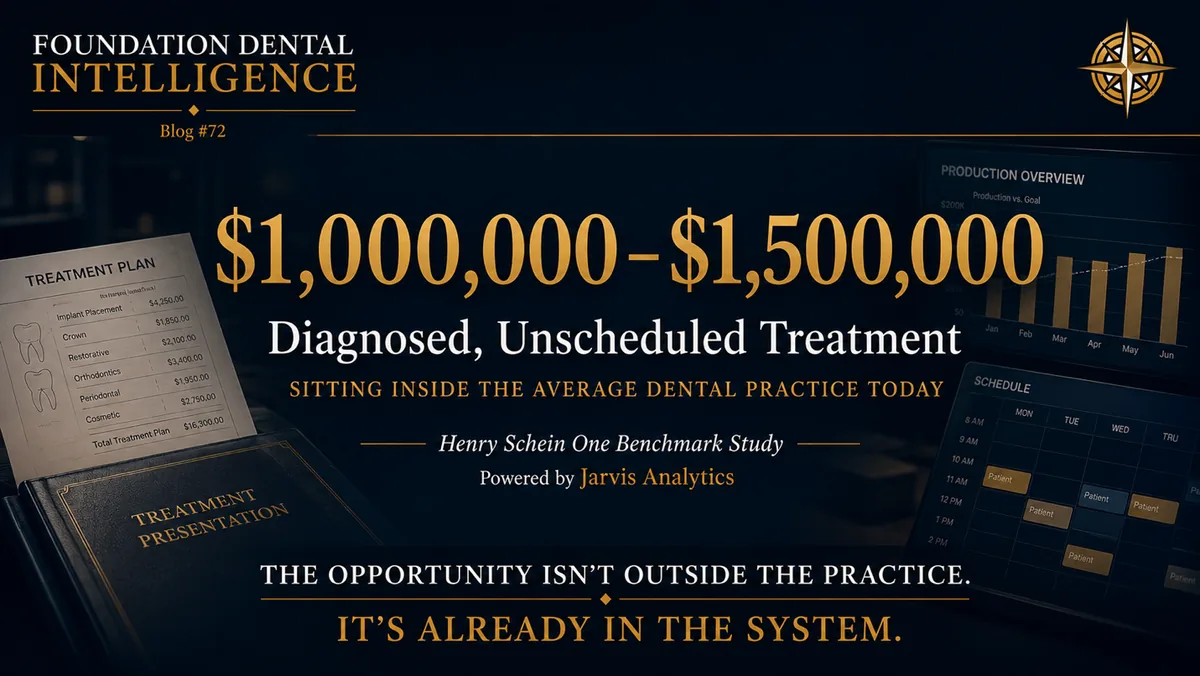
The opportunity isn’t outside the practice. It’s already in the system.
That’s the problem Codent AI was built to solve.
The Most Expensive Assumption in Dentistry
The most expensive assumption in dentistry is that patients who want treatment will call us back.
Most dentists believe some version of that statement. We diagnose the condition, explain the consequences, present the options, answer questions, discuss finances, and assume the patient will take the next logical step when they’re ready.
Sometimes they do. A lot of times, they don’t.
That doesn’t mean they disagreed with the diagnosis. It doesn’t mean they lost trust in the practice. It doesn’t mean they thought the treatment was unnecessary. It often means something far more ordinary happened. Human beings are busy. People intend to do things they never get around to doing. Dental treatment isn’t immune from that reality.
Jarvis Analytics measured this across thousands of practices. When you track what’s actually being presented against what’s actually being scheduled - dollar for dollar - the average closed treatment percentage sits around 34%. For every $100,000 presented, roughly $66,000 never makes it to the schedule. Levin Group puts average case acceptance for two-thirds of U.S. practices between 20% and 50%. The best-run practices hit 90%. Most aren’t close.
Most patients who don’t schedule within 48 hours of a treatment recommendation never come back for that treatment. The window is real. And most front desk teams don’t have the bandwidth to work it consistently - not because of negligence, but because nobody designed a system around it.
The assumption that patients will call back when they’re ready feels respectful. It feels patient-centered. It feels like the opposite of pressure. But it misunderstands what actually happens. The patient didn’t necessarily reject the diagnosis, dislike the fee, or lose trust. The patient got distracted - delayed a decision that required coordination, money, time, and emotional energy. The patient intended to take the next step but didn’t have a system around them that made the next step easy enough to complete.
The Persistence Problem
Most dentists think case acceptance happens in the operatory. At least not entirely.
Some patients absolutely make their decision while they’re sitting in the chair. They hear the diagnosis, understand the need, and schedule treatment before they leave. Those cases are straightforward.
For many patients, the real decision-making process begins after they leave the office. It happens during conversations at home. It happens while reviewing finances. It happens while comparing priorities. It happens when they’re trying to fit treatment into an already busy schedule.
The appointment may be over. The decision isn’t.
The mistake dentistry often makes is assuming those are the same thing. Patients are still processing information long after they leave the office. They’re still weighing options. They’re still deciding how and when treatment fits into their lives. The question is whether the practice remains part of that conversation.
Most don’t. Not because they don’t care. Because they don’t have the infrastructure.
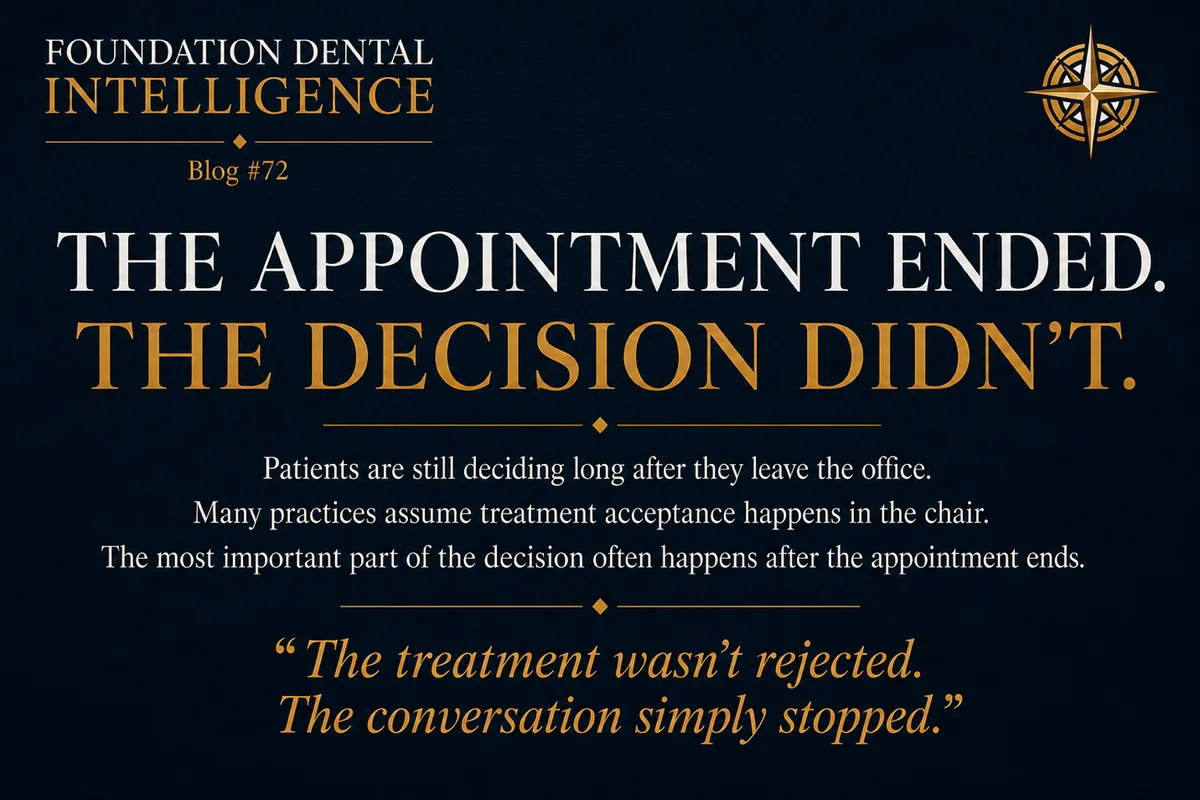
Case acceptance doesn’t end when the patient leaves the chair. For many patients, that's when the decision process actually begins.
What First Got My Attention About Codent AI
I first met Janet Chen, Codent AI’s CEO and Co-Founder at a Mastermind event in Branson, Missouri in October 2025. Within about fifteen minutes of that conversation, I realized the company wasn’t trying to invent a problem in order to sell a solution. It was addressing something that already exists in nearly every practice.
Front office teams are carrying more responsibility today than they ever have. They answer phones, manage schedules, verify insurance, handle collections, coordinate treatment, and keep the day moving. Even exceptional teams struggle to consistently follow up with every patient who leaves without scheduling. That’s not a people problem. It’s a systems problem.
I was skeptical at first. I wasn’t convinced patients would engage with AI-driven communication in a meaningful way. After seeing multiple demonstrations, reviewing the platform, and speaking with practice owners using the technology, my perspective changed.
The communication didn’t feel robotic or generic. It felt remarkably human - like the type of follow-up a great treatment coordinator would send if they had unlimited time, perfect memory, and the ability to stay connected with every patient simultaneously.
That’s when I realized Codent wasn’t really an AI story. It was a communication infrastructure story.
Technology doesn’t create trust. It extends trust that already exists.
Why Janet Chen and Brian Gorham Built Codent AI
Janet Chen brings a Harvard MBA, a Columbia undergraduate degree, and more than fourteen years inside health technology and growth-stage software, including experience at Insight Partners and Sprinklr. Brian Gorham, her Co-Founder and Chief Technology Officer, built a previous healthcare platform to more than 500 locations and $120 million in scale. He knows how difficult it is to create systems that feel personal while operating across hundreds of practices simultaneously.
They didn’t set out to build another reminder platform. They recognized a recurring problem throughout healthcare: patients were falling through the cracks after important clinical conversations. Not because providers didn’t care. Not because teams weren’t working hard. Because communication systems weren’t designed to sustain relationships after appointments ended.
That question became the foundation of Codent AI: what happens after diagnosis?
What Codent AI Actually Does
Codent AI functions as what the company calls an AI Treatment Coordinator. The platform integrates directly with your practice management system, identifies diagnosed but unscheduled treatment, and initiates personalized text-based conversations with patients. Rather than relying on generic reminders or mass communication campaigns, the system continues the conversation that began inside the office.
Patients can ask questions. They can work through insurance concerns. They can clarify timing. They can explore scheduling options. Most importantly, they can stay engaged with the practice during the window when decisions actually get made.
The platform connects natively with Dentrix, Open Dental, Eaglesoft, Curve Hero, and more than 50 other practice management systems. No manual input, no exports, no data re-entry. It reads the unscheduled treatment list directly.
The example message Codent uses isn’t hypothetical: “Hi Jason, this is Anna from Dr. Smith’s office. Remember that cracked tooth we saw? Let’s fix it before marathon training ramps up.” That’s not a blast. It names the patient, it names the treatment, and it uses context that only someone who knew that patient would have. The difference between that message and a generic reminder isn’t small - it’s the whole ballgame.
When a patient replies - and SMS gets opened around 98% of the time versus about 20% for email - the platform handles the conversation. Insurance questions get answered. Scheduling friction gets removed. The system runs 24/7, including the hours when patients are actually deciding things: not during office hours, but at nine o’clock at night when they’re looking at next week’s calendar.
Their model also includes remote virtual treatment coordinators - W-2 employees, not contractors - who are required to have a minimum of five years of in-office treatment coordination experience before they handle a single patient conversation. They work inside the platform to manage complex treatment questions, run insurance benefit verification, and guide patients through financial decisions. These aren’t bots reading scripts. They’re credentialed dental professionals who understand PPO and HMO fee structures, clinical terminology, and the specific kind of communication that moves a hesitant patient toward action.
Unscheduled treatment isn’t a patient problem - it’s a follow-up timing problem. The patient already said yes in the chair. The system has to meet them where they are before they forget.
A patient who says no has made a decision. A patient who says nothing often hasn’t. Those are completely different situations requiring completely different responses.
Real Results in Real Practices
These results come from Codent’s own case study data. The specificity is more useful than a general claim.
Single-Location Family Practice
533 patient conversations. 103 appointments scheduled. $41,225 in production booked.
One front desk admin. General dentistry plus pediatrics, IV sedation, and Invisalign. Recorded its highest production month ever during the 12-week period - over $89,000 in reactivated production. No new hires. No new marketing budget.
Two Underperforming DSO Locations
Practice A: 288 patients contacted, 50 appointments booked, $54,000 in estimated production. Practice B: 349 patients contacted, 48 appointments booked, $55,000 in estimated production.
Both locations ranked among the lowest producers in their region. Practice A hadn’t hit its monthly production goal in over two years. Nine weeks after deploying Codent, Practice A hit goal for the first time in two years. Practice B went from last to first in regional production. Same teams. No new staff. Different system.
Five-Practice DSO, Northern California
1,336 unique patients contacted. 141 appointments ready to schedule. $259,241 in revenue generated.
Codent deployed across all five locations simultaneously over six to nine weeks. Every location produced measurable results. That’s what the model looks like at scale.
Mid-Size Practice After Losing Two Hygienists
Production stayed stable through a staffing crisis that would have damaged most practices.
A practice with a heavy hygiene program lost two hygienists shortly after deploying Codent. Because Codent had already filled the schedule with perio appointments through its follow-up program, the practice hired replacement hygienists immediately into a full book.
The revenue Codent AI recovers was always there. The clinical work was already done. The diagnosis was already made. The trust was already built in the chair. What was missing wasn’t clinical skill or marketing spend. What was missing was the system.
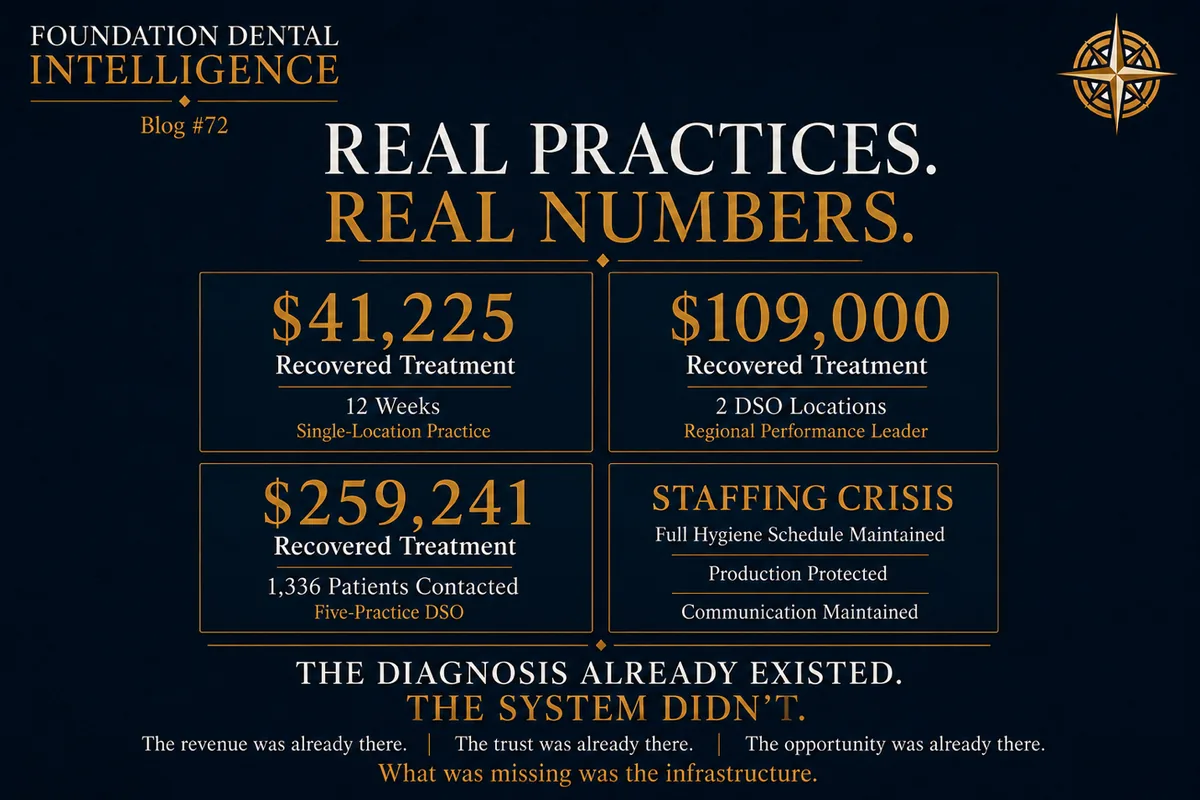
The diagnosis already existed. The trust already existed, and the opportunity already existed. What was missing was the system.
Why This Is Really an EBITDA Story
Most people think about production when unscheduled treatment comes up. I think about EBITDA.
The treatment has already been diagnosed, the patient relationship already exists, and the marketing investment has already been made. When that treatment gets recovered and completed, much of that revenue carries attractive margin characteristics because the acquisition costs have already been absorbed. There’s no new marketing spend, no new patient onboarding, no treatment planning time. It’s pure recovery of value already sitting in the system.
For independent practices, that means stronger profitability. For multi-location groups and DSOs, it means something more significant.
An incremental $100,000 in EBITDA at a 7x multiple is $700,000 in enterprise value. At 10x, it’s $1,000,000. A patient reactivation system that consistently recovers treatment volume across a multi-location group isn’t a software line item - it’s an enterprise value amplifier.
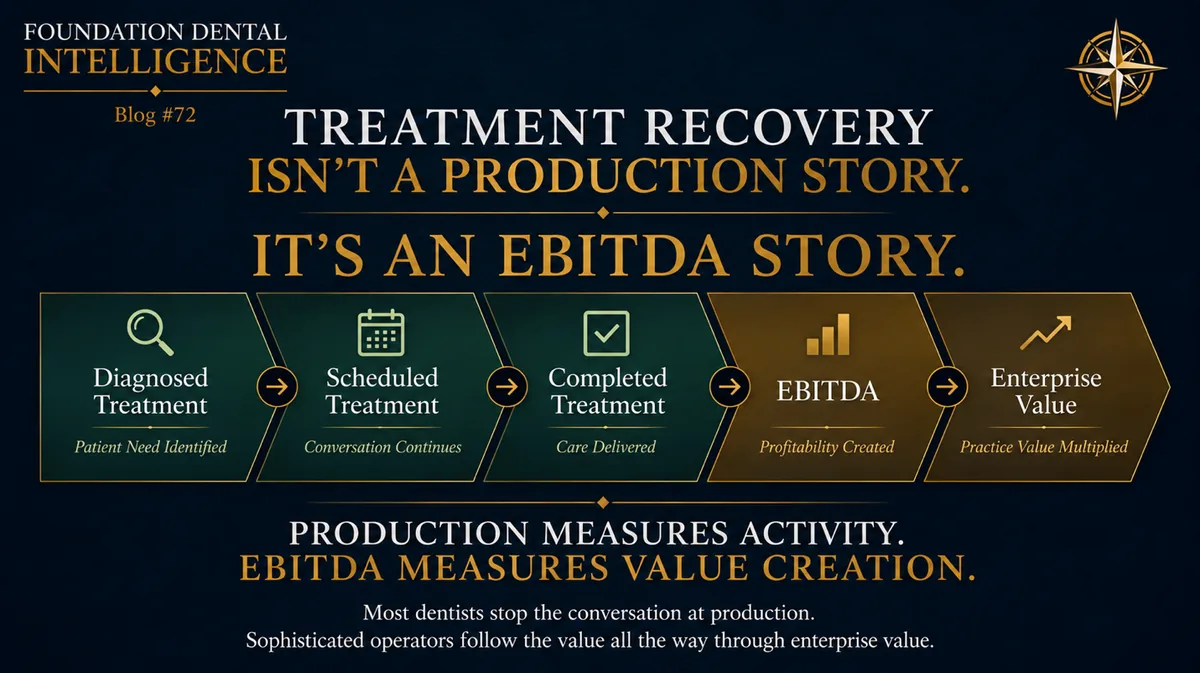
Most dentists stop the conversation at production. Sophisticated operators follow the value all the way through EBITDA and enterprise value.
I’ve been involved in more than 60 practice transitions. The practices that command the highest valuations aren’t always the practices producing the most dentistry. They’re often the practices with the strongest systems - infrastructure that’s predictable, scalable, and not dependent on one exceptional employee holding everything together through sheer effort.
Patient communication infrastructure contributes directly to that. The math at the DSO level doesn’t just add. It multiplies.
What Makes Codent Different
The dental communication space isn’t empty. Practices already have access to appointment reminders, review requests, recall systems, and two-way texting platforms. Weave, Solutionreach, NexHealth, Podium, RevenueWell - these are mature, well-funded platforms. Most practices already have one of them.
Codent’s difference is focus. Those platforms were built around reminders - attendance tools that help patients remember something they already scheduled. Codent was built around treatment completion. Everything about the platform begins with diagnosed but unscheduled treatment and works backward to a personal patient conversation. Treatment recovery isn’t a buried feature. It’s the primary mission.
A practice communication platform and a treatment reactivation system are solving different problems. Most practices have one. Very few have both.
Foundation Dental Alliance has formally endorsed Codent AI as a strategic technology partner. That endorsement isn’t based on the category they occupy. It’s based on the specific outcomes we have seen them produce in real practices - independent offices, multi-location groups, and DSOs - where the gap between diagnosed treatment and completed treatment was closing consistently and measurably.
What to Verify Before You Deploy
Standard SMS is not HIPAA-compliant. It lacks encryption, access controls, and the audit trail healthcare communication requires. Any platform sending patient-specific treatment information via text needs to operate under a signed Business Associate Agreement - a BAA - and needs to demonstrate clearly how it handles protected health information.
Codent positions itself as HIPAA-compliant and fully encrypted, and it acts as a Business Associate under HIPAA for partner practices. Before you go live on any platform like this, you want a signed BAA in hand - a document, not a verbal assurance. You also want to understand what PHI appears in the messages themselves versus what’s handled through secure links.
Under TCPA, practices are responsible for obtaining legally required patient consent for automated outreach. Codent’s systems include opt-out handling and suppression, but the practice owns the consent obligation. If you’re running multiple locations or operating inside a DSO, get your compliance officer or legal counsel involved early. These aren’t obstacles. They’re the questions a well-run organization asks before adding any patient-facing technology.
The Human Side of the Equation
It would be easy to make this conversation entirely about revenue. That would be a mistake.
Patients benefit when they complete treatment. A crown delayed often becomes a larger problem. Periodontal treatment postponed rarely improves on its own. Restorative care that never gets scheduled doesn’t improve quality of life. A patient who intended to proceed but never did isn’t a win for anyone - not for the practice, not for the patient.
Better follow-up isn’t just better business. It’s better care.
One of the reasons I appreciate Codent’s approach is that the technology doesn’t attempt to replace human relationships. It supports them. The goal isn’t to automate care. The goal is to maintain communication long enough for patients to act on decisions they’ve already begun making. That is fundamentally different from marketing. That is fundamentally different from sales. That is continuity of care.
What Dentists and DSO Operators Actually Ask
Does this replace my treatment coordinator?
No - and I’d be skeptical of any platform claiming it does. What it replaces is the inconsistency in the follow-up process. Your treatment coordinator’s time is better spent on the in-person conversation, the diagnosis discussion, the patient relationship. The systematic post-appointment follow-up is where most teams fall short - not because of skill, but because of bandwidth. That’s the gap this fills.
What PMS systems does it support?
Dentrix, Open Dental, Eaglesoft, Curve Hero, and a wide range of others. Native PMS sync - no manual exports, no CSV uploads - is what makes this work at scale. If you’re re-entering data to run the system, the ROI math changes considerably. Verify your specific version before piloting.
How do I verify the ROI before I commit?
Pull your unscheduled treatment report for the last 12 months. Most PMS systems generate it in under 10 minutes. Apply a conservative 15-20% recovery rate to size your specific opportunity. Then pilot at one or two locations for 90 days with clear before-and-after metrics - case acceptance percentage, treatment dollars recovered, response rate, and completed treatment, not just scheduled. Scheduled is not recovered. Completed is recovered.
What does the enterprise value math look like at scale?
At a 10-location group with $1 million in unscheduled treatment per location, a 20% recovery rate is $2 million in recovered production annually. Most of that flows to EBITDA at margins considerably higher than new patient revenue. At an 8x multiple - conservative for a well-run group - that’s $16 million in enterprise value from one system change. That’s why this conversation happens at the DSO level, not just the solo practice level.
What should I do before the first conversation with Codent?
Three things. Pull your unscheduled treatment report. Calculate your current case acceptance rate at the dollar level, not just the patient count. And know your EBITDA multiple or have a reasonable estimate. Those three numbers tell you exactly how much upside is in the conversation before you walk in.
Is this really about revenue?
Partially. Revenue matters because healthy practices can invest in people, education, technology, and patient care. But there’s another side that doesn’t get talked about enough. Patients benefit when they complete treatment. Helping patients follow through on care they already need isn’t just good business. It’s good healthcare.
Final Thought
The best practices I’ve seen over 25 years aren’t the ones that chased the most new patients. They’re the ones that built systems so that treatment already diagnosed, relationships already built, and trust already earned actually converted into completed care.
The diagnosis was already made. The patient already intended to move forward. The only thing missing was a system capable of maintaining the conversation long enough for intention to become action.
A friend of mine installed this system and within the first 90 minutes of going live, his team recovered a $23,000 case that had been sitting unscheduled. Later that same day, they recovered an $18,000 case. Forty-one thousand dollars on day one. That’s not a marketing claim. That’s a phone call I got that same evening.
To learn more and schedule a live demo or Treatment Recovery Assessment, visit codentai.com/?aff=jim-arnold or book directly at savvycal.com/codent/demo.
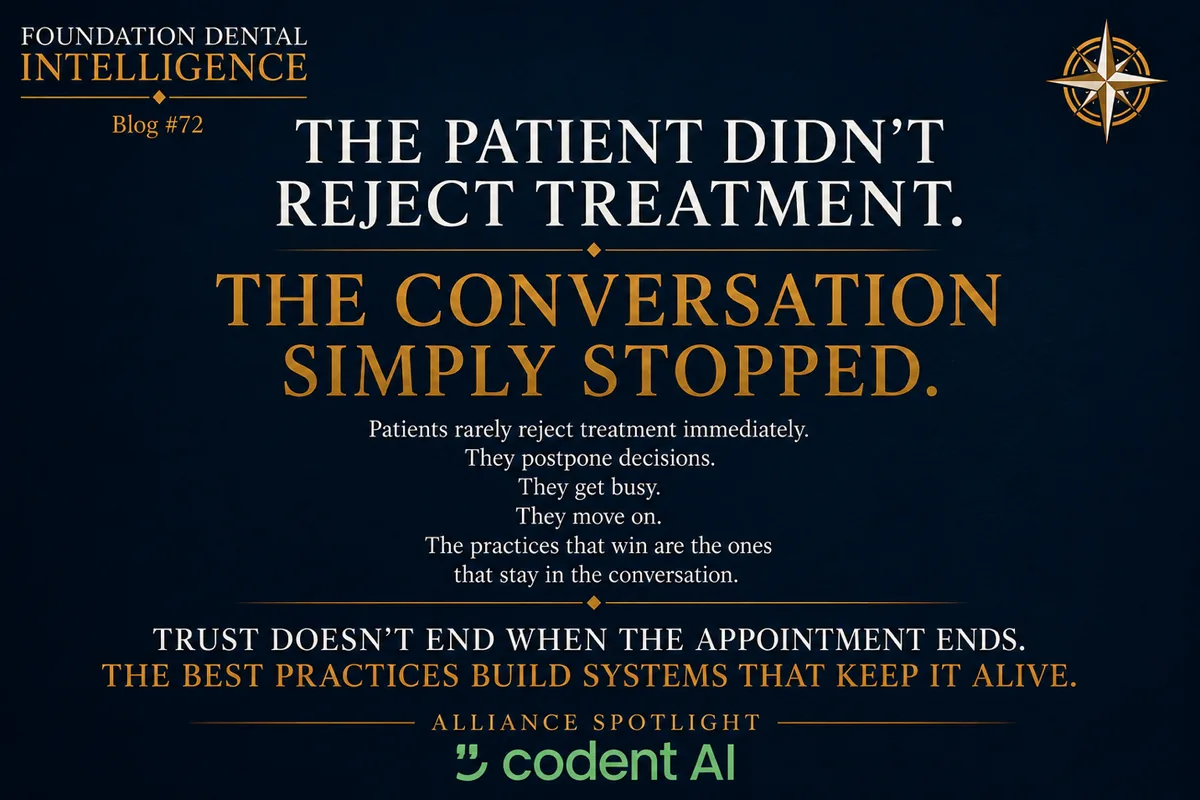
The patient didn’t reject treatment. The conversation simply stopped. Codent AI was built to make sure it doesn’t.
About the Author
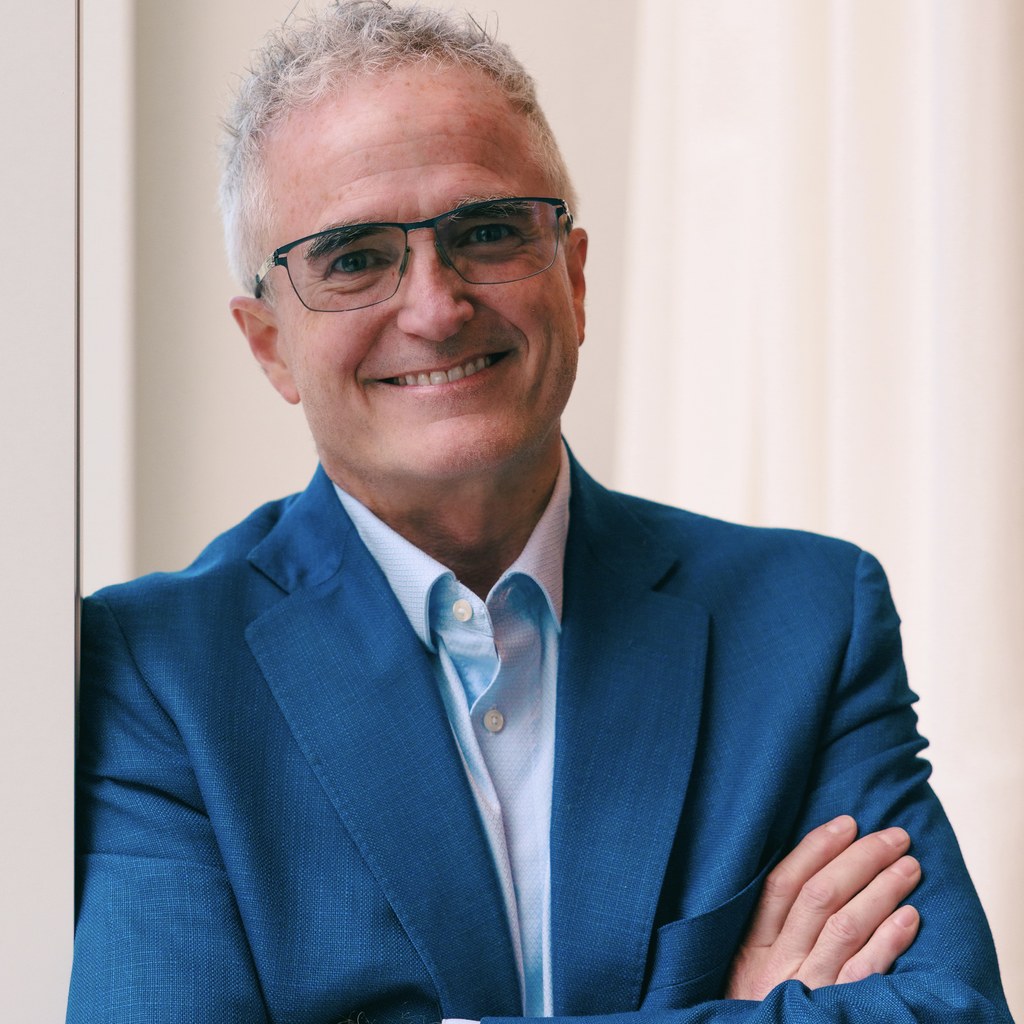
Dr. Jim Arnold, DDS is the Founder and CEO of Foundation Dental Alliance and Chief Dental Officer of Codent AI. He has 30 years of experience as a multi-practice owner, has been involved in more than 60 dental practice transitions, was a DSO executive, and achieved 31% EBITDA in a private practice group. He leads the Foundation Dental Mastermind, Luxury Dental Retreats, co-founded Foundation Dental Transitions, and hosts the Foundation Dental Podcast. He also publishes the Foundation Dental Newsletter and Blog weekly, focused on leadership, practice design, and long-term sustainability in dentistry.
Stay Connected
Websites
FoundationDentalAlliance.com
FoundationDentalMastermind.com
FoundationDentalTransitions.com
FoundationDentalNetwork.com
LuxuryDentalRetreats.com/dubai
CodentAI.com/?aff=jim-arnold
Social Media
LinkedIn: linkedin.com/in/arnoldjim
Instagram: instagram.com/smilesbyarnold
YouTube: youtube.com/@DrJimArnold
Facebook: facebook.com/smilesbyarnold
Twitter/X: twitter.com/smilesbyarnold
TikTok: tiktok.com/@foundationdentalalliance
Google Business Profile: tinyurl.com/2t3chcv6
Publications
Foundation Dental Newsletter: linkedin.com/newsletters/foundation-dental-newsletter-7289675134649450496
Contact
Professional Email: drarnold@foundationdentalalliance.com
Alliance Spotlight: Dentistry’s Top People, Companies and Products
© 2026 Foundation Dental Alliance. All Rights Reserved.