Foundation Dental Intelligence
Blog No. 74
The Hidden Compliance Problem with Clear Aligner Therapy.
Get the next article.
One signup. Everything we publish.
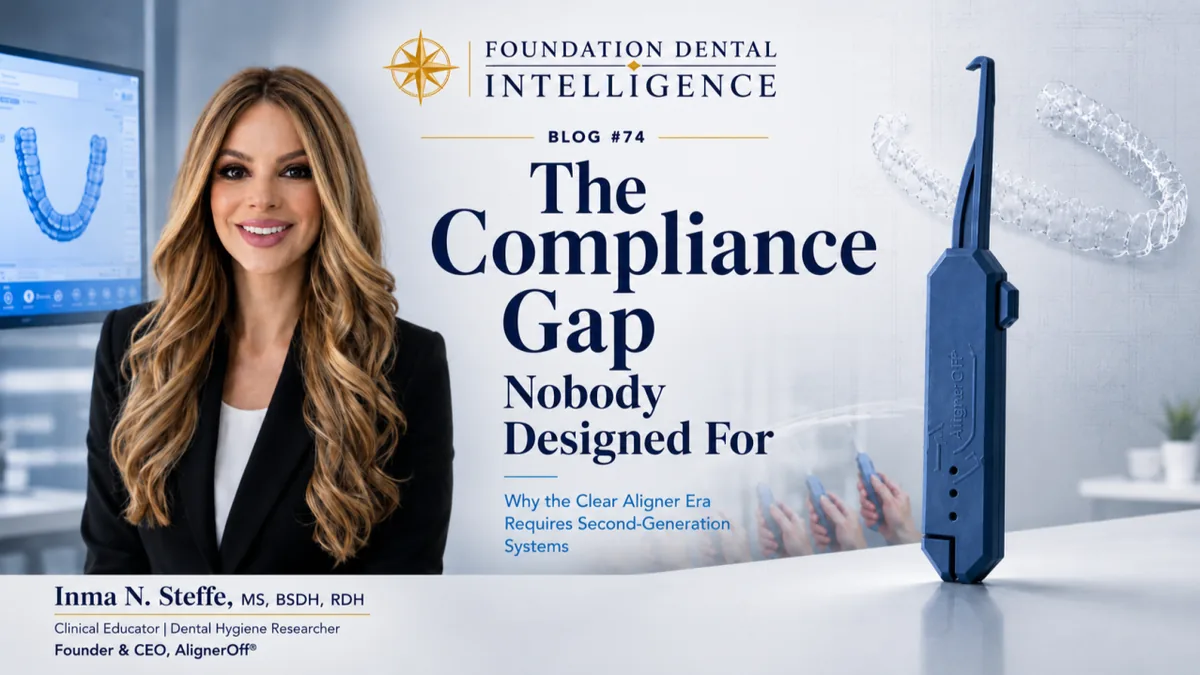
Founder & CEO, AlignerOff | Clinician, Researcher, and Inventor of Second-Generation Aligner Removal Systems
Clear aligner therapy has never been more sophisticated.
Every year, treatment planning becomes more precise. Digital workflows become more predictable. Artificial intelligence helps clinicians visualize tooth movement with remarkable accuracy. Manufacturing tolerances continue to improve.
Almost every part of the system has evolved. One critical part hasn’t.
The moment a patient removes an aligner.
It happens six to eight times every day. By the end of treatment, most patients will have removed and replaced their aligners more than two thousand times. Almost none of those moments happen in the dental office. They happen at restaurants, in conference rooms, at school, in the car, on airplanes, in public restrooms - wherever life happens.
For decades, dentistry accepted that moment as something patients would simply figure out. They used fingernails. They improvised with whatever was available. They placed aligners on restaurant tables, paper napkins, bathroom counters, and in pockets or purses.
Not because clinicians didn’t care. Because nobody viewed that moment as part of the treatment system. That’s the compliance gap.
It wasn’t created by poor technology or caused by poor clinical planning. It emerged because one of the most repeated interactions in clear aligner therapy was never intentionally designed.
As clear aligner treatment continues to mature, that assumption deserves another look.
The next competitive advantage in clear aligner therapy may not come from better biomechanics. It may come from building better systems around the moments that happen after the patient leaves your office.

Inma N. Steffe, MS, BSDH, RDH, Founder & CEO, AlignerOff | Clinician, Researcher, and Inventor of Second Generation Aligner Removal Systems
Repetition Defines What Matters
When a behavior repeats thousands of times, it stops being incidental. It becomes structural.
A single removal event seems minor in isolation. But aligner therapy doesn’t work in isolation. Across an 18-month treatment cycle, a patient performs roughly 2,000 removal events. That number changes the conversation entirely.
Repetition amplifies everything it touches. Hygiene inconsistency compounds. Material stress accumulates. Attachment strain builds. Reinsertion delays add up. Patient frustration grows. Support call volume climbs. None of those variables are dramatic on their own, but they don’t stay on their own. They stack. And at scale, what looked like minor friction becomes a systemic problem with a measurable footprint.
In aligner therapy, removal is the most repeated physical interface between patient and appliance. That repetition alone makes it a structural variable, and structural variables determine system integrity.
Accessory Thinking vs. Systems Thinking
First-generation aligner removal tools weren’t wrong for their moment. They solved a real problem. Patients needed leverage to remove trays, and these tools provided it. They were simple, affordable, and reduced frustration. That’s legitimate value.
But they were accessories, not infrastructure.
An accessory assists a task. Infrastructure governs a system. Accessory design tolerates variability. System design reduces it. Accessories improve convenience. Systems shape behavior consistently, across every patient, every visit, every removal event at scale.
That’s the shift that defines second-generation design. First-generation tools treated removal as a mechanical event. Second-generation systems treat it as a clinical interface. The difference isn’t semantic. It’s strategic.
The aligner industry has built best-in-class treatment systems. The infrastructure that governs daily patient behavior at home should meet the same standard. Most of it still doesn’t.
I had a great conversation with Inma for the Foundation Dental Podcast earlier this year and her story is remarkable. She spent three years designing and manufacturing the AlignerOff system.
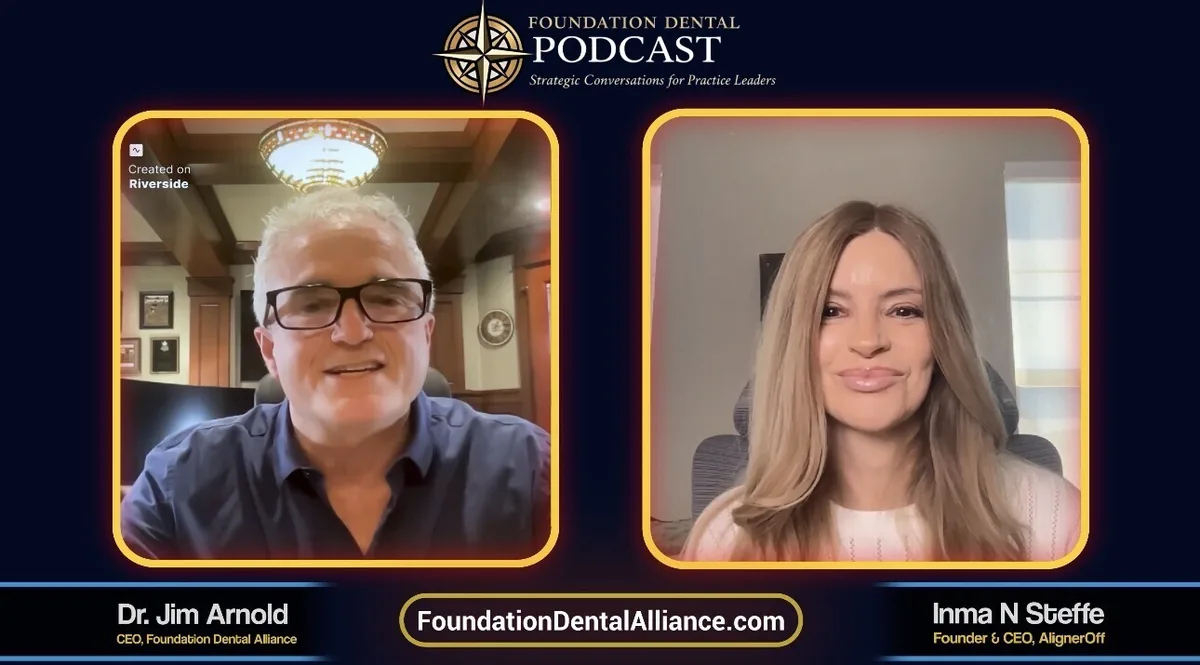
I had a great conversion with Inma for the Foundation Dental podcast earlier this year and her story is remarkable. She spent three years designing and manufacturing the AlignerOff system.
The Compliance Gap
The true compliance gap in aligner therapy doesn’t happen in the operatory. It happens at home, in the car, at a restaurant, at a desk. It happens in the moments nobody’s watching and no system is managing.
Clinical protocols assume ideal behavior. Real-world behavior is variable. Education assumes compliance. Behavioral design reduces dependence on it. Those aren’t the same thing, and confusing them is how the gap stays open.
When patients improvise removal or delay reinsertion, it’s rarely carelessness. It’s friction. The clinical intent is clear. The lived experience doesn’t match it. And small, repeated friction doesn’t stay small. It accumulates into measurable variation. Variation at scale becomes cost - in chair time, in case outcomes, in patient satisfaction, in support volume.
That’s the compliance gap. For years, nobody owned it.
The Contamination Interface Nobody Measured
The hygiene implications of aligner removal aren’t hypothetical. They’re structural, and they repeat thousands of times across a single treatment cycle.
Think through the actual sequence. Hands contact phones, keyboards, door handles, steering wheels, and restaurant surfaces. Those same hands then contact the appliance and enter the mouth. After removal, saliva transfers to fingers, then to external surfaces, devices, and shared objects. That cycle runs six to eight times a day, for months.
For immunocompromised patients, it’s clinically meaningful. For practices carrying hundreds of active aligner cases, the aggregate behavioral pattern has infection control implications that have never been systematically measured.
The storage problem compounds it. Standard plastic hooks stored loosely inside aligner cases sit in direct contact with the appliance between uses. No protective containment. No barrier between the tool and the oral environment it’s about to enter. It’s repeated, unmanaged exposure at a critical interface, and it’s been treated as normal.
AlignerOff addresses this through design. Not instruction. Not patient education. Design.
She Began With a Pattern
Inma N. Steffe, MS, BSDH, RDH, didn’t start with a product idea. She started with a pattern she couldn’t stop seeing.
More than twenty years of chairside clinical experience, graduate-level academic training, in-vitro research evaluating dental instrument behavior under real-world conditions, and adjunct faculty experience at Old Dominion University gave her a particular kind of visibility. She wasn’t watching aligner removal from the outside. She was watching it up close, across hundreds of patients, over years.
And what she saw was friction that nobody had decided to fix.
Patients struggling with removal. Improvised technique. Hygiene variability. Tool durability failure. Inconsistent storage behavior. Careful, compliant patients carrying exposed removal tools loose in their aligner cases - the tool sitting in direct contact with the appliance it was designed to manage. She saw it repeat. She saw it normalize.
When friction repeats at that scale, it’s rarely a patient flaw. It’s a system flaw. The system just hadn’t been built yet.
Aligner removal had never been engineered as a compliance interface. It had been improvised around. Inma decided that wasn’t good enough, and she built what didn’t exist.
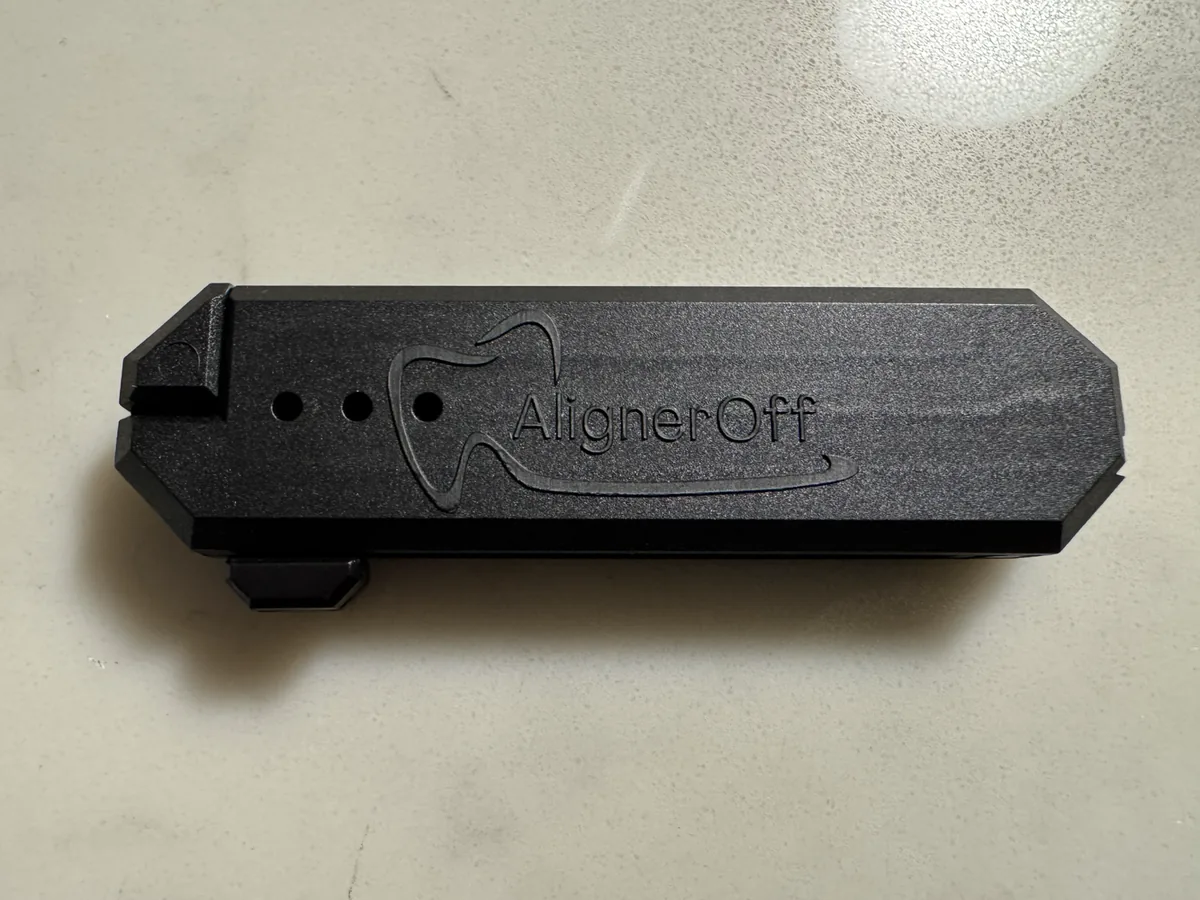
Retractable removal mechanism fully enclosed to protect the working tip and reduce surface contamination between uses.
The Removal Moment as a Clinical Interface
The aligner industry engineered digital precision into treatment planning, fabrication, and tracking. It didn’t engineer the removal interface. That interface has been improvised around since the beginning.
And it quietly influences more than most practices recognize. Hygiene exposure. Tray integrity. Attachment preservation. Reinsertion timing. Patient confidence. Practice support burden. None of those outcomes are dramatic in a single removal event. Across 2,000 of them, they’re anything but minor.
This is a micro-moment with macro consequences, and it’s been treated like a convenience problem when it’s actually a standardization problem.
When removal is handled casually, variability expands. When it’s engineered intentionally, variability contracts. That’s not a philosophical distinction. It’s the difference between a system that holds and one that leaks at the edges, slowly, invisibly, across every patient in your practice.
Engineering the Removal Interface
AlignerOff doesn’t position itself as a novelty device or a patient comfort upgrade. It’s behavioral infrastructure for aligner hygiene and compliance standardization. That framing matters because the engineering reflects it.
Second-generation design begins with geometry. Traditional first-generation removal hooks are short by design. That limited length requires the user’s fingers to enter the oral cavity during leverage. They provide mechanical assistance, but they don’t meaningfully separate hands from appliance. The contact point remains essentially unchanged.
AlignerOff’s retractable architecture changes that. When stored, the working end retracts into a ventilated protective case. The device is compact, contained, and shielded from environmental exposure between uses. The working tip is isolated. The exterior surface stays protected. When deployed, the geometry reverses. The extended removal arm reaches beyond what first-generation tools can.
Short tools reduce fingernail leverage. Long, retractable infrastructure reduces hand-to-mouth intrusion. The contamination pathway narrows in both directions.
Durability is equally intentional. A common concern with longer tools is flex or breakage under repeated use. First-generation plastic hooks bend, fatigue, and fracture. AlignerOff’s structural design uses reinforced materials engineered for repeated deployment and retraction cycles. The outcome is increased structural stability, reduced bending under load, lower breakage risk, and greater longevity across daily repetition.
Repetition exposes weakness. Infrastructure anticipates it.
For enterprise organizations managing hundreds of active aligner cases, tool replacement frequency and patient support burden compound quickly. Infrastructure-grade durability reduces both. These aren’t cosmetic enhancements. They’re behavioral and mechanical interventions embedded in the object itself.
Patient education works at the individual level. Behavioral geometry works at scale. Systems don’t rely on perfect execution. They reduce dependence on it.
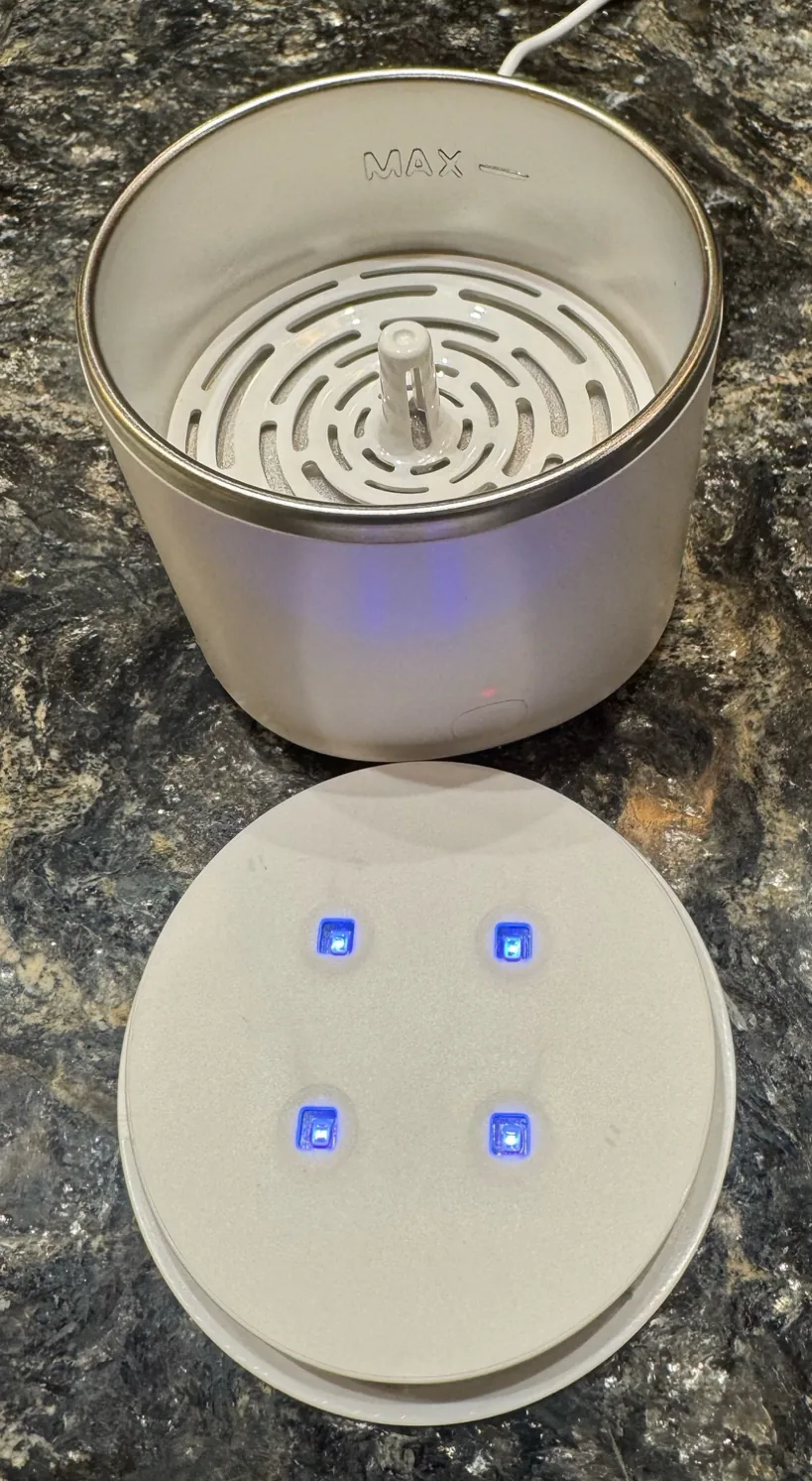
The ultrasonic and UV-assisted cleaning system that Inma designed to support consistent aligner hygiene between daily wear cycles. It’s best in class.
Why This Matters for DSOs and Enterprise Dentistry
For a single private practice, removal variability might feel manageable. One provider, one team, a contained patient base. The friction is real but it stays visible.
For organizations managing hundreds or thousands of active cases, it doesn’t stay visible. It aggregates. Remake frequency climbs. Support calls stack. Chair time varies in ways that are hard to trace back to a root cause. Hygiene messaging becomes inconsistent across providers. Brand perception drifts across locations. None of it looks like a removal problem from the outside, but that’s exactly what it is.
Most DSOs have already standardized the obvious variables - imaging protocols, sterilization workflows, procurement systems, digital treatment planning. Very few have standardized removal behavior. It’s the most repeated patient-appliance interface in aligner therapy, and it’s still being left to individual patient improvisation.
The purchasing conversation has to shift. Not “how much per unit?” but “how are we managing this interface across our entire system?” That’s the enterprise question. And it’s the one AlignerOff is built to answer.
Category Maturity
Markets don’t stay where they start. They move through stages - mechanical solution first, then convenience refinement, then standardization demand, then infrastructure development.
Aligner removal began at stage one. A hook that provided leverage. That was the whole brief.
Clear aligner therapy is mature enough now to require stage four. The treatment systems are sophisticated. The patient volumes are significant. The behavioral infrastructure supporting daily compliance hasn’t kept pace. That gap is where category evolution happens, and infrastructure categories behave differently than commodity ones. When a function becomes standardized, it becomes durable. Standards, once adopted, rarely reverse.
That’s not a marketing position. It’s how categories work.
Enterprise Evaluation Requires Measurement
Enterprise dentistry doesn’t adopt products on instinct. It evaluates systems, and it expects the evidence to hold up.
A mature pilot structure looks like this: baseline metric capture before deployment, controlled cohort rollout, staff adoption review, patient feedback tracking, measured aligner handling comparisons, and executive-level summary reporting on the back end. That’s the standard. Infrastructure isn’t assumed to work. It’s validated.
ISO-certified manufacturing. Biocompatible materials. Governance discipline. Measured integration rather than uncontrolled expansion. That posture signals category seriousness, and enterprise partners read it clearly.
Why Founder Credibility Matters
There’s a meaningful difference between inventing from market opportunity and inventing from lived clinical experience. They can produce similar-looking products. They don’t produce similar-looking decisions.
Inma Steffe is a licensed clinician with more than two decades of chairside experience, graduate-level education, and a research background in dental instrument behavior under real-world use conditions. She didn’t study this problem from the outside. She worked inside it for years before she decided to solve it.
Her guiding question was never “can we sell this?” It was whether she’d recommend it to her own patient. That orientation shapes everything downstream - material selection, manufacturing standards, clinical positioning, the way the product performs at repetition.
Enterprise partners evaluate credibility as carefully as they evaluate function. In a category built around clinical trust, founder credibility isn’t a soft asset. It’s infrastructure.
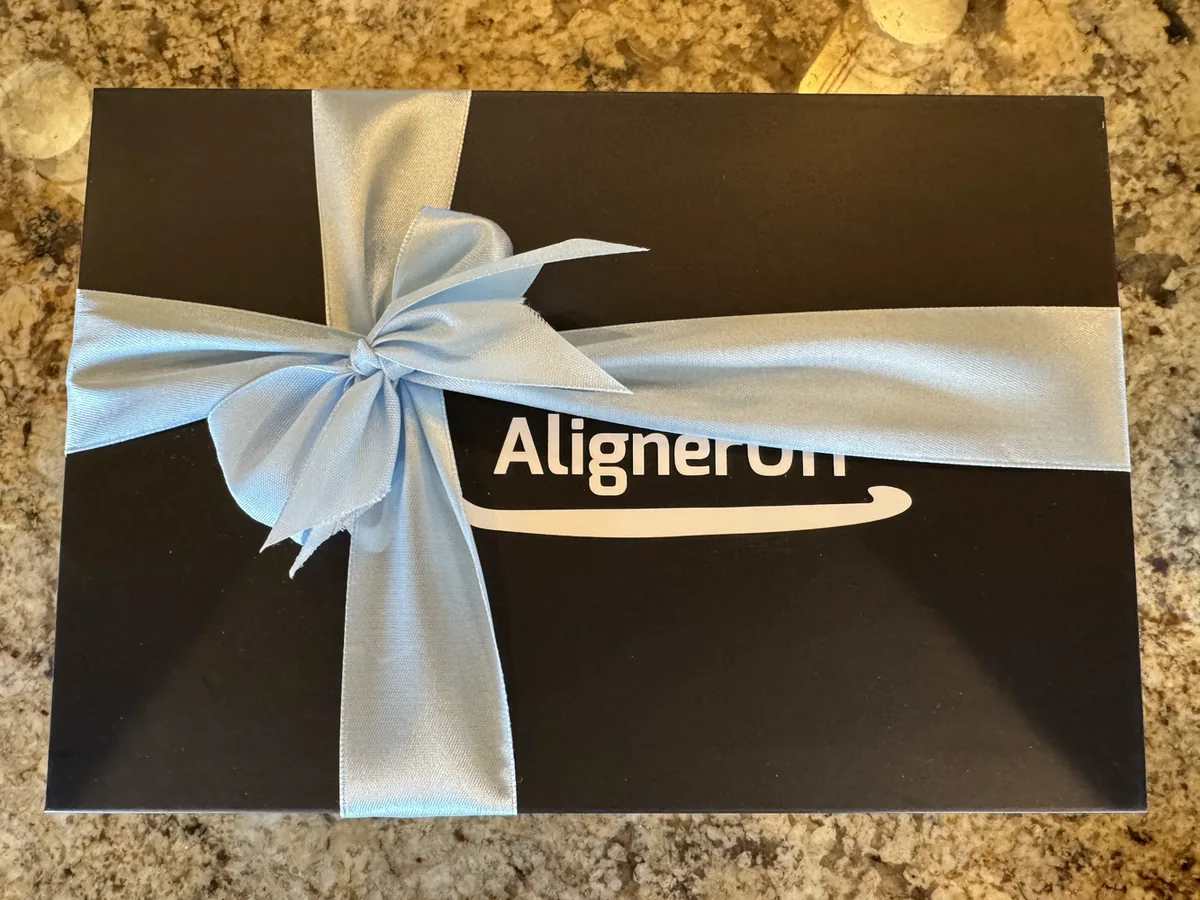
AlignerOff is a complete aligner removal and hygiene infrastructure system engineered to standardize daily handling, cleaning, and storage.
The Complete Hygiene Ecosystem
AlignerOff’s flagship removal system is the anchor of a broader clinical ecosystem built on one principle: patients manage precision appliances in real-world conditions, and every point of contact in that daily experience deserves appropriate systems.
The compliance gap isn’t limited to removal. It extends across the complete patient hygiene interface - cleaning aligners properly, storing them safely, managing perioral tissue health across months of daily wear, and protecting appliance integrity between uses.
AlignerOff’s ecosystem addresses each of these with clinician-informed precision:
THE ALIGNEROFF HYGIENE ECOSYSTEM
Ultrasonic cleaning systems with UV assistance for appliance-level hygiene between uses
Non-bleach, aligner-compatible cleaning foam for daily cleaning without material degradation
Mineral cleaning crystals formulated for ultrasonic system performance
Aligner-compatible lip care addressing perioral dryness and tissue comfort across extended treatment cycles
Complementary care components designed to integrate into aligner onboarding protocols
Each product emerged from the same clinical observation that produced the removal tool: patients were managing sophisticated medical appliances without clinical-grade tools to support them.
For DSO partners, the ecosystem signals category depth rather than single-SKU dependency. For aligner company partners, it signals a clinician-inventor who has systematically mapped and addressed every hygiene touchpoint of daily aligner use.
Best-in-class aligner therapy deserves best-in-class infrastructure across the entire patient experience. Not just at the planning stage. At every repeated daily touchpoint.
I believe this should be the standard of care for all clear aligner patients.
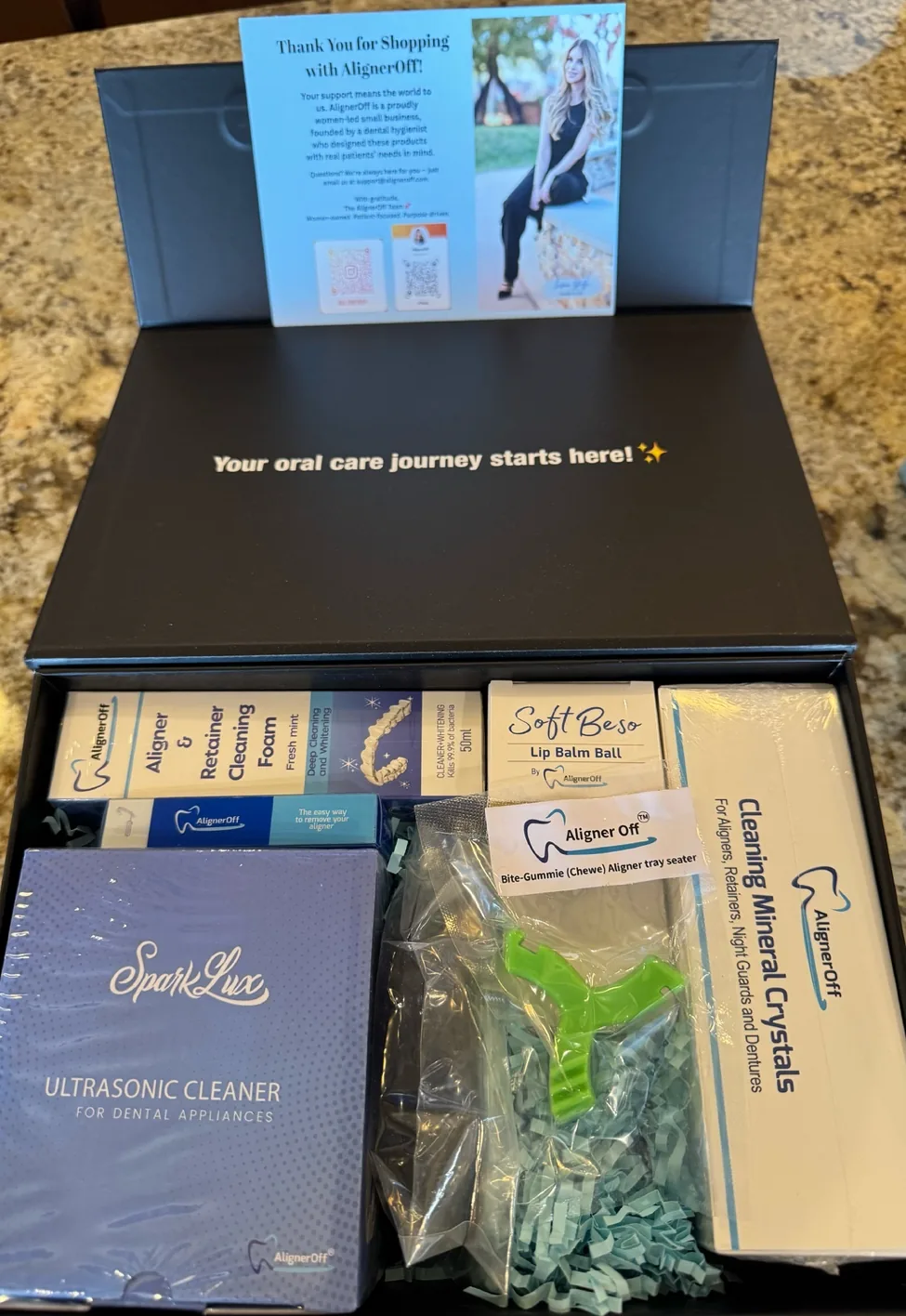
The integrated removal and hygiene components that work together as a complete daily-use system for clear aligner therapy is one of a kind. I think that this should be the standard of care for all clear aligner patients.
The Larger Principle
Dentistry invests heavily in visible technology. The equipment, the software, the imaging systems. Those investments are real and they matter.
But patient outcomes aren’t shaped in the operatory. They’re shaped between appointments, in daily life, across repeated behaviors that nobody’s supervising. Small interactions, performed thousands of times, determine whether a treatment system holds or leaks.
The removal moment isn’t dramatic. That’s exactly why it’s been overlooked. But repetition makes it structural, and structural variables determine system strength. Closing this gap isn’t a critique of the first era of aligner tools. Those tools served their moment. Second-generation infrastructure completes what they started.
Frequently Asked Questions
What is AlignerOff?
AlignerOff is a second-generation clear aligner removal system designed as behavioral infrastructure rather than a disposable accessory. It integrates removal mechanics with hygienic containment and standardization readiness.
Who founded AlignerOff?
AlignerOff was founded by Inma N. Steffe, MS, BSDH, RDH, a clinician and educator with over 20 years of chairside experience who identified removal as a repeated systems-design gap in aligner therapy.
How is it different from traditional aligner removal tools?
Traditional tools assist with mechanical removal. AlignerOff addresses removal as a compliance interface, with hygiene, durability, and behavioral standardization built into the design itself.
Why does removal matter clinically?
Removal occurs thousands of times per patient. Repeated variability influences tray integrity, hygiene consistency, attachment stress, and overall compliance behavior across the full treatment cycle.
What is the contamination risk of standard aligner removal?
Standard removal requires repeated hand-to-mouth contact across uncontrolled daily environments. Fingers touching phones, surfaces, and shared objects introduce external contamination into the oral cavity. Saliva then transfers to subsequent surfaces. Unprotected tool storage creates an additional exposure point between the removal tool and the appliance. AlignerOff’s enclosed, ventilated design addresses each of these pathways.
Does AlignerOff offer a complete hygiene ecosystem?
Yes. Beyond the removal tool, AlignerOff offers ultrasonic cleaning systems with UV assistance, non-bleach cleaning foam, mineral cleaning crystals, aligner-compatible lip care, and complementary hygiene components. Each product addresses a specific, validated gap in daily aligner hygiene.
Why is this relevant to DSOs and enterprise groups?
Organizations managing large patient volumes benefit from reducing micro-variation. Standardized removal infrastructure supports predictable outcomes across locations and reduces unmanaged variability at every hygiene touchpoint.
How does AlignerOff’s durability compare to traditional removal tools?
AlignerOff is engineered from medical-grade materials designed for thousands of repeated removal cycles across an entire treatment period. The extended length distributes leverage stress across the case-and-tool assembly rather than concentrating force at a single flex point. First-generation tools use thin plastic optimized for low manufacturing cost, not long-term durability. For enterprise organizations managing hundreds of active cases, the difference in replacement frequency and patient support burden is operationally meaningful.
About the Author
Dr. Jim Arnold, DDS is the Founder and CEO of Foundation Dental Alliance and Chief Dental Officer of Codent AI. He has 30 years of experience as a multi-practice owner, has been involved in more than 60 dental practice transitions, and achieved 31% EBITDA in his private practice group. He leads the Foundation Dental Mastermind, Luxury Dental Retreats, co-founded Foundation Dental Transitions, and hosts the Foundation Dental Podcast. He also publishes the Foundation Dental Newsletter and Blog weekly, focused on leadership, practice design, and long-term sustainability in dentistry.
Stay Connected
Websites
FoundationDentalAlliance.com
FoundationDentalMastermind.com
FoundationDentalTransitions.com
FoundationDentalNetwork.com
LuxuryDentalRetreats.com/dubai
Social Media
LinkedIn: linkedin.com/in/arnoldjim
Instagram: instagram.com/smilesbyarnold
YouTube: youtube.com/@DrJimArnold
Facebook: facebook.com/smilesbyarnold
Twitter/X: twitter.com/smilesbyarnold
TikTok: tiktok.com/@foundationdentalalliance
Google Business Profile: tinyurl.com/2t3chcv6
Publications
Foundation Dental Newsletter: linkedin.com/newsletters/foundation-dental-newsletter-7289675134649450496
Contact
Professional Email: drarnold@foundationdentalalliance.com
Alliance Spotlight: Dentistry’s Top People, Companies and Products
© 2026 Foundation Dental Alliance. All Rights Reserved.