Foundation Dental Intelligence
Blog No. 67
The Revenue Your Practice Already Earned.
Get the next article.
One signup. Everything we publish.
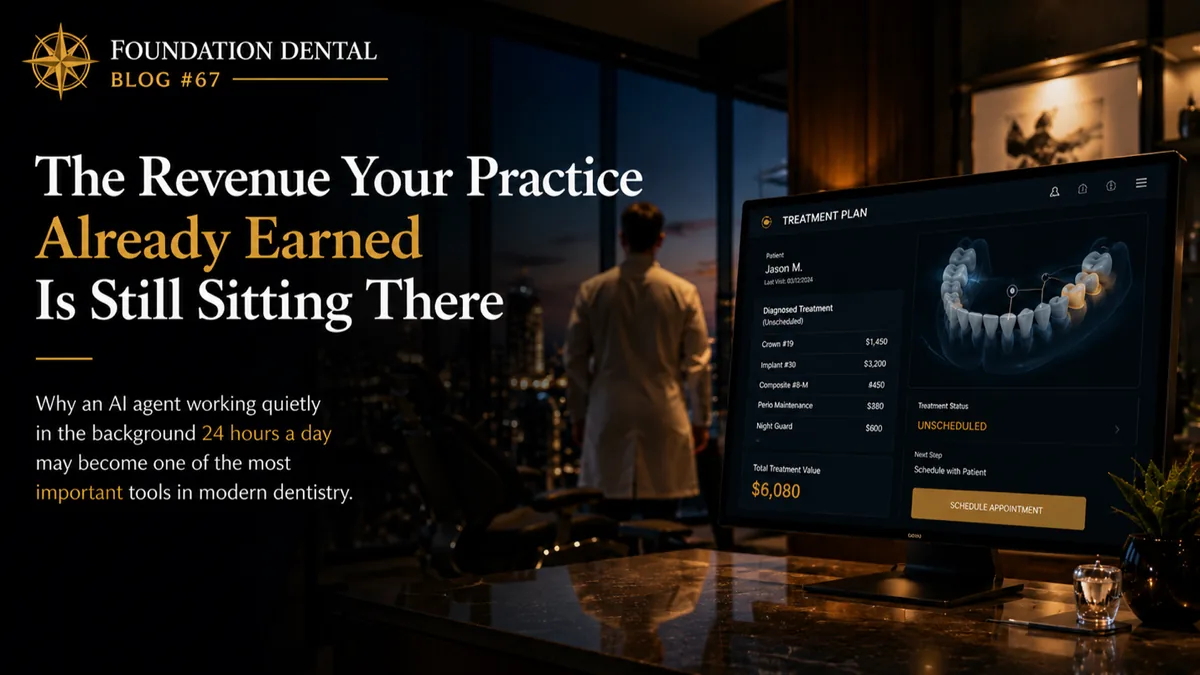
Jason needed the crown. He knew he needed it. The dentist diagnosed it correctly, the patient trusted the office, and the treatment got presented properly.
Then Jason left. Three months later, the tooth fractured.
This happens thousands of times every day in dentistry. And in virtually every case, the outcome wasn't inevitable. Jason didn't reject the treatment. The conversation just disappeared before anyone could bring it home.
Most dental practices don't have a production problem. They have a persistence problem. And that distinction may become one of the most important operational conversations in dentistry over the next decade, because most practices are trying to buy more opportunity while quietly losing the opportunity they already earned.
Every single day in dentistry, excellent treatment gets diagnosed. The clinical need is legitimate, the patient understands the recommendation, trust gets established, and the treatment plan gets presented correctly. Then the patient leaves - and somewhere between the operatory and the parking lot, the conversation starts disappearing.
Not because the patient aggressively rejected care. Because life got louder. Work got busy, kids had activities, insurance questions surfaced that evening, fear re-entered the picture once the urgency of the appointment faded. And most practices simply don't have the bandwidth to stay inside that conversation long enough to bring the patient back.
Patients don't wake up intending to neglect their health. They drift because the conversation fades - they get busy, they mean to call back, they keep waiting until something actually hurts. The treatment didn't disappear because they rejected it. The conversation disappeared because nobody stayed inside it long enough, and the real issue isn't diagnosis or clinical quality or patient demand. It's continuity.
Here's what makes this solvable in a way it wasn't before: most patients don't answer phone calls from numbers they don't recognize, rarely return voicemails, and largely ignore emails from their dental office. But they text constantly, all day long, and they respond to messages that feel personal. Codent AI was built entirely around that reality.
The platform functions like a hyper-personalized virtual treatment coordinator running quietly in the background around the clock, following up with every diagnosed but unscheduled patient through natural text conversations that feel like they came directly from the office itself. It doesn't forget a single follow-up. It doesn't get pulled away when the phones are ringing. It doesn't leave a string of voicemails and give up. And because the communication feels personal rather than automated, patients actually respond - which changes the economics of treatment follow-up completely.
This is important to understand clearly: the practices struggling with follow-up are often not weak practices. My own multi-practice group had highly capable, deeply committed front-office teams - and they still couldn't consistently work the diagnosed-treatment follow-up list at the level required to fully capture what was sitting inside the system. Because real-time operational chaos always wins. The patient physically standing at the front desk takes priority over the patient who left three weeks ago, and that isn't a motivation problem. It's a structural limitation of human bandwidth that gets more expensive the larger the organization becomes.
Because this isn't just about production. Recovered diagnosed treatment behaves very differently financially than newly acquired production - the marketing already happened, the acquisition cost already happened, the trust-building and the diagnosis and the presentation already happened. You're not trying to convince a stranger. You're trying to continue a relationship that already exists. Operationally that's a completely different equation, and financially the implications become enormous when it compounds month after month.
Attention creates opportunity. Continuity converts it.
The Numbers Most Dentists Haven't Looked At
Here's a report worth running inside your practice management system right now: diagnosed but unscheduled treatment over the last twelve months, total dollar value, every patient, every open treatment plan. Most dentists avoid running it because they aren't entirely sure they want to see what's in there. The numbers get uncomfortable quickly.
Industry data from Jarvis Analytics places average DSO case acceptance around 34 percent by dollar value - meaning for every $100,000 in treatment diagnosed, approximately $66,000 never makes it onto the schedule. Even high-performing practices leave substantial diagnosed treatment untouched every single month.
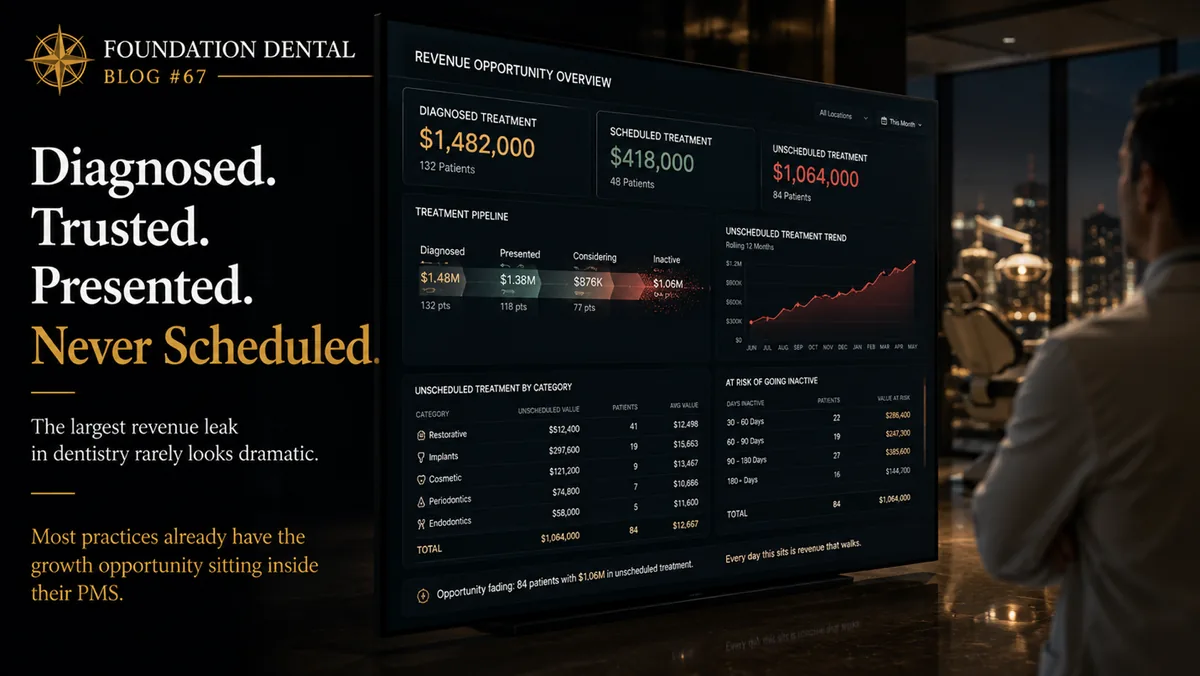
Run this report in your own PMS. Most dentists are surprised by the what’s sitting there.
What matters is understanding what this actually is. It's not failed dentistry or bad diagnosis or weak clinical work. It's diagnosed treatment that drifted into silence after the expensive part of the relationship already occurred - the marketing spend, the patient acquisition, the exam, the chair time, the diagnosis, the trust-building, the presentation. The opportunity already exists and the relationship already exists. The production just never materialized.
That's why this category is so financially significant. Recovered diagnosed treatment carries dramatically better economics than newly acquired production because the hard, expensive work is already done.
Most practices aren't struggling to diagnose enough treatment. They're struggling to complete the treatment they've already diagnosed.
Why the Front Desk Keeps Losing This Battle
This isn't a laziness problem and it isn't a culture problem. Most front-office teams are already overloaded managing phones, insurance verification, check-ins and check-outs, hygiene schedule gaps, emergencies, broken appointments, financial conversations, and clinical handoffs - all simultaneously, all demanding immediate attention. Inbound demand always wins. The patient standing at the front desk always gets priority over the patient who left three weeks ago, and that creates one of the largest invisible production leaks in the business.
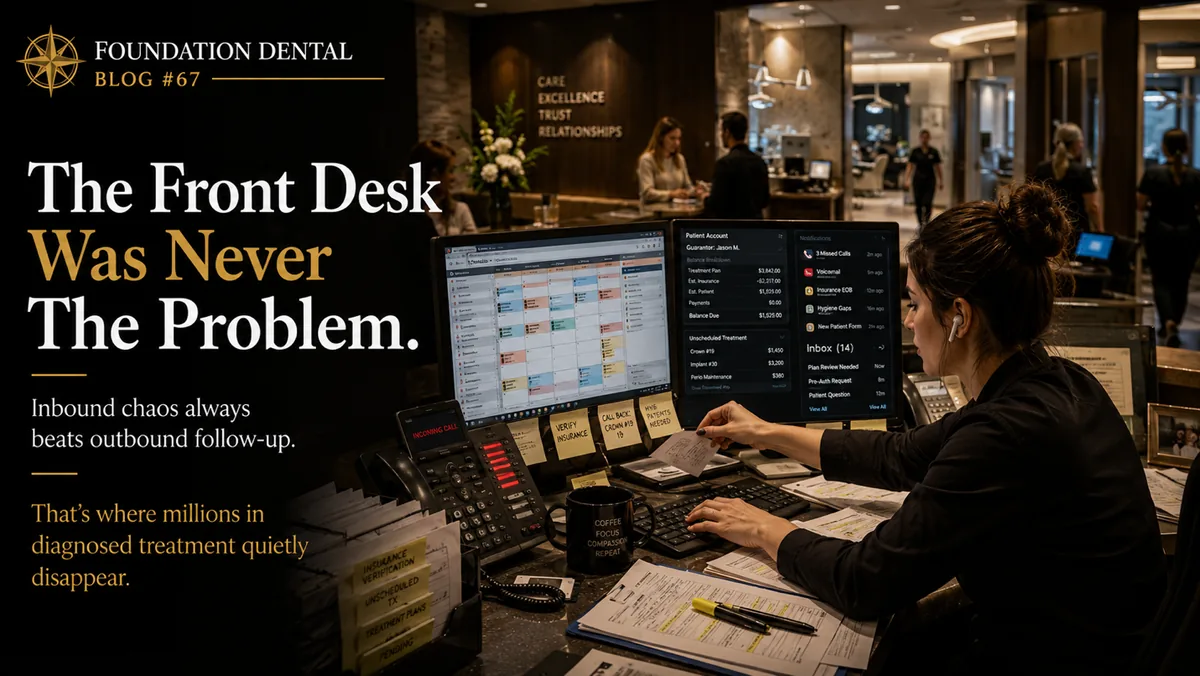
Inbound chaos always wins. The unscheduled list is the first thing to fall off the and the last thing to get back to.
Persistent outbound follow-up requires consistent communication bandwidth, and most practices simply don't have it. Historically the model has been a team member works through a list, leaves multiple voicemails, maybe sends an email, gets no response, and moves on. That model stopped working effectively once text messaging changed patient communication behavior completely. A patient who ignores five phone calls will often respond immediately to one personal text message that actually feels like it came from someone who knows them.
This tool isn't replacing great front-office teams. It's protecting them from drowning. The best teams in dentistry still don't have enough hours in the day to consistently work unscheduled treatment follow-up at scale - that's not a reflection on their capability, it's a reflection on the structural impossibility of doing everything at once.
Codent AI was built specifically to solve that structural problem.
What Codent AI Actually Does
Codent AI isn't simply another communication platform or recall system, and it's not an AI company trying to attach artificial intelligence to generic workflow automation. It operates more like an always-on virtual treatment coordination infrastructure layer sitting quietly behind the practice.
Once integrated into the practice management system - Dentrix, Eaglesoft, Open Dental, CareStack, and other major platforms, with a setup that takes under an hour - it automatically identifies diagnosed but unscheduled treatment and initiates personalized follow-up conversations through highly natural text-message communication. Not mass blasts or robotic reminders. Actual conversational outreach that feels like it came from someone inside the office who genuinely knows the patient's situation.
Their materials include an example that captures the difference cleanly:
"Hi Jason, this is Anna from Dr. Smith's office. Remember that cracked tooth we saw? Let's fix it before marathon training ramps up."
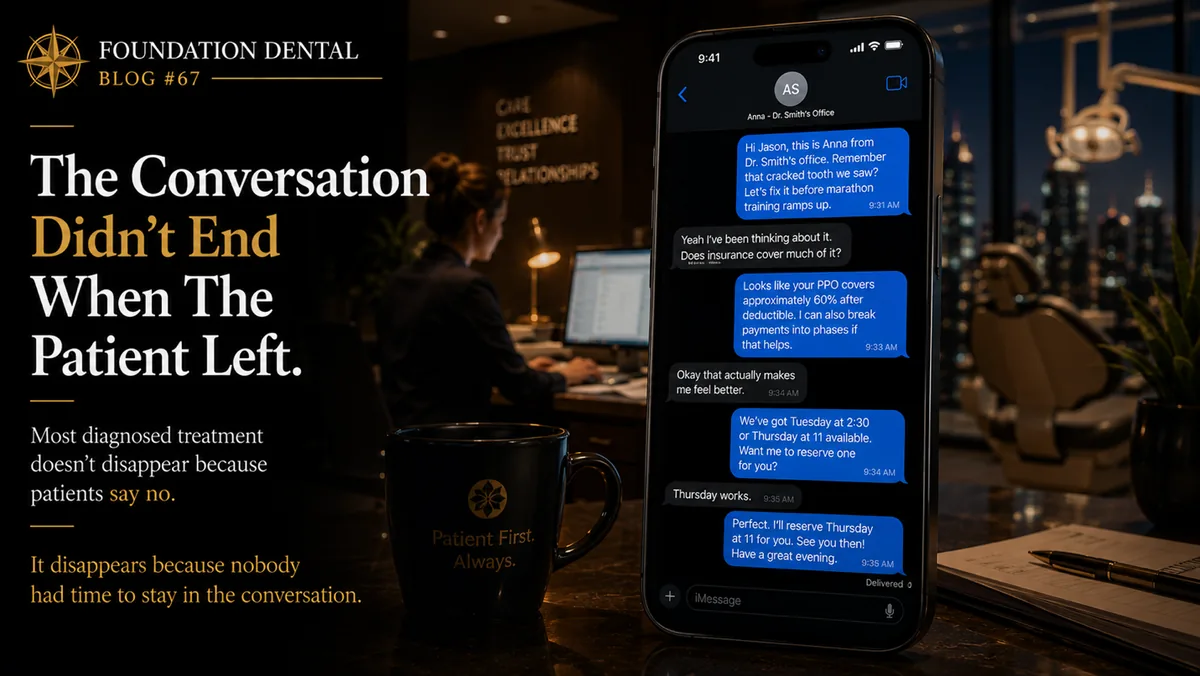
This is what Codent looks like in practice. From first text to confirmed appointment, without the front desk touching it.
That doesn't feel like software. It feels like continuity. Most automation feels like automation - Codent doesn't, and that's the breakthrough. Patients genuinely think someone from the office remembered them and reached out personally. The AI was trained around real treatment-coordination psychology from elite dental treatment coordinators, so it understands timing, hesitation, insurance uncertainty, and how patients actually communicate once they leave. It continues the conversation naturally rather than restarting it awkwardly weeks later with a voicemail nobody returns.
The platform is also no longer just following up - it's actively scheduling appointments directly through the messaging workflow itself, from first text to confirmed appointment without the front desk touching it. That dramatically reduces front-office stress because the team no longer has to manually chase unscheduled treatment lists while simultaneously managing everything else. Practices are essentially adding a treatment coordinator that never takes a day off, never forgets a follow-up, and never stops working the opportunity sitting inside the system.
When this runs across a multi-location organization or DSO, the economics become powerful very quickly - because the organization is no longer depending entirely on human bandwidth to recover diagnosed production. It has infrastructure doing it automatically.
The best follow-up system is the one that actually runs - every day, on every patient, without anyone making it run.
Why Blue-Bubble Communication Changes the Math
Most dental communication systems still behave like broadcast media - mass texts, mass reminders, mass recall campaigns that patients increasingly tune out because they feel impersonal. Codent understands something much deeper about modern communication psychology.
The medium matters as much as the message. Text is how patients actually communicate now - they respond faster, trust it more when it feels personal, and can ask questions without feeling trapped in a sales conversation. That lowers friction, and in treatment follow-up, friction is often the entire difference between a scheduled case and a silent treatment plan.
The 'blue-bubble' concept matters because it feels human, familiar, and like the office actually remembers. When a patient receives a message that references their specific treatment, asks a natural question, and feels like it came from someone who knows them - the barrier to responding drops dramatically. Once that conversation opens, Codent handles everything: insurance questions answered instantly, financing options explained clearly, and a direct booking path that makes it easy to say yes from their phone.
Patients don't just need information. They need the conversation to stay alive long enough for them to move forward, and that's exactly what this does.
Why Janet Chen's Background Matters
Janet Chen's background isn't traditional dentistry, and I think that's part of what makes this company different. Her experience covers economics, enterprise communication systems, strategy, and operational infrastructure design at significant scale - including leadership at Sprinklr and strategy work at Insight Partners. That background builds a particular kind of thinking: not 'how do we make another dental app?' but 'where does operational friction quietly destroy value after the clinical interaction ends?' That's a much more important question, and it's why Codent feels structurally different from most of what enters dental technology.
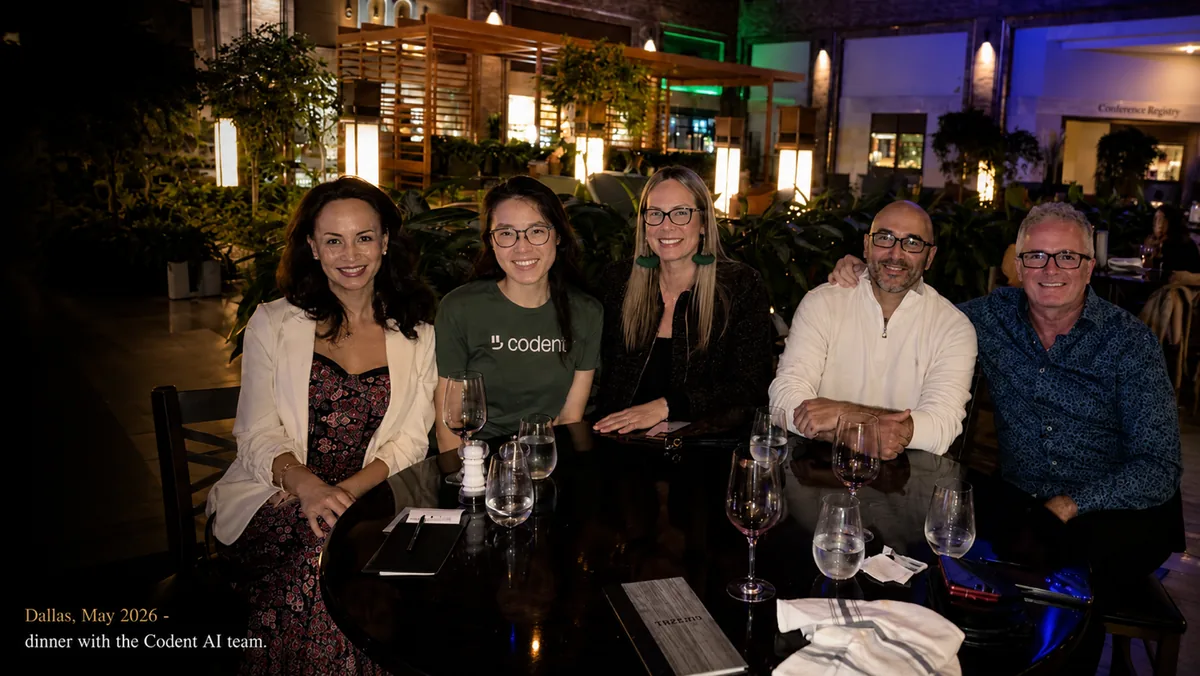
Dallas, May 2026 - dinner with the Codent AI team
The company isn't trying to be everything. It's trying to own one of the most expensive gaps in dentistry - the space between diagnosis and scheduled care. Co-founder and CTO Brian Gorham engineered the infrastructure: he built a $120M healthcare platform that scaled to over 500 locations, and he designed this system HIPAA-compliant by design, encrypted end-to-end, built for clinical environments at real scale.
What the Results Actually Look Like
Two practices within a multi-location DSO were among the lowest producers in their region. One hadn't hit its monthly production target in more than two years. The other was last in regional production, run by a single front desk team member handling everything alone. After nine weeks on Codent's system, Practice A ran 288 patient conversations, scheduled 50 appointments, and booked $54,000 in production - hitting its monthly goal for the first time in over two years. Practice B ran 349 conversations, scheduled 48 appointments, and booked $55,000, moving from last in the region to first. Same doctors, same clinical skill, same markets. The only variable was the follow-up system.
A single-location family practice with one front desk admin ran the system for 12 weeks: 533 unique patient conversations, 103 appointments scheduled, and over $89,000 in production reactivated in a single month - the highest production month that practice had ever recorded.
A mid-size practice with eight providers lost two hygienists shortly after deploying Codent. Instead of watching production collapse, they hired replacements into a schedule that was already full because Codent had been reactivating perio patients throughout the staffing crisis. Nine weeks, 365 conversations, 51 appointments, $57,647 booked.
A five-practice DSO across Northern California ran the system simultaneously across all locations: 1,336 unique conversations in 6-9 weeks, 141 appointments scheduled, $259,241 in documented production, every location producing.
These aren't projections. They're documented outcomes from practices that turned on a consistent, intelligent follow-up system and watched it work.
This Is an EBITDA Story, Not Just a Production Story
This is the section DSO operators and group practice owners need to sit with. Most dentists think about unscheduled treatment as lost monthly production. Sophisticated operators think about it as unrealized enterprise value - and that framing changes the entire strategic conversation.
When a practice recovers diagnosed treatment that's already in its system, the economics are fundamentally different from acquiring new production through marketing. Every dollar of recovered production comes with better operational leverage than new-patient revenue because the acquisition cost, the clinical time, and the trust-building already happened.
THE EBITDA MATH PER LOCATION
Recovered Production: $300,000
Typical EBITDA Impact: ~$60,000 to $75,000
At 7x Multiple: ~$420,000 to $525,000 in enterprise value
At 9x Multiple (DSO platform): ~$540,000 to $675,000
Multiply across 10, 25, or 50 locations. The number becomes transformational.
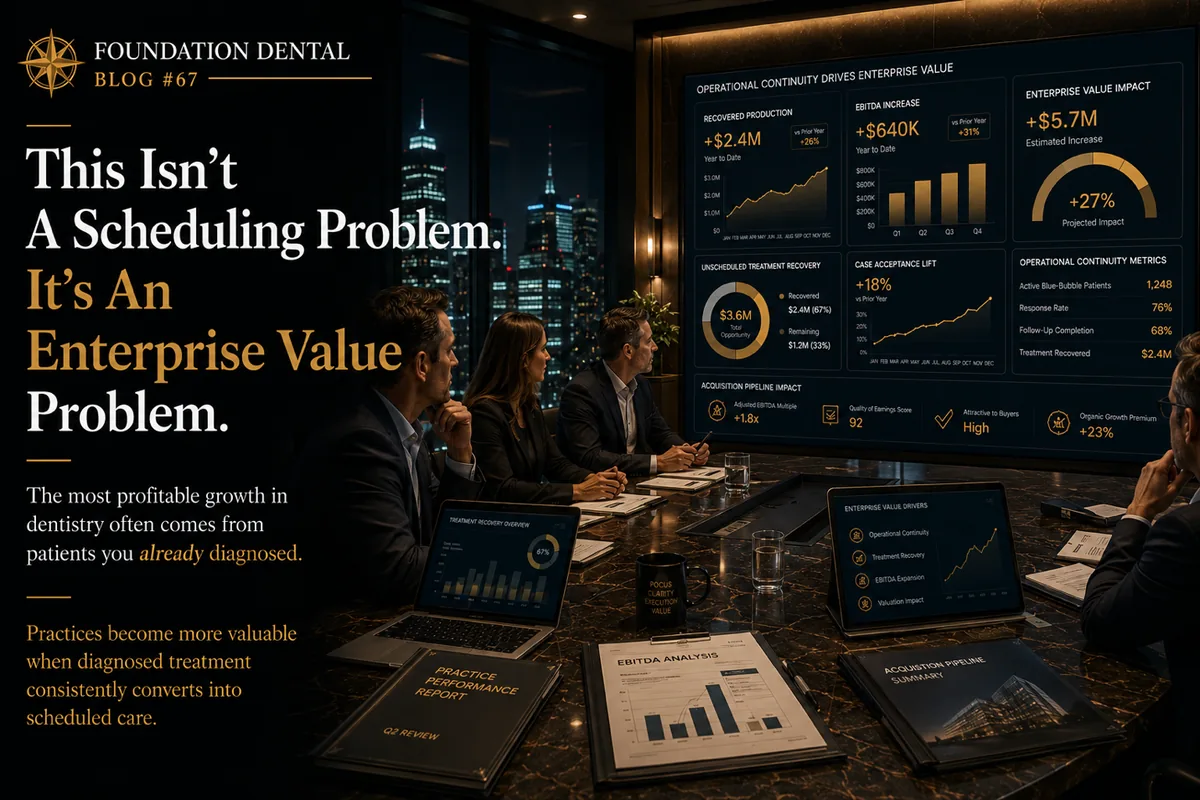
Most dentists think about unscheduled treatment as lost production. Sophisticated operators think about it as unrealized enterprise value.
For a 50-location DSO carrying industry-average unscheduled treatment numbers, even a 10 percent capture improvement represents millions in incremental production. At typical margins and a 9x multiple at recap, the enterprise value implication is real and material - not theoretical.
Sophisticated buyers increasingly evaluate operational consistency, communication infrastructure, scheduling predictability, and infrastructure durability alongside raw collections. Practices that depend entirely on heroic human effort eventually become unstable. Practices with durable systems become significantly more valuable - and they read that way in a quality of earnings analysis before a buyer ever sits across the table.
I ran a multi-practice group. The monthly production impact of having this tool would have been significant, the EBITDA impact meaningful, and the effect on my eventual sale price would have been substantial. That's not a hypothetical. It's arithmetic I wish I'd been doing earlier.
Attention creates opportunity. Continuity converts it. And Codent AI is the infrastructure that makes continuity automatic.
How Codent Fits Into the Broader AI Conversation
Most dental AI right now is focused on inbound communication - answering calls, handling scheduling inquiries, managing front-desk overflow. That's valuable work and there are solid platforms doing it well. TrueLark is excellent for inbound patient communication management at the DSO level. Weave, Solutionreach, and RevenueWell are platforms many practices already use, and they include follow-up campaign features - but template-driven bulk messages aren't the same as personalized two-way dialogue in the practice's own voice referencing a specific patient's specific clinical situation.
Codent doesn't compete in that category. It's purpose-built for the outbound, post-visit, treatment-plan recovery conversation that none of the incumbents were designed to handle at this level of personalization. It doesn't ask you to replace your existing stack. It adds the one layer that's been missing from virtually every practice in this industry.
See Codent AI at CDA Presents in Anaheim This Week
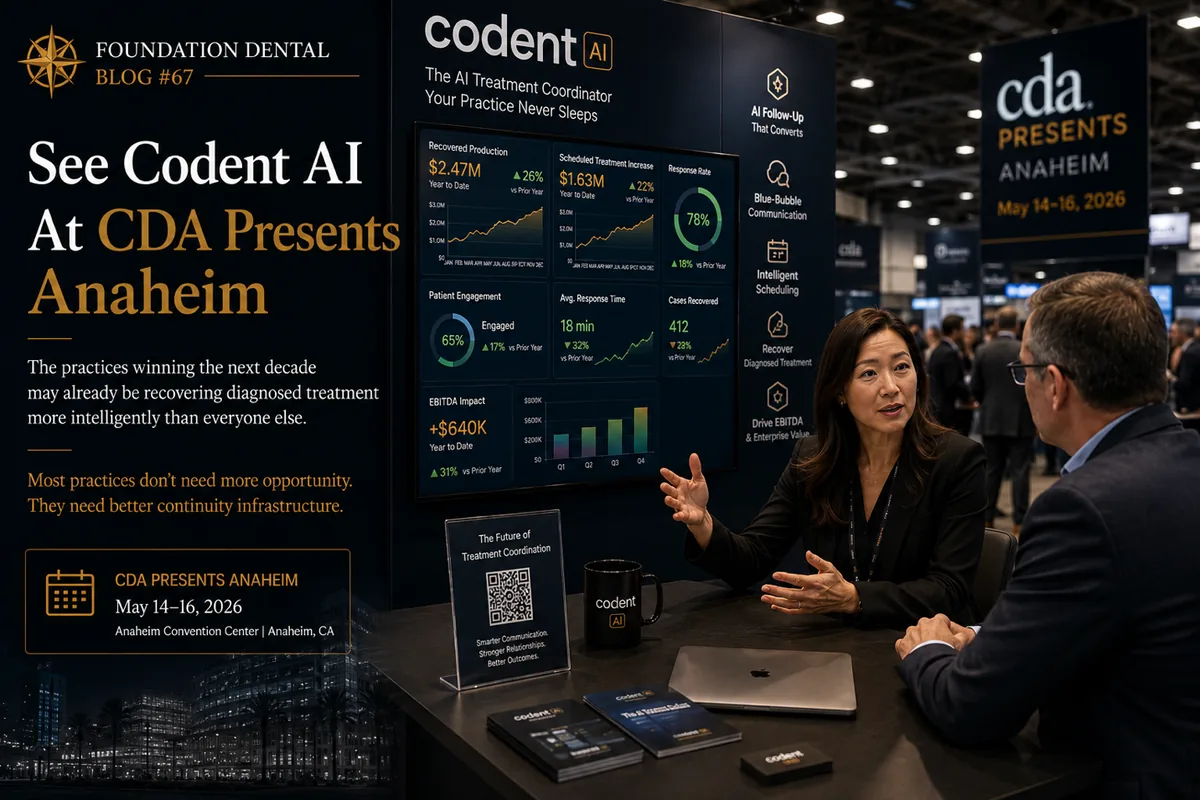
If you're attending CDA Presents: The Art and Science of Dentistry in Anaheim this week - May 14-16, 2026 - Janet Chen and the Codent AI team will be on the exhibit floor (Booth 1792) all three days. Stop by, meet them in person, and ask them to show you how the system actually works in a real practice environment.
Skip the vague software questions and ask the one that matters: how much diagnosed treatment is sitting inside my practice management system right now, and what would happen to my numbers if every one of those patients got a follow-up that genuinely felt like it came from my best coordinator? That's the conversation worth having.
The practices adopting this category early are building a structural advantage that compounds every month they have it and their competitors don't. Every month you wait is production you don't recover and enterprise value you don't build.
If you can't make it to Anaheim or want to see the platform before then, book a free demo below. There's no upfront cost - Codent earns when your practice recovers revenue.
Book your demo: codentai.com/?aff=jim-arnold
Frequently Asked Questions
What is diagnosed but unscheduled treatment?
Diagnosed but unscheduled treatment refers to treatment plans that were clinically recommended, presented, and often verbally accepted by the patient but never made it onto the schedule. Most practices carry a significant amount of this inside their practice management system, but many owners don't realize the scale because it doesn't show up as an obvious daily gap.
What makes Codent different from normal follow-up software?
Traditional follow-up means phone calls that go to voicemail, emails nobody reads, and generic reminder campaigns patients tune out. Codent uses hyper-personalized text-message conversations through an always-on AI agent trained around elite treatment-coordination communication. It feels like the office is personally following up - because to the patient, that's exactly what it feels like. And now it can book the appointment directly through the messaging workflow.
Does Codent AI replace the treatment coordinator or front desk team?
No. It removes one specific function - outbound follow-up on unscheduled treatment - from the front desk's plate entirely. The team still handles everything happening in real time. Codent handles the patients who left without scheduling, consistently and automatically, so the front desk can stay focused on the people right in front of them.
Why does unscheduled treatment matter for EBITDA and practice valuation?
Most dentists think about unscheduled treatment as lost monthly production. Sophisticated operators think about it as unrealized enterprise value. At typical margins, recovering $300,000 in unscheduled production can add $60,000 to $75,000 in EBITDA - and at a seven-times multiple that's $420,000 to $525,000 in additional enterprise value per location. Real money, not theoretical upside.
What does it cost?
There's no upfront cost. Codent operates on a performance-aligned model and earns only when the practice recovers revenue. Zero adoption risk, with incentives completely aligned with practice outcomes.
About Codent AI
Codent AI is a virtual AI treatment coordinator that automatically follows up with patients who leave without scheduling diagnosed treatment. Founded by CEO Janet Chen and co-founder Brian Gorham, Codent AI helps dental practices and DSOs recover unscheduled production through personalized, HIPAA-compliant, AI-driven communication without adding staff or disrupting existing workflows. The platform uses always-on, hyper-personalized text-message conversations to re-engage patients, answer questions, reduce front-office stress, and book appointments directly through the messaging workflow.
About the Author
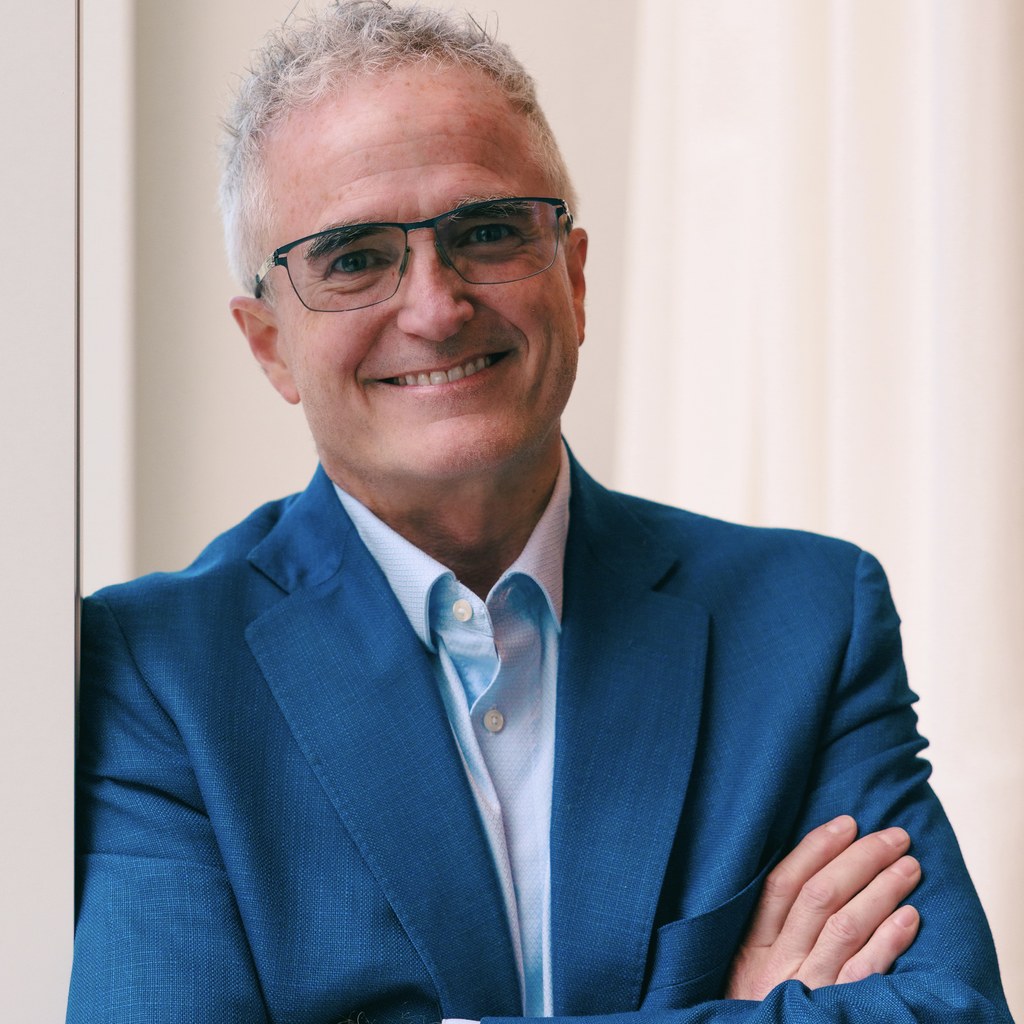
Dr. Jim Arnold, DDS is the Founder and CEO of Foundation Dental Alliance, a leadership and practice development organization serving dentists from graduation through retirement. He has 30 years of experience as a multi-practice owner and has been involved in more than 60 dental practice transitions. He leads the Foundation Dental Mastermind, Luxury Dental Retreats, co-founded Foundation Dental Transitions, and hosts the Foundation Dental Podcast. He also publishes the Foundation Dental Newsletter and Blog weekly, focused on leadership, practice design, operational infrastructure, and long-term sustainability in dentistry.
Stay Connected
Websites
FoundationDentalAlliance.com
FoundationDentalMastermind.com
FoundationDentalTransitions.com
FoundationDentalNetwork.com
LuxuryDentalRetreats.com/dubai
Social Media
LinkedIn: linkedin.com/in/arnoldjim
Instagram: instagram.com/smilesbyarnold
YouTube: youtube.com/@DrJimArnold
Facebook: facebook.com/smilesbyarnold
Twitter/X: twitter.com/smilesbyarnold
TikTok: tiktok.com/@foundationdentalalliance
Google Business Profile: tinyurl.com/2t3chcv6
Publications
Foundation Dental Newsletter: linkedin.com/newsletters/foundation-dental-newsletter-7289675134649450496
Contact
Professional Email: drarnold@foundationdentalalliance.com