Foundation Dental Intelligence
Newsletter No. 71
The Insurance Trap Nobody Talks About Honestly.
Get the next issue.
One signup. Everything we publish.
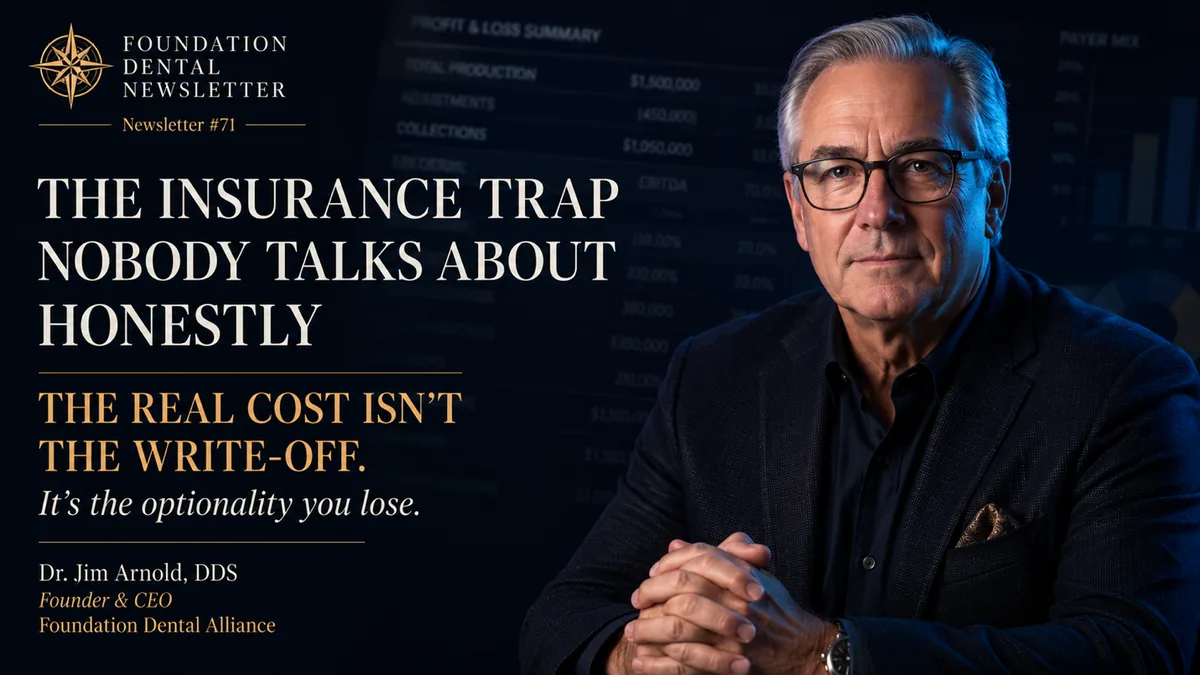
I decided early in my career that I wasn't going to give 40 percent of my fees to an insurance company.
That wasn't a casual opinion. It wasn't something I heard from a consultant. I thought it through carefully and came to a conclusion: if the only way I could make dentistry work was by giving away nearly half of every dollar I produced to a third party that never sat in the chair, never diagnosed a patient, never managed a team, and never carried any clinical risk whatsoever - I would've rather changed careers.
That probably sounds extreme. Maybe it is. But after more than 30 years in dentistry, multiple practices, and more than 60 practice transitions, I'm more convinced today than I was back then.
Most dentists aren't trapped by insurance. They're trapped by what insurance slowly teaches them to build. That's where margin erodes, EBITDA compresses, and practice value stops reflecting how hard you work. And that's the conversation almost nobody is having honestly.
Most discussions about PPO participation focus on reimbursement rates, write-offs, and fee negotiations. Those conversations matter. They're also incomplete. The biggest cost of insurance participation isn't the adjustment percentage on your monthly report. The biggest cost is what happens after years of building a practice around someone else's economics. Insurance changes how schedules get built. It changes how teams communicate. It changes what patients expect to pay and what owners believe is possible. And eventually, if enough years pass, it changes what the practice is worth - and how many options the owner has left.
That's the trap nobody talks about honestly. Not because people are hiding it. Because most owners never stop long enough to see it.
The schedule stays full. Production looks respectable. Patients keep coming. The practice appears successful from the outside. Yet the owner feels like they're working harder every year to produce the same result. That's usually when the real questions begin. Not "am I making enough?" but "why does this much effort produce so little freedom?"
That's not a production problem. It's an architecture problem.
The Most Dangerous Phrase in Dentistry
There's one phrase I hear regularly, and every time it surfaces I know we're about to have a much deeper conversation than the one that's been happening.
"Our PPO write-offs are just a marketing expense."
I understand the logic. Insurance plans send patients. Patients generate production. The discount is the price of admission. But apply that logic honestly to any other scenario.
If a marketing firm approached you and proposed: "We'll send you patients, but you'll permanently discount every procedure by 35 to 45 percent - and you won't control the pricing, the rules, or the ability to exit without risking your patient base" - would you sign that contract and call it a smart marketing deal?
You'd call it a hostage situation. Yet thousands of dentists renew that same contract every year without a second thought.
No other marketing channel in dentistry works this way. You wouldn't hand 40 percent of every crown, implant, and hygiene visit to any other source without evaluating the return, the risk, and the alternatives. Yet many practice owners never apply that same scrutiny to PPO participation. The contracts get signed, the write-offs become familiar, the relationship becomes normalized. The discount stops feeling like a decision and starts feeling like gravity.
That's when the trap becomes invisible. Not because it disappeared. Because the owner stopped noticing it.
Calling a 40 percent write-off a marketing expense is not strategy. It's a story that lets insurance quietly own your pricing, your schedule, and your sense of what's possible.
What the Write-Off Actually Costs
Most dentists know their write-off percentage. Far fewer know what that percentage represents in real dollars across a full year of production - and that translation matters more than any other number in this conversation.
A practice producing $1.5 million annually with a 30 percent effective write-off rate isn't writing off an abstract percentage. It's writing off $450,000. Actually. Not conceptually. That's an associate's full compensation. That's significant retirement capital. That's the investment that could have materially restructured the financial architecture of the practice - and instead it went to insurance companies that carried none of the clinical risk.
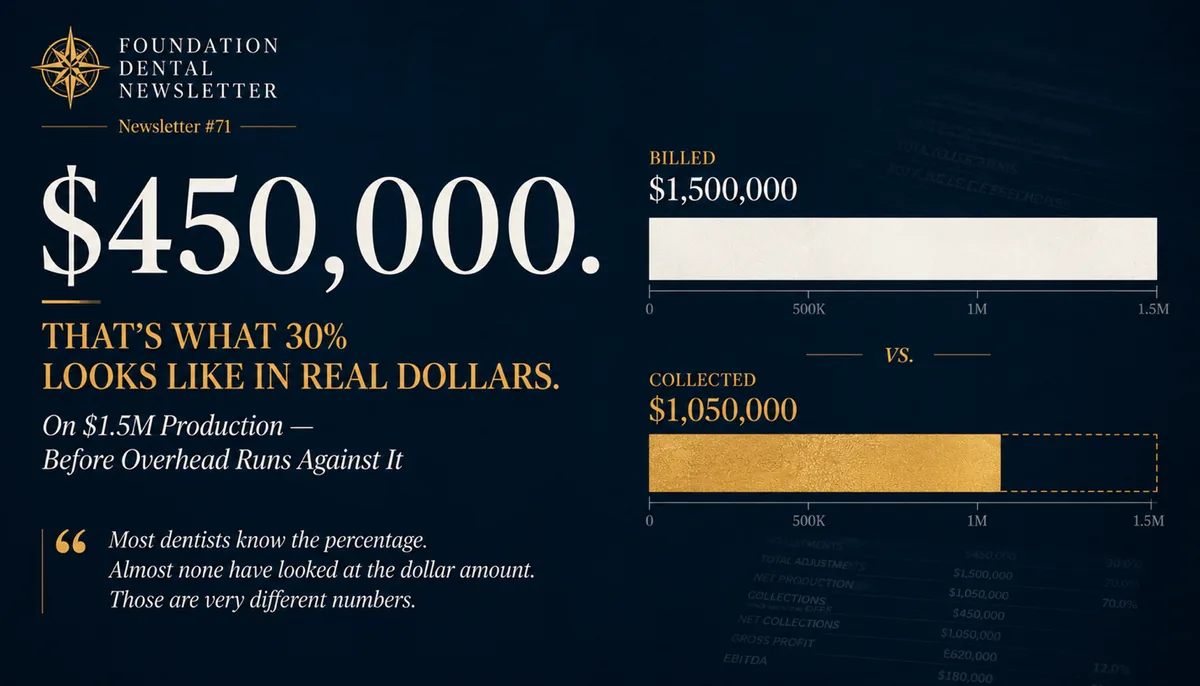
Percentages are easy to ignore, but dollar amounts are harder to rationalize.
The math gets more expensive when you follow it through to margin. Overhead doesn't adjust when the insurance company discounts your fee. Payroll runs at full cost. Supplies run at full cost. Lab fees, rent, technology - all of it runs against the collected amount, not the billed amount. The write-off comes directly from margin. That's why so many owners experience the same frustration: production looks healthy, collections look decent, the schedule is packed, and yet the income statement never quite reflects the amount of effort being invested. Nobody is doing anything wrong. They're pushing volume through a system that has margin compression built directly into its foundation.
In my own practice operations, I worked to build EBITDA to 31 percent across my group. That wasn't accidental. It was the result of deliberate margin architecture - and the single largest lever in getting there was the fee structure the practice operated under.
The EBITDA Gap Nobody Calculates
EBITDA - earnings before interest, taxes, depreciation, and amortization - is the number that determines what a dental practice is worth. Not gross production. Not collections. EBITDA. It's the metric sophisticated buyers apply a multiple to, and it's the metric most practice owners are least familiar with in their own business.
Consider two practices with nearly identical collections, both at $1.5 million. One carries heavy PPO participation and generates 12% EBITDA - roughly $180,000. The other operates predominantly fee-for-service and generates 28% EBITDA - roughly $420,000. Apply a market multiple to both. The valuation difference isn't incremental. It's often the difference between a transition that funds the owner's next chapter and one that creates disappointment at the table.
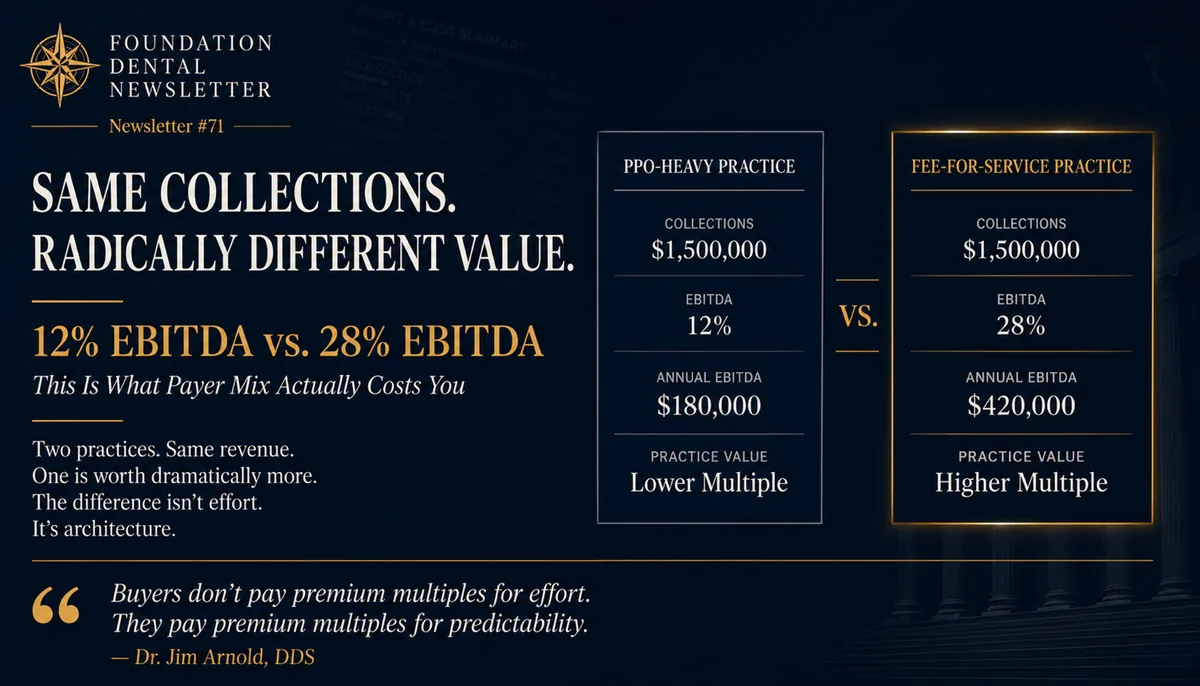
The market doesn’t reward effort equally. It rewards profitability, predictability, and margin.
Inside Foundation Dental Transitions, this is one of the first conversations Brian Mans and I have with sellers. What's the actual EBITDA? What's driving it or suppressing it? Is the margin structural - built into how the practice operates - or is it fragile and dependent on the owner working at full pace?
Sophisticated buyers evaluate payer mix early in every transaction because it tells them the margin story and the risk story simultaneously. A practice with a heavy PPO mix and thin margins requires the buyer to build margin after the transaction. A practice with strong fee-for-service positioning lets the buyer acquire margin that already exists. Those are priced very differently - and they should be.
Buyers don't pay premium multiples for a practice that needs them. They pay premium multiples for a practice that produces predictably, independent of any one person running it.
The Relationship I Refused to Have
Throughout my entire ownership career, my primary relationship was with the patient. Not with the insurance company.
That distinction shaped everything about how the practice operated - how we hired, how we trained, how we communicated, how we diagnosed, how we discussed treatment. Patients were welcome to use their benefits. We helped them maximize what they had. But the insurance plan never dictated what we believed was best for the patient, and it never served as a substitute for communicating value directly.
That's a fundamentally different operating philosophy - and it requires things many practices have never intentionally developed. Genuine communication skills, not scripts. A team with shared values that everyone can articulate without prompting. A patient experience that creates trust independent of any network relationship. Confidence in the clinical recommendation regardless of what an insurance company has decided it's worth.
When the primary relationship shifts to the insurance company, the practice starts making insurance-adjusted decisions without realizing it. Appointment time gets compressed toward what the reimbursement justifies. Schedules get built around volume because the margin requires it. The front desk starts asking "what does your insurance cover?" before they've asked anything about what the patient actually needs. Nobody intends for this to happen. It happens gradually, through accommodation, until one day the practice looks busy and produces thin margins simultaneously - and everyone wonders why.
The best fee-for-service practices I've visited don't feel slower. They feel calmer. More intentional. More present. That calm isn't accidental. It's architectural.
The Optionality Problem
This is where the conversation moves beyond PPOs entirely.
The wealthiest practice owners I know don't necessarily own the biggest practices. They own the practices that give them the most choices. They can slow down if they want to. They can add an associate or remove one. They can take extended time away without the wheels coming off. They can transition when the timing is right for them - not when the economics force the decision. They can keep practicing or reinvent themselves. Why? Because they built optionality into the architecture.
Optionality is what allows an owner to make decisions from opportunity instead of necessity.
Most dentists think wealth is money. Wealth is choices. Money is simply one of the tools that creates those choices.
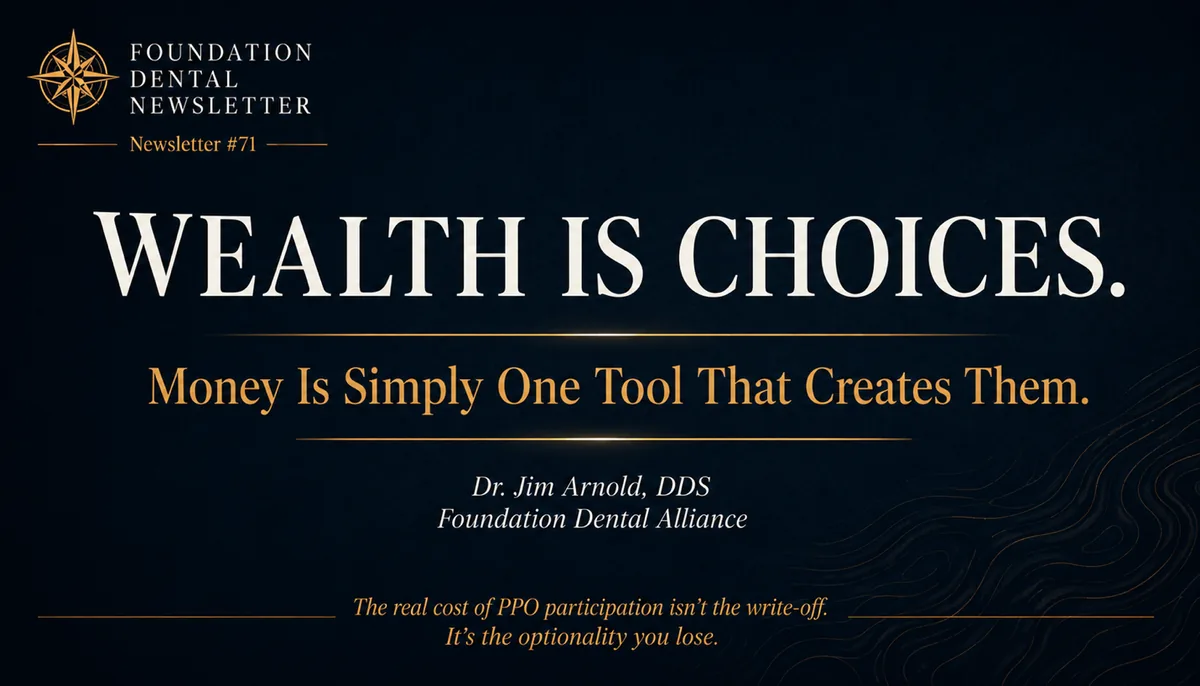
The goal isn't simply earning more. It’s creating the freedom to choose what’s next.
Insurance dependence doesn't just reduce margin. It reduces options. And reduced options eventually become reduced freedom. Every contract signed, every scheduling decision made, every pricing policy tolerated either increases optionality or decreases it. Over time those decisions compound. Eventually the owner wakes up inside a business they either designed intentionally or inherited accidentally.
Here's the simplest test I know: if your largest PPO reduced reimbursement by another 10 percent tomorrow, what would happen to your business model? To your schedule? To your retirement timeline? To your transition plans? If the answer creates discomfort, pay attention to it. That discomfort is pointing directly at the architecture problem that's been avoided.
Why Most Owners Stay Longer Than They Should
The answer is rarely ignorance. Most owners stuck in plans that aren't working financially already know the numbers aren't ideal. The answer is fear - and the fear is usually more specific than a general worry about losing patients.
It's the fear that the practice doesn't have anything else to offer. That the insurance relationship is what patients are actually loyal to, not the team, not the experience, not the clinical relationship. That if the plan disappears, so do the patients - and what's left isn't enough to sustain the practice.
That fear is understandable. It's also usually a signal about what hasn't been built yet.
The practices that successfully reduce insurance dependence share a specific sequence. They built the capability before they made the move. Stronger communication. Stronger patient experience. Stronger scheduling architecture. Stronger clinical relationships. Then they reduced the dependency - from a position of strength rather than desperation. The practices that struggle almost always reversed that sequence. They dropped plans first and then scrambled to build what should have existed from the beginning.
Build capability before reducing dependency. Not after.
The Number Worth Running This Week
Before any decision about which plans to evaluate, before any conversation about transition timing or patient communication - run one calculation.
Pull your total annual production - the full billed amount before any adjustments. Pull your total annual adjustments. Divide adjustments by production. That's your effective discount rate. Multiply it by your production number. Now look at the result in dollars, not percentages.
That's the amount you earned and agreed not to collect.
Then ask yourself one honest question: if you were designing this practice from scratch today, knowing that number, would you choose the same revenue model?
Most dentists already know the answer. They just haven't asked the question directly.
Inside Foundation Dental Mastermind, this is one of the first exercises we work through together - not to tell you which plans to drop, but to make sure any decision you make is built on clear math and real optionality instead of fear.
That's where every meaningful change in this area begins. Not with an emotional decision about which plans to exit. With an honest look at what the current model is actually producing - and what it's actually costing your future.
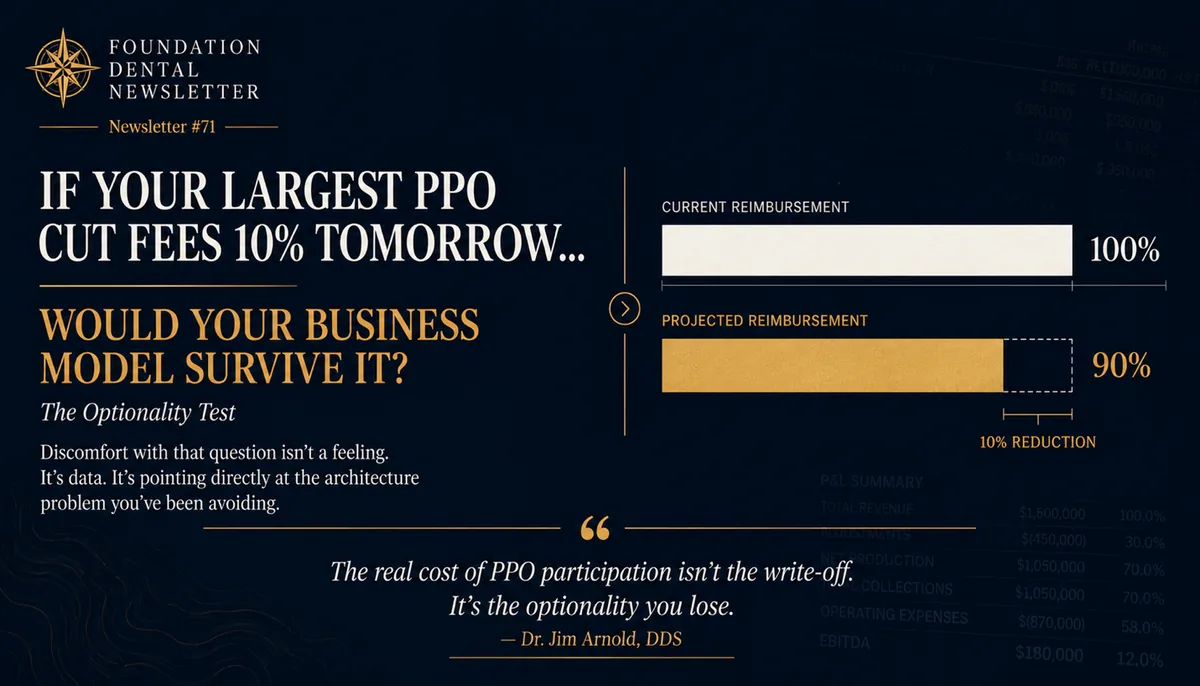
If a 10% reimbursement cut would fundamentally change your future, then that’s worth paying attention to.
Frequently Asked Questions
How do I calculate my actual PPO write-off accurately?
Pull total annual production - the full fee before any adjustments - and total annual adjustments from your practice management software. Divide adjustments by production to get your effective discount rate. Multiply that rate by production to get the annual dollar amount written off. Run this separately by plan if you participate in multiple networks. The numbers are often distributed unevenly, with 80 percent of write-offs concentrated in one or two plans.
Is it realistic to reduce PPO dependence without significant patient loss?
Yes, when it's sequenced properly. The practices that lose significant patients during a transition almost always moved before building the communication skills and patient experience that create loyalty independent of network status. A deliberate sequence - building capability first, then reducing dependency - typically loses far fewer patients than the owner projected. The patients who stay were loyal to the practice, not the card.
Should I drop all my PPOs at once?
No. The most successful transitions are almost always staged. Start with the lowest-performing plans - typically the ones producing the highest write-off percentage with the smallest patient volume. Measure results. Build confidence. Then move to the next. Dramatic all-at-once exits create unnecessary risk and make an already complex process significantly harder.
How does PPO participation affect practice valuation?
Directly and significantly. Sophisticated buyers evaluate payer mix early in every transaction because it tells them the margin story and the risk story simultaneously. Heavy PPO participation typically means lower EBITDA, higher patient base fragility, and more owner dependency - all of which reduce what a buyer will pay. Two practices at the same collections number can have materially different valuations based solely on margin structure and payer mix.
What EBITDA margin should a fee-for-service practice generate?
There's no universal answer - every practice has a different service mix, overhead structure, and geography. That said, well-run fee-for-service practices regularly generate EBITDA margins that are materially stronger than PPO-heavy practices at similar production levels. Thirty percent EBITDA is achievable in a well-structured FFS model. Most heavily insurance-dependent practices operate well below that, often in the 10 to 15 percent range once owner compensation is properly normalized.
What's the first step?
Run the math. Most owners have strong opinions about insurance participation and very little data underneath those opinions. Before making any decision, calculate the actual annual write-off in dollars, understand your true EBITDA margin, evaluate your payer mix, and assess what percentage of your patient base is loyal to the practice versus loyal to a network. Clarity before strategy. Strategy before action.
Bottom Line
This conversation isn't really about insurance.
It's about optionality.
And optionality is built years before you need it.
The practices creating the most freedom today aren't necessarily the busiest. They're the most intentional. They stopped building around someone else's economics and started designing around their own. That shift - from inherited architecture to intentional architecture - is where the financial gap between practices actually originates.
Most owners spend years trying to improve production without examining the system that determines it. The number on the monthly report isn't the problem. The structure producing that number is.
That's the place to start.
About the Author
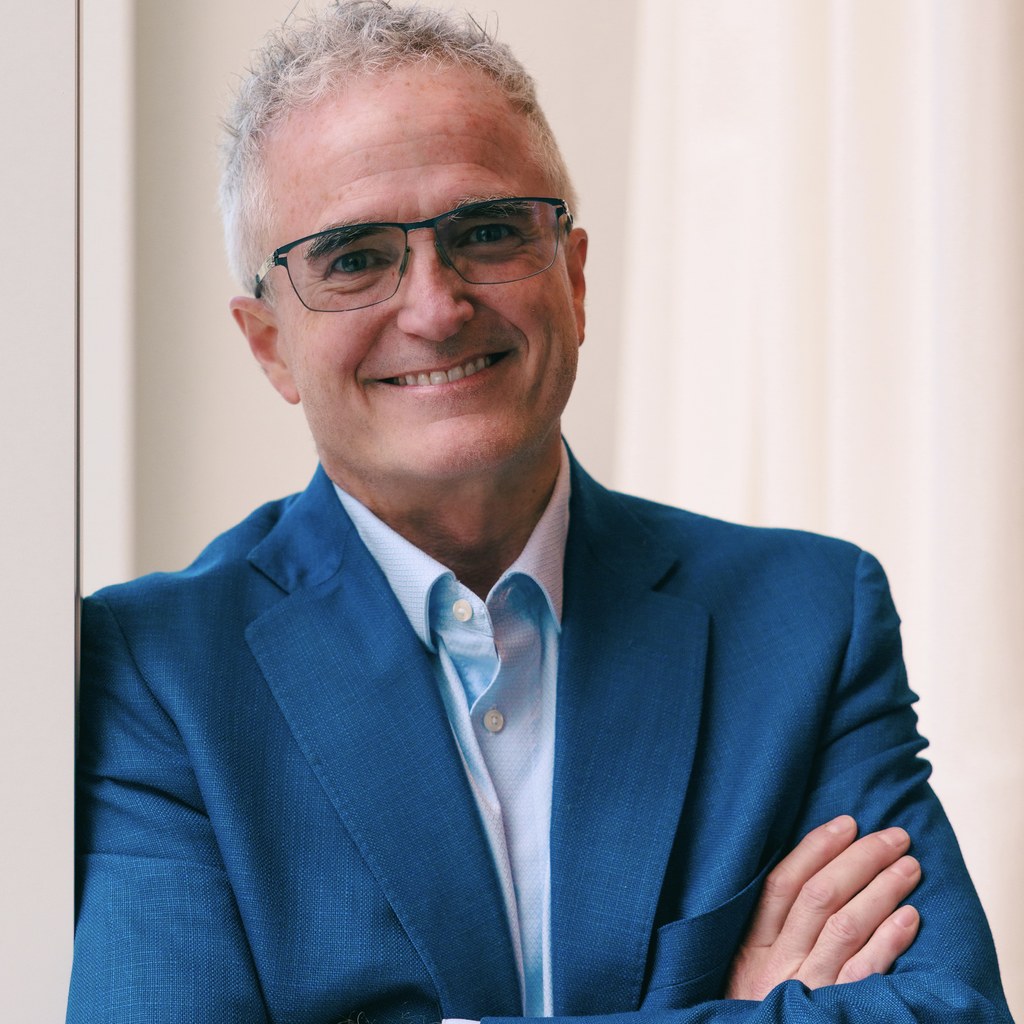
Dr. Jim Arnold, DDS is the Founder and CEO of Foundation Dental Alliance, a leadership and practice development organization serving dentists from graduation through retirement. He has 30 years of experience as a multi-practice owner and has been involved in more than 60 dental practice transitions. He leads the Foundation Dental Mastermind, Luxury Dental Retreats, co-founded Foundation Dental Transitions, and hosts the Foundation Dental Podcast. He also publishes the Foundation Dental Newsletter and Blog weekly, focused on leadership, practice design, and long-term sustainability in dentistry.
Stay Connected
Websites
FoundationDentalAlliance.com
FoundationDentalMastermind.com
FoundationDentalTransitions.com
FoundationDentalNetwork.com
LuxuryDentalRetreats.com/dubai
Social Media
LinkedIn: linkedin.com/in/arnoldjim
Instagram: instagram.com/smilesbyarnold
YouTube: youtube.com/@DrJimArnold
Facebook: facebook.com/smilesbyarnold
Twitter/X: twitter.com/smilesbyarnold
TikTok: tiktok.com/@foundationdentalalliance
Google Business Profile: tinyurl.com/2t3chcv6
Publications
Foundation Dental Newsletter: linkedin.com/newsletters/foundation-dental-newsletter-7289675134649450496
Contact
Professional Email: drarnold@foundationdentalalliance.com
© 2026 Foundation Dental Alliance. All Rights Reserved.